
Most organizations solve the wrong problem when they go global. They get the infrastructure right, find the talent, and figure out the cost model. Then the offshore team quietly drifts from the core org, and nobody quite knows why.
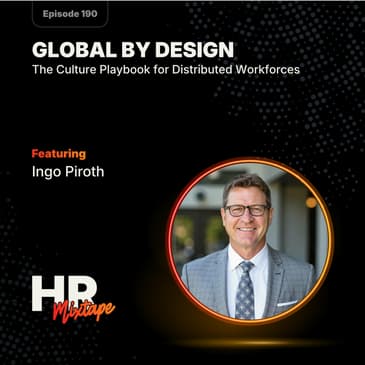
Ingo Piroth, Chief Revenue Officer at Emapta, has spent 30 years in global delivery and workforce transformation working with enterprise clients across multiple continents. His framework for what actually makes offshore teams succeed goes well beyond the basics.
In this episode, he covers:
- Why connection, context, and commitment are the real performance drivers in distributed teams, and how cultural integration design makes each one possible from day one
- How to structure the first 30 days of a global team integration so you build momentum and confidence rather than confusion and attrition
- Why the most common myth about offshore talent, that geography limits capability, is the belief that costs organizations access to some of their strongest people
Timestamps
[00:00:54] Why culture is now the key differentiator in outsourcing, after infrastructure, talent, and cost barriers have largely been solved
[00:02:05] How to design cultural integration from scratch using shared rituals, communication channels, and recognition of local cultural moments
[00:03:04] Real examples of shared identity: embracing Philippine Christmas in September and Colombian Semana Santa alongside US holidays
[00:04:05] The biggest planning mistake leaders make when setting up offshore teams, and why treating it as cost arbitrage guarantees trouble
[00:06:02] Why "treat offshore like it's your core business" is the philosophy that makes the mechanics of distributed work actually function
[00:08:26] Time zones as a design challenge, not a barrier: intentional overlap by function, async communication, and protecting personal time
[00:09:28] Why recognition has to be personal, not procedural, and why global employee-of-the-month programs fall flat
[00:13:08] The first-30-day playbook for global teams: why speed of clarity determines speed of performance
[00:15:05] Why global talent wants careers, not just roles, and what succession planning actually looks like in an offshore environment
[00:19:58] The biggest myth about offshore talent, and why companies that treat offshore as strategic consistently outperform those that don't
Brought to You by Paylocity
Paylocity is the fastest growing unified platform for HR, Finance, and IT. Paylocity brings your people, processes, and data together in one place so HR leaders can spend less time managing systems and more time doing the work that actually moves their organizations forward. Learn more at paylocity.com
Keywords: global workforce, outsourcing, offshoring, distributed teams, workforce transformation, cultural integration, global talent, HR leadership, people strategy, recognition, succession planning, offshore teams, cross-cultural management, employee engagement, retention, global delivery, talent management, culture design, time zone management, Emapta
Powered by the WRKdefined Podcast Network.
[00:00:01] You're listening to the HR Mixtape, a podcast for leaders who want to understand people, strengthen culture, and navigate change with clarity. Today's conversation starts now. Joining me today is Ingo Piroth, Chief Revenue Officer at IMAPTA. Ingo focuses on building strong global teams and making offshore talent work as a true extension of the organization.
[00:00:32] Ingo, thank you so much for jumping on the podcast with me today. Thank you for having me, Shari Simpson. It's a pleasure to be here. So you have spent space in the global delivery environment for decades. And I'd love to get your perspective on what you think around culture really being a driving factor now in that space.
[00:00:54] Yeah, that's a great question. And with about 30 years or so in this space, I've seen all the kind of core elements of success in this area, the technology, the people, the labor rules, and everything else. But at the end of the day, connection, context, and commitment really drive performance. And I think that when you think about what creates successful outsourcing projects, culture is now the key differentiator.
[00:01:24] The barriers of infrastructure, talent access, and costs have all largely been solved. So if you can get the cultural alignment done well, that's really the strategy for success. With the complexities that you see in these different environments, and especially as I think about organizations that are just kind of dipping their toe into a more global mindset, what do you think are the best ways that you've truly seen integration approached?
[00:01:54] Because in my experience, it can go a whole bunch of different ways, right? You can try to absorb them. You can try to mirror the culture. There's a whole bunch of approaches. What have you seen kind of best practice in that space? Wow. This hopefully will get through in a few seconds, but to me, this is actually at the heart of the issue. And I think if you can design cultural integration from scratch, that's really going to be what makes the model successful.
[00:02:22] So think about rituals, recognition, real-time communication, those all build culture. So whether you're looking at best practices around what are shared rituals, things like stand-ups, demos, leadership touchpoints, how do you create consistent communication channels that reinforce the why you're doing it? And we'll talk a little bit about that in a moment because I think culture also means ownership and alignment to your core strategies, something that is often forgotten in the outsourcing world.
[00:02:52] And if you can celebrate both the global and local cultural moments to drive belonging, that's really when culture becomes real, when it shows up in the weekly rhythm of how those teams operate. And there's lots of little examples of that. In the Philippines, Christmas starts in September, so embrace that, right? Teams decorate early. They run gift exchanges. It's a huge cultural moment. And if we don't embrace that, we're missing out on a local cultural component.
[00:03:19] In Colombia, Semana Santa, which the Easter week is deeply meaningful, we just had that Easter here in the United States, by the way, it's celebrated differently there. And so we've seen clients celebrate both. A U.S. Thanksgiving shout-out and a Filipino Christmas kickoff, and that really creates shared identity. And that's what you're looking for. Well, and it's cool to be able to see those experiences inside your own organization and to share them in that unique way.
[00:03:47] Because it's an educational piece, too, for the rest of the org as they go through that. What are some of the mistakes that you've seen early on leadership take that might sabotage kind of this integration and cultural synergy that we're all hoping for?
[00:04:03] Yeah, I would probably say that one of the biggest mistakes that we see people make is not taking a good look at what the blueprint for success looks like. We talked a little bit about culture and connectedness already. But if you think about how do you structure an outsourced environment, how do you plan for it? You need agility. You need to standardize the SOPs.
[00:04:30] You need to really kind of look at how this team is going to get integrated into your company. We always say at a IMAPTA, you know, if it's done well, those people will walk around with your water bottle, with your T-shirt on their back, and they'll show on LinkedIn that they feel that their identity is part of your organization. And if you don't set up an environment from the very beginning that incorporates this, you're going to run into trouble.
[00:04:59] So it's a planning process. We loosely call this term workforce transformation. It's slightly different than outsourcing because really what you're doing is you're shifting the way that you are managing labor and work across different geographies and different type of talent entities. So if you don't do this deliberately and you're just looking at it as a cost efficient way to get labor arbitrage benefits, you're going to run into trouble very quickly. How have you helped leaders understand how to set expectations across these groups?
[00:05:28] You know, I'm fortunate. I work on a team where we have teammates in India and we have teammates in Canada. I'm located in the U.S. So, you know, part of our expectation is to be one of one very simple thing is be very cognizant when we're scheduling meetings if we are requiring our India counterparts to participate. But beyond that, there's, you know, there's deadlines that we have to follow and there's best practices for that for sure. And then there's kind of like the things that you know that don't work.
[00:05:55] So how have you coached people to look at project management and expectation setting in this environment? Yeah. You know, there's multiple components to this answer. And let me perhaps before we get into the mechanics of how you do, you know, follow the sun kind of work, how you do time zone overlap, how you do deal with night differential and all those kind of things.
[00:06:19] I do think from a leadership standpoint, the very first thing I would recommend is treat offshore like it's your core business, not like it's offshore. And to me, visibility, voice and value really create those true teams. So inclusion is the ultimate performance lever.
[00:06:39] And what that really means is including your offshore teams in core meetings and decision making, giving them a voice and shaping the outcomes, treating them as part of the organization, not an extension of it. And those are kind of, if you like guiding philosophies. And if you take that in mind, then the mechanics of how you do distributed agile workforce alignment with daily scrums, time zone overlaps, those kind of things, they become a little bit more intuitive and easier to do.
[00:07:08] Because we often have this tendency to approach outsourcing work as, well, if they're being paid the night differential, then surely they can make the 6 a.m. call. That is just a recipe for high attrition, employee dissatisfaction, et cetera. So we can go into the mechanics. I think time zone overlaps as opposed to time zone alignment is important. It all depends by function, of course.
[00:07:34] If what you're really doing is getting teams aligned on, say, core application development areas, you only need two or three hours to overlap. It's a little bit different when you're talking about customer experience that needs to be on 24-7. So we do a lot of work to kind of try to optimize that because at the end of the day, if you've got an organization that is going to be unhappy, the cost of success is going to be very high.
[00:08:00] High attrition, high turnover, unhappy employees that don't feel like they're integrated. Yeah, I love the idea of that overlap and also the handoff of work. You know, if you're working in a team and you've set those clear expectations, you can do that time zone kind of handoff of the work. And then the next person in the next time zone kind of picks it up fresh at the beginning of the day. I love that kind of cascade of work.
[00:08:26] Yeah, and I think, you know, we often say that time zones are not – they're a design challenge. They're not a barrier. So you just have to be cognizant of intentional overlap. You have to become a professional at asynchronous communications as well. The tools that you use are going to be important. And you have to remember to protect personal time to sustain long-term performance. I'm constantly scolding my team in the Philippines, for example, for being available whenever I want them to be.
[00:08:54] I'm like, wait, isn't it 2 a.m. where you are? So, you know, you just have to be cognizant of those kind of things. To me, the best global teams respect time as much as they respect talent. And if you have that philosophy in mind, you're going to get successful teams. What does recognition look like globally? And the reason I ask that specifically is because I think about, you know, just in any one organization, people want recognition vastly different. And then you layer on the cultural variances.
[00:09:24] What have you seen kind of be the best practice in the recognition space? I think there's both a kind of guiding principle and then there is culturally specific things you have to take into consideration. So, first of all, recognition has to feel personal, not procedural. And I think what motivates people in one culture may embarrass people in another. So, for example, in the Philippines, public recognition in team meetings often lands pretty well, builds pride in community.
[00:09:54] But in some, like Latin cultures, like Colombia or the Dominican Republic, recognition tied to team contribution and relationship carries more weight than formal awards. So, we've seen, you know, global employee of the month programs fall really flat, but local team shoutouts were brilliant. So, as long as you can kind of figure out what is culturally appropriate as far as recognition and you can make it personal, I think you're on to something really good.
[00:10:22] To me, consistency matters more than scale. So, frequent, authentic recognition wins every day. And if you tie recognition to impact, not just effort, that should be a guiding principle anyway. And to me, at the end of the day, recognition works when it reflects how people want to be valued, not how leaders prefer to give praise. And so, it's a little mind shift there that you just need to be cognizant of.
[00:10:49] As I think about my HR counterparts that are listening to this, one of the things that I'm curious about is when you're going through an acquisition process into a different country you haven't been to before or been in before, how do you quickly ramp yourself up on the cultural norms that you're going to need to learn for that environment? What is, like, the best way to do that?
[00:11:11] I mean, we can all pick up a book and read that kind of stuff, but is there, like, tips and tricks of really being able to dig into what the cultural norms are and some of the things that you just mentioned? Well, let me say that I think the number one thing you need is a really good partner that understands the outsourced kind of cultural nuances of the place that is your target area.
[00:11:38] And there are many companies that do that, our own included, because you can do as much research as you want. If you don't really understand anything from labor laws to the way talent is done, the cultural components of an area, you're not going to figure that out with one or two visits in-country. So, yes, you can read a lot of books, but I think if you're going to try and accelerate this transformation, you really need a partner to help you do that. Yeah.
[00:12:08] That being said, we love hosting leaders to go check it out, to actually spend some time in market, to meet the people, to go out to dinner and to really understand the type of environments you're looking at. I think especially in the United States, we often have completely different perceptions of the countries that we are outsourcing to. And then when we go, our minds are just blown. You know, the economy is different.
[00:12:38] The people are different. Everything is so different and you don't know until you go and see it. So, number one, partner with someone who knows it. Do all your research, of course. And then you just have to put in some good old shoe leather and get into market to check it out. Yeah. You mentioned building that team cohesion early. So, as you think about that first, you know, 30 to 90 days, what does the leadership playbook look like in that first month to really build the cohesion fast across teams?
[00:13:08] Yeah. You know, this is where I think the difference between outsourcing for just cost benefits versus outsourcing for this to be part of your core business really kind of differentiates itself. Because to me, month one sets the tone for everything that follows. And to me, you know, speed of clarity determines speed of performance.
[00:13:33] And what I mean by that is you have to do some upfront work establishing clear roles, workflows, and communication norms immediately. And handing this off as just another project is just not going to be successful. You need to ensure that you have full system and information access. Any delays here kill momentum. So, if you hire people and they're sitting around still waiting for access or haven't got compliance issues solved,
[00:14:00] all that kind of stuff needs to be right from the very beginning done. And then what I would highly encourage you to do is to come up with a couple of ways to create some early wins. Because really what you're trying to do is build confidence and trust. If you think about it, these very talented people in other countries are also making a leap of faith working with you as their new de facto employer.
[00:14:24] And unless you can build them with confidence that they've made the right choice and celebrate some early wins, I think that's important. The first 30 days are not about perfection. They're about momentum and confidence. That makes a lot of sense. As you've worked with teams, what does succession look like across this global environment? And I love that you kind of set the stage early in our conversation to say, don't treat them as separate.
[00:14:52] Treat them as one to have that mentality. So with that as the background, how do we think about career trajectory and leadership opportunities with this global workforce? Yeah. And I think this is where a misconception about outsourcing often comes in place. You think about your own career here in the United States. Everybody wants to know, what's my career path? How am I going to get ahead? Right. And exactly the same thing for any outsourced environment.
[00:15:20] So to me, growth creates retention, not perks. And as long as you keep that in mind, that the global talent also wants careers, not just roles, you're going to have a successful deployment. So let's see. Clear career pathways and role progressions are essential. I think visibility into the rest of the organization increases engagement.
[00:15:46] And we often forget this about our counterparts in the outsourcing world that they're just off on their own little island. No, they're not. They want to know where else is your company going. And so creating leadership opportunities within the offshore team, to me, drives long-term stability. We've seen analysts in the Philippines grow into team leads, and they manage global workflows within 12 to 18 months. I recently had a client, and this just filled me with joy.
[00:16:11] And they said, do you think it's going to be weird if our American team reports to the lead of the outsourced organization in the Philippines? I said, no, that is an absolutely perfect model. You may have to deal with some nuances about salary discrepancies because you just can't avoid that if you're in a lower-cost market.
[00:16:31] But to me, that's an insightful way that this customer is looking at career growth for offshore talent as a mechanism to both retain and attract the best talent. What an exciting opportunity, too, for that person to just be able to say, yeah, I manage teams in another country. Like, how cool is that? Absolutely. It's kind of new.
[00:16:52] We've got, I would say, in our more than 12,000 or so global talent, we've currently got about 20 customers that are doing this. And we are very active. I mean, we talked about culture at the beginning, Sherry, right? We're very active in encouraging people about how to do this right so that you drive down costs and bring down retention and attract the best talent. So this just fills me with joy that this is happening. I love that.
[00:17:22] Well, you mentioned cost, which kind of gives me, you know, into my next question around metrics. You know, we always like to have the metrics conversation. You know, how do you know via metrics that your integration is going well? Yeah. I mean, everybody's got slightly different ways to look at this. But to me, you know, retention results and responsiveness really show you if you're successful.
[00:17:45] And, you know, the old adage that what gets measured gets integrated or measure what you want to, you know, you expect from people is true here as well. To me, there's kind of three key areas that I would say are metrics that signal your integration is working. It is the retention and engagement scores. That's the cultural integration. The very first question you have when you outsource is what is the attrition rate?
[00:18:13] You know, if I'm going to have a high turnover, how do I create institutional versus tribal knowledge? And how do I kind of get that momentum going? So, retention and engagement scores, we measure obsessively all the time. And then I think the second thing would be productivity parity and quality consistency. So, this is where we often find where the expectations are when you outsource, you're going to see some level of drop of quality.
[00:18:42] The opposite is true. The work ethic, the dedication, the type of quality that we're seeing on our outsourced operations is through the roofs. And measuring that, I think, is a great way to signal, hey, this integration is working really well. And then I think the last thing is communication responsiveness and collaboration patterns. You know, and you'll realize that I haven't mentioned at all the number of widgets or these KPIs.
[00:19:11] These, to me, are all metrics that tell a consistent story across people, performance, and outcomes without necessarily getting into the weeds about numbers and metrics. In the call center, you're going to be measuring SLAs around responsiveness and number of minutes on the call. That is not going to tell you whether the integration is working. It is those things that we just talked about, how are the people working together? Yeah. Yeah.
[00:19:38] Such good metrics to actually look at that you can evaluate that integration. You know, as we wrap up our conversation, what's, you know, one of the biggest myths that you hear in boardrooms about this type of work that you want to let our audience know that it's just not reality? I think the biggest myth about offshoring is that offshoring equals lower value or quality.
[00:20:07] And nothing could be further from the truth. And we have just seen unbelievable quality coming out of these outsourced teams. And, you know, I got to be careful how I kind of pitch this year. But in terms of desire, work ethic, pride of identity with your core brand, we're seeing some of the most dedicated employees in that kind of offshoring world. Because geography doesn't define capability.
[00:20:37] And to me, the offshore talent is usually equally or more capable in more domains. And the limitation is how the team is structured, not the talent itself. So companies that treat offshore as strategic outperform those that don't. So get rid of that myth. Try it out. I think you'll be absolutely astonished at the quality of the people that you're going to be working with. So great.
[00:21:07] That is a tweetable quote around geography doesn't define capabilities. I love that. Ingo, this was a great conversation. Thanks for taking a few minutes to chat with me on the podcast. No problem at all, Sherry. It's been a real pleasure. Thank you for having me. Thanks for tuning in to the HR Mixtape. Like, share, review, and subscribe to support the show.
[00:21:35] And help more people discover these conversations. Until next time, keep the conversation going.
Sponsors
