
[00:00:00] Hey everybody, breaking news about Intuit QuickBooks Payroll. They've evolved into QuickBooks Workforce. And it matters if you run a business or you're the person managing payroll and HR. It's no surprise that owners and HR leaders like you spend half their week playing detective. QuickBooks Workforce gets you out of that mess. It's an all-in-one command center that pulls HR, time, benefits, and workforce data into one connected dashboard fully integrated with QuickBooks Accounting.
[00:00:30] You can automate the routine stuff without losing control. Spend less time reconciling and more time acting. Turn workforce data into clear business insights and stay ahead of compliance and labor costs. Move from reactive to proactive. Make the switch today to QuickBooks Workforce at QuickBooks.com forward slash workforce. That's QuickBooks.com forward slash workforce.
[00:00:53] RepCap is proud to support Punk Rock HR. We're B2B content marketing consultants that combine a journalist's curiosity with a marketer's creativity to tell clear human stories that connect. From strategy to execution, we partner with brands to turn ideas into thought leadership and get real results. Want to learn more? Head over to RepCap.com.
[00:01:17] Leaders are quick to say that skills gaps and governance are the biggest barriers to scaling AI, but the data shows that most of them aren't actually doing much about it. So yeah, it does feel like sometimes there is a bit of corporate theory here because on the one hand where they are suggesting that these are two of the biggest problems that they have,
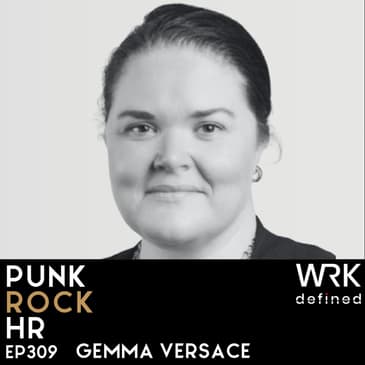
[00:01:40] they are also highlighting the fact that they don't have internal training programs or workflows or governance to actually be able to deliver on this. Hey, everybody. I'm Lori Rudiman. Welcome to Punk Rock HR. My guest this week is Gemma Versace. She's the chief customer officer at X-Team.
[00:02:05] X-Team is the world's premier on-demand network of high-performing remote software engineers. And Gemma is on the show today because X-Team surveyed over 300 leaders and had really interesting insights around how executives and HR leaders feel about staffing, talent, and AI, and business results in this new world of work.
[00:02:32] I thought the data and the research were compelling. And Gemma is a podcast host of her own, and she's just got a great personality. So it made for a show where I think you can learn something new about the world of work. So if you're interested in staffing and engineering and IT, and also in thinking about what work can look like when it's optimized fully, we'll sit back and enjoy this conversation with Gemma on this week's Punk Rock.
[00:03:02] HR. Hey, Gemma. Welcome to the podcast. Thank you so much for having me, Lori. Great to be here. Well, before we get started, I just want to hear all about you and the great work you do, but we need to like pick a place to land. How about you tell us who you are and what you're all about? Yes. Thank you so much. Great place to start. So I'm Gemma Versace.
[00:03:31] I am lucky enough to be the chief client officer here at X-Team. I have been in the staffing world and workforce technology solutions world for the last 20 years. An Australian native that has been living in the US for the last four years, both in New Jersey and now in Scottsdale, Arizona.
[00:03:51] I'm a mom of two boys, seven and 11, and really somebody who from starting off my career was going to be a psychology teacher who made a very different pivot into the world of staffing and more recently, IT talent augmentation globally. So that's me in a little bit of a nutshell. Well, I love it. I mean, there are a lot of different ways that we can go. First of all, tell us about X-Team. What is it? What do they do and what problems are they trying to solve?
[00:04:20] Yeah. So X-Team partner with clients globally to make sure that we are supplying them with the very best elite IT talent there possibly is. We do have a very strong community out of LATAM, but we also do have amazing talent pipelines globally to support all of our clients' IT projects, whether they be short-term or long-term. But really our X-Factor, if you like, is really how we embed and integrate really closely into our clients' businesses.
[00:04:49] So we're not just another talent provider. We really are a strategic partner for our clients to make sure that they can deliver amazing value creation through their technology projects, but also more importantly, their technology teams as well. I started out in 1995 in human resources as an intern and the word staffing back then really had a pretty limited point of view, a limited definition.
[00:05:15] And HR professionals didn't really care about staffing because the staffing dollars and the staffing budget and the staffing talent were really managed by like the CFO or the CTO or the CIO. But I don't think that's the case today. So can you tell me why HR professionals listening to this podcast should even care about the word staffing? The one thing that I always say to clients and prospects alike is, I know this is coming from a very biased angle,
[00:05:43] but if there are any partners that you need to have the best relationships with that have the ability to move the needle for your organisations, it is your people partner. It is your staffing partner. It is your staff or partner. So for those HR leaders listening, please make sure that if there's any word of advice that I could give, reach out to your talent partners.
[00:06:07] Make sure that you share deeply with them what you are trying and wanting to achieve and make sure that there's very clear deliverables that you need and want from them and watch them jump on with open arms and very eager hearts to be able to work really closely with you in delivering what is the most important vendor relationship, I think. And that is through how you are powering your people across your organisation. What's your model behind staffing? Can you tell us a little bit about that?
[00:06:36] We have a model where we supply independent contractors into our client sites, which really does allow us to be able to support and protect our clients in relation to maintaining the relationship directly with the IC and X-team. And really look to flush out the key deliverables and the key outcomes of the project that our clients are wanting to deliver.
[00:07:01] And making sure that we're going to be able to deliver and make sure that we're going to be able to deliver and make sure that we're going to be able to deliver on our client deliverables. Well, I appreciate that model and I love the rigour behind it. And I think rigour is one word that I would use with X-team. I mean, you are rooted in data and research and a really thoughtful approach to the marketplace.
[00:07:28] And I read that X-team surveyed over 300 leaders and found that 92% of executives feel great about their organisation's ability to hire AI talent. But the people actually doing the work of AI only 29% agree. And that's a 63 point gap. So I wonder what the disconnect looks like when it shows up in real organisations. Yeah, absolutely. And, you know, I definitely agree with you that, you know, that 63 point gap is wild.
[00:07:58] And when you actually see it play out in real organisations, you know, the consequences are significant. You know, I've got a couple of examples to share on this. And one being we were working with a client last year where the executive team and the CEOs were, the CEO, sorry, was incredibly excited and kicked off an all hands meeting talking about the shiny new AI centre for excellence and really how confident they were in their talent strategy.
[00:08:26] And the CEO was genuinely pumped and excited about delivering really quickly on their AI client strategy. But when we started to actually talk to the engineering management and the engineering teams who were actually doing the work, it was an entirely different story. You know, they were frustrated, they were burnt out and they really felt that the company was nowhere near ready to deliver on some of the expectations and deliverables that had been set.
[00:08:53] You know, a lot of them were spending more time just trying to get the business stakeholders really to understand, you know, basic prompts and rather than actually building anything useful. And the change management piece was unfortunately non-existent and communication between the business and the teams was really not productive. That's what the disconnect really looks like.
[00:09:16] And, you know, you see executives see strategy slides and the hiring updates and they've got these really wonderful polished demos. So they feel great. But the actual people with their hands on the keyboards who are delivering and are in the mud, you know, they're dealing with shifting requirements. They've got lack of alignment across the business. They've got processes that are yet to change and needing to change.
[00:09:42] And, you know, it creates a really awkward situation where leadership thinks everything's on track and everything's fantastic. Well, the teams that are actually doing the work feel like they're constantly pushing uphill, you know, with unfortunately limited support from the top.
[00:09:58] And, you know, another danger that every leader should worry about and particularly from a HR perspective is this gap has the real potential to drive your best talent out the door or not even get great talent in the door. Because the top engineers can feel when leadership is disconnected from the actual work and they get tired, you know, of fighting the same organizational issues over and over.
[00:10:24] And before you know it, you know, they're out the door looking for new work, heading somewhere that actually feels like they are going to move fast with AI and are ready with a clear AI strategy. And so, you know, if there's one suggestion that I have for HR leaders listening who want to get this right, you know, run an anonymous survey.
[00:10:45] We give mid-level folks and individual contributors who are actually doing the AI work currently and ask them what their confidence levels are and how they really feel about the AI efforts within the business. And, you know, you might be surprised by the answers, but, you know, the surprises are always incredibly valuable. And that's where, you know, some of the gold really lies from feedback. Are you an HR or talent leader trying to figure out how to have the biggest impact on your business and your people?
[00:11:14] Listen, you're busier than ever, but you're also under more pressure than ever before. The We're Only Human podcast has been running for over 10 years, helping leaders get a handle on these topics. I'm Ben Eubanks, the host of the show, and I started my career as an HR practitioner and executive. Now I run a research firm dedicated to exploring the trends affecting work and the workplace. We cover research from a practical lens, technology changes, compelling case studies, and more so that you can get back to work and have the impact you've always wanted to. And we do it with some fun.
[00:11:43] Check out the We're Only Human podcast today. Well, I love this perspective. And one of the things that jumped out in me in the research is that HR leaders reported the lowest confidence of any function, 31%, and a quarter of HR respondents didn't even know how their organization adds AI engineering capacity. And I think as someone who grew up in human resources, I have a distinct perspective about AI.
[00:12:10] But what I really believe is that all HR professionals should be working on their fluency so that they can be relevant to help make good decisions for the labor market, for the team that works for their organizations, and for their entire talent pool. Why is the function that owns workforce planning completely in the dark on the AI talent model? Yes, it's a really good call out, Laurie. And, you know, I felt that one in my bones as well, like you.
[00:12:38] I'm not from HR, but I work very closely as HR being key stakeholders. And I can completely understand why that would be so incredibly alarming and frustrating as somebody like yourself who's, you know, sat in the HR seat. I've seen this unfortunately frustrating version, you know, too many times too, when it comes to not just specific to AI, but just all projects in general where, you know, I've seen the good, the bad, and unfortunately the ugly.
[00:13:07] And, you know, with one example highlighting really how detrimental it is to bring HR in at the 11th hour for any type of major project, but in particular from an AI project where specific key talent, you know, was needed. And, you know, this led to the HR team having almost no visibility into how the company was adding to its AI capacity.
[00:13:33] And as our research showed, you know, a full quarter of HR leaders don't even have an understanding or deep understanding relating to their organisation's AI strategy or model. And that makes a real, that makes workforce planning, as you mentioned, incredibly, you know, almost nearly impossible that will lead to the wrong talent being onboarded with high turnover, higher costs, and, you know, an overall loss of morale across the teams as a potential result.
[00:14:03] As well. You know, when it's done poorly, it has significant consequences, but, you know, when it's done well, there's really fantastic success. And one such example that can expand on what you were saying about, you know, I think it really is something for HR leaders as well to make sure that their tech fluency is something that they do keep at the forefront of all times.
[00:14:29] When HR and the technology executives work closely together and when there is no daylight between them, you know, that really is where the magic can happen. And we're lucky enough to work with a client that does this exceptionally well. They are a business that have been around for around about 10 years. Four years ago, they were around about a $50 million organisation. This year, they are around about a $700 million organisation.
[00:14:58] It is in large part due to the fact that the head of people and the technology executives literally sit next to each other every single day in the office where they are building their talent strategy specifically for AI, but more broadly across the talent technology sector in general. They are building it together.
[00:15:48] You know, Gemma, I want to get back to the really great research that you provide out there because your research found that role definition, literally how you define AI in someone's job scope, predicted AI maturity more than budget or company size. So that's a really bold claim and interesting. Can you walk me through it in a couple of minutes? Yeah, absolutely. And yes, I definitely agree with you. It is a very bold claim when you do hear it first, but you know, the data doesn't lie.
[00:16:16] So to me, it is a lag. It's a clear lagging indicator of how much real effort the organisation is really putting into making AI a part of their actual business strategy. And, you know, I've seen the difference close up. One example was a prospect we were working with who had they had decent funding, but they just slapped a vague line like, you know, supports AI initiatives onto existing roles.
[00:16:44] And AI talent and the broader market, you know, everything, they can see that it stays fuzzy. There's no clarity. There's no ownership. There's no specific identification of what the direction of the business looks like, particularly from an AI strategy perspective.
[00:17:00] And, you know, to give the opposite example, on the other hand, we have a client that went really deep and they deliberately set out to redefine around about 40 roles with real clarity that had specific AI capabilities and accountabilities that they were looking for in market. And they spelled out exactly who owned what, you know, what the key deliverables were, as well as what the key specific skill set and tech stacks required would be.
[00:17:30] And that deliberate approach made, you know, it made a really big difference. When you get specific about ownership and key deliverables, it really signals something important to AI talent. It tells them, you know, we've thought this through. We know what we're trying to do. We know what we're trying to achieve and how to achieve it. And we're really invested in doing this properly.
[00:17:53] And top AI talent from what we hear and what we're hearing in the market, but what we see as well is they notice that immediately. You know, it tells them that it's not just another experiment that a business is trying to do, but it's a serious project. It's a serious effort with clear direction, clear investment and clear buying from the leaders. And that type of clarity really does help to attract better talent and also helps them, helps keep them a lot longer as well.
[00:18:24] Hey, hey, I'm Katie Van Horn. And I'm Jackie Clayton. We're your hosts of the Inclusive Amp podcast, where we take on DEI, leadership and HR without all the corporate fluff. That's right. We've got decades of experience, a lot of opinions and zero tolerance for performative anything. Every week we dig into what it really takes to build inclusive workplaces with honesty, strategy and a few side eyes.
[00:18:51] We'll talk about the tough stuff, power dynamics, privilege, what's broken in the system and how we can all do better. And don't worry, it's not all heavy. We bring receipts, laughs and real talk from people actually doing the work. Think of it as your weekly dose of truth, tips and a little tea to help you lead with intention and show up for your people. So if you're ready to push past the buzzwords and get into the actual work of inclusion, you're in the right place.
[00:19:20] So subscribe to the Inclusive AF podcast. New episodes drop every week. Catch us on Spotify, Apple or wherever you get your podcasts. We'll be here breaking it down one inclusive convo at a time. Well, I love that you use the word clarity because I do have a question and without getting into the numbers and without going deep into the data, I recognize that governance and skills are hot topics right now.
[00:19:46] We're all talking about it when it comes to AI, especially around governance and ethics. And we're talking a lot about skills, but there's a mismatch between what we're talking about and what shows up in the X team research as to what's really happening on the ground. So can you conceptually talk to me about both governance and skills? What's going on and really what matters in this conversation? I think leaders are quick to say that skills gaps and governance are the biggest barriers to scaling AI.
[00:20:16] But then as you mentioned, the data shows that most of them aren't actually doing much about it. And so 82% of those who named governance haven't embedded policies within real workflows. And so therein lays a really significant problem. As well as over half of those were worried about skills gaps, have zero structured training programs.
[00:20:41] So yeah, it does feel like sometimes there is a bit of corporate theory here because on the one hand where they are suggesting that these are two of the biggest problems that they have, they are also highlighting the fact that they don't have internal training programs or workflows or governance to actually be able to deliver on this. And so here's what I think is really happening.
[00:21:08] I think identifying a problem feels productive. You know, it feels smart in the leadership meeting, but actually fixing it, that's a lot harder. And, you know, it requires real ownership, changing how people go about their day-to-day work, as well as creating, you know, deliberate, regular cadence for review and also holding people accountable. And I think that's where most people actually do stall as well.
[00:21:34] Another piece of the research did show us is that, you know, 26% of people who are closing the gap treat this as core management work and not some fancy AI project. So they name the owner for governance. They define really clear review criteria. And they also build learning as an expectation of the job and not just, you know, hoping that they'll do it on their own.
[00:22:00] One of the first leaders that I ever had used to say that hope is not a strategy. And she was so right because we need as leaders to give clear direction, identify where the accountability lies, but also reinforce what the ongoing training expectation looks like and invest in that for our people as well. You know, hope may not be a strategy, but it's a foundation. So I wonder with that 26%, are you an optimist that we can fix this?
[00:22:30] I am, Laurie, yes. I am a glass half full person and I do think that there is opportunity to close the gap. And I think that with the right investment, but also with some extra support and potentially, you know, taking the lead from a HR perspective, there's a really great opportunity for HR leaders to be able to step in
[00:22:51] alongside their CTOs and their technology executives in being able to really formalise what closing the gap looks like. Well, there sure is a lot of opportunity to take that glass half full perspective and apply it to the world of work. I mean, I'm happy being a cynic, but Gemma, we need people like you out there to be optimistic about the world of work. And yet, whether it's Gallup saying that only one in 50 digital transformation projects has a return on investment,
[00:23:20] or the stat that I know that you know, which is only 19% of organizations in your study can actually prove the business value of AI in work in a way that finance would recognise that there's a lot of opportunity out here. And it's a problem that goes beyond tech. And so I want to know what happens to the next round of AI investment when you can't show what the last round did. Give us the optimistic take on this.
[00:23:49] So the optimistic take on this is that it's a really fantastic opportunity for HR and business leaders to take this and move it away from what it looks like it is currently, that it is a bit of a credibility crisis. Because, you know, that 19% number isn't just a stat.
[00:24:10] You know, when only one in five organizations can prove in clear, you know, finance recognised terms, that the AI investments actually moved the needle. Well, you know, what happens next time when they're walking to the CFO's office for round two? It's going to be, you know, resoundingly rejected. And the flow-on effect too also has the potential to not only just have the tap turned off from a money perspective,
[00:24:37] but it also has the potential to have scepticism to spread across the business that, you know, this AI transformation wasn't delivered. It was just a fancy new project that kind of went nowhere. So I think the best thing that I would suggest is, you know, making sure that there is clear measurement from the outset. You know, measurement just isn't about accountability. It's a really good real-time measure of confidence as well.
[00:25:05] And I think that, you know, it answers the question that every leader actually needs answered before they scale, shrink or kill something. Is, you know, is it actually working? And as you mentioned too, it's not just an AI issue. It's how serious organisations, you know, run their talent strategy or culture change or, you know, learning programs, you know, DEI strategy, everything. Everything's included. Finance doesn't fund feelings.
[00:25:35] No, they fund evidence. And so you want to be able to show up with real outcomes. You want to be able to highlight productivity lifts. You know, it might be faster hiring cycles, lower turnover, real revenue impact that has been delivered. And, you know, that makes you earn your next round of funding rather than, you know, having to come in and try and beg for another go. I think also to genuine organisational confidence.
[00:25:59] So leaders move faster and, dare I say, you know, sleep better when they know what is working and what isn't. So making sure that there is clear clarity, clear measurement, clear accountability, and then being able to really regularly provide updates as to what that success looks like gives finance a lot more confidence to continue to fund, you know, current projects, but also increases the likelihood of getting approval for future projects. Thanks.
[00:26:29] Well, Gemma, as we wrap up the conversation, I think about the beginning of the show today where you talked about the importance of having a partner in this journey that we're all going on to really create dynamic organizations. And in full disclosure, that's what X Team is. You are a partner in this entire ecosystem.
[00:26:49] So I want to talk, though, about your role in that ecosystem because your data shows that organizations using embedded long-term partner teams have dramatically better outcomes than internal-only teams or short-term contractors. And the number is not insignificant. It's 85% value capture versus 42%. So I want to understand that a little bit more.
[00:27:13] And if you could make the case for why that's not just an X Team stat grading its own homework and why it's real and validated. Yeah, absolutely. I think, you know, I think for me the advantage of embedded longer-term partner teams, it isn't just speed. You know, it's continuity and it's compounding knowledge that I think is the real difference.
[00:27:36] You know, short-term contractors or fully internal teams, you know, they can execute against defined work streams and, you know, they can hit a deadline and they can get the job done. But when the same experienced engineers stay embedded with an organization over months and, you know, something deeper happens and something deeper is delivered, you know, learn the actual code base. They understand and find the hidden dependencies across the business.
[00:28:04] They understand the team's real ways of working. You know, they can, they are able to understand the unspoken context that, you know, no handover document it can ever capture properly. And so that knowledge compounds over time and it transfers daily through, you know, real collaboration across the business.
[00:28:25] And so over time it builds organizational muscle and the internal teams can keep delivering at a higher level long past when the partners move on. And I think that's the key, the key difference is, you know, it's the difference between renting temporary capacity versus strengthening the whole system and making sure the whole entire foundation is created, you know, really strong from the outset.
[00:28:54] You know, the strongest outcomes didn't come from going all in on one side either. The best performing organizations also use a smart blend. So, you know, they've got the right mix of seniority and specialization of skills as well as tenure. And so external partners bring a fresh perspective and depth. You know, internal leaders maintain ownership, which is always important as well as the cultural fit.
[00:29:19] But the balance is really able to then help secure and create really real lasting capability within the business as well. And, you know, for HR and business leaders, this directly, you know, impacts what you care about most, which is building resilient teams, not just checking off projects. So for us, it's not the only way to succeed, but you want to move well beyond the 42% value capture.
[00:29:48] And betting on continuity and knowledge compounding definitely beats constant churn, you know, every single time. Gemma, we've had a huge conversation today, not just about the world of staffing, but really around partnerships and technology and the future of work and all the good, nerdy, meaty stuff that punk rock HR listeners love. If they want to learn more about your research, where should they go on your website? Yeah, thanks, Laurie.
[00:30:15] If they go to Xteam.com, you can search for our Why AI Initiative Stolen How to Fix It report. Just simply click on Download Full Report, put in your details, and it will be made available to you immediately. Wonderful. We'll make sure to include the full URL in the show notes. And if people want to connect with you, how do you like people to say hello? Yes, thank you. I would be welcome to any and all to give me a shout out on LinkedIn.
[00:30:42] Just come to Gemma Versace and it will be absolutely a pleasure to be able to connect with all of you listening today. Well, and one more thing before we go. I understand that you've got a wonderful, fun podcast yourself. So tell us a little bit about your show. Yes, thank you so much. So we are lucky enough to interview tech professionals who are out there helping us to inspire, lead and grow. It is Keep Moving Forward by X-Team and would love for any and all of you to come in and give us a listen. Thank you.
[00:31:12] Oh, of course. Well, listen, it was a pleasure to connect with you today to learn more about you and your industry. Thanks again for being a guest on Punk Rock HR. My pleasure, Laurie. Thank you so much. Hey, everybody. I hope you enjoyed that conversation with Gemma Versace on this week's show. Here are three things that stood out to me in this conversation. Number one, staffing matters to HR professionals.
[00:31:38] When I first started working in human resources, HR professionals didn't really think about staffing. And those days are over. When people are part of your talent pipeline, no matter how they enter that pipeline, we have to think about the impact to the organization. And the best thing that you can do as an HR leader is to be curious about staffing, be curious about these long-term partnerships, and really expand your thinking about workforce planning.
[00:32:08] The second thing that stood out to me in today's conversation is that Gemma is really rooted in data. That's how she makes the case for her business. And that model is a great model for human resources leaders. What I would like you to do is think about partnering with your chief customer officer, your chief procurement officer, your head of revenue, and start to understand organizational stories and data so that when you need to make the case for something in your organization,
[00:32:36] whether it's budget or change management or a different perspective on AI, you can do it rooted in organizational knowledge and research. The third thing that stuck out to me is that Gemma mentioned that organizations who are using embedded long-term partners are having better outcomes than internal-only teams or short-term contractors. So what I heard in all of this is that it takes a village to solve really big problems in the society.
[00:33:05] You can't just do it with short-term temps. Employees are not going to do it alone. You need a mix of people who come into your organization for different periods of time, different lengths, and who have different skill sets to achieve those really important goals. Punk Rock HR is produced by RepCap. They're a B2B content marketing agency who help organizations tell clear human stories that connect.
[00:33:30] Whether you need strategy, customer interviews, or full production support, RepCap turns complex ideas into compelling content that moves business forward. Learn more at RepCap.com. Punk Rock HR can also be found on the Work Defined podcast network along with hundreds of other work-focused shows. To listen or learn how to advertise, head on over to WorkDefined.com.
[00:33:57] That's W-R-K-Defined.com. And finally, if you enjoyed this episode, please leave us a five-star review wherever you stream it. It really helps the show. Now that's all for today. I've got some advice for you. Be safe, be kind, and don't sell out.
Sponsors
