
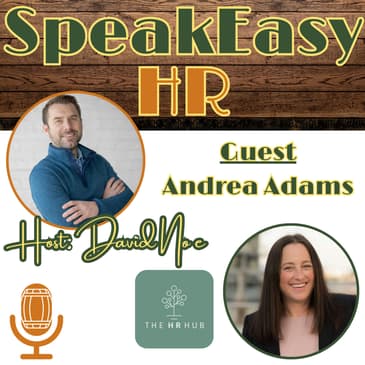
In this upcoming episode, we’re joined by Andrea Adams, founder of The HR Hub and host of Canada’s largest HR-focused YouTube channel. With more than 20 years of HR experience, Andrea has worked with organizations through some of their most challenging workplace moments — and she’s learned that many of those crises are preventable when leaders focus on the human side of work.
Our conversation centers on “Navigating Change Fatigue in the Workplace” — a topic impacting organizations everywhere as teams continue to adapt to constant shifts in leadership, technology, expectations, and workplace culture.
Andrea shares practical insights on why employees are feeling overwhelmed, how leaders can recognize the signs of change fatigue before it becomes burnout, and what organizations can do to create healthier, more sustainable workplaces. We also discuss the importance of communication, trust, and building systems that support people instead of exhausting them.
This episode is packed with thoughtful leadership advice for HR professionals, managers, and anyone trying to lead people well during times of uncertainty and change.
To find her work on YouTube: https://www.youtube.com/@andreaadamshr
Powered by the WRKdefined Podcast Network.
[00:01:04] What's going on everybody? David Noe with SpeakEasy HR presented by Payroll Partners. We are back with a brand new episode, brand new guest, my friend from in Canada, one of the best largest YouTube channels for HR joins me today. Andrea Adams with the HR Hub. How are you today Andrea? Andrea Adams I am great, thank you. I really like your intro. That's great. I'm going to have to take notes afterwards about some of the things you're doing. It's fun.
[00:01:34] David Noe Yeah, absolutely. It's a little catchy, a little jingle. David Noe Yeah, yeah, yeah. David Noe Gets you going on a Monday. We are live on LinkedIn and YouTube. If you are watching, have a question, chime in as we get into this topic that Andrea is bringing to the show. Andrea, for those who don't know you, maybe this is the first time they've heard you talk. Obviously, you have your YouTube channel, the HR Hub, so we'll get into that. But tell everybody about yourself.
[00:02:05] Andrea Hmm, where to start? No, I'm kidding. I'm well, I'm obviously an HR YouTuber. I've been doing that for five years. And I'm also an HR consultant, mostly to small and medium businesses. I do a lot of crisis HR, actually. So mass resignations, terminations, investigations,
[00:02:33] all that kind of thing. I think mostly just because I'm a good emotional, like it's stressful stuff. I'm a good partner in those circumstances. Yeah, that's about it. Otherwise, personally, I like biking and hiking and enjoying the Rockies, which I am close to. David Okay. All right. And you're in Calgary? Andrea Yes, Calgary. All right. All right. Very good. I haven't been to Calgary. I've been
[00:02:59] to Canada a few times, Toronto, Ontario and that area. But definitely. Andrea I am close to Banff. I think it's like our number two tourist destination in Canada. David Okay. All right. Well, it's great to have you on as we have connected over the past on or how many months, we both are part of the work to find podcast community. So you can find
[00:03:25] both of our podcasts out at work to find the great people over there. It's ever growing podcast community. So any, any kind of HR workplace, AI, payroll, there's all kinds of fun topics over at work to find. So check that out. So Andrea, what's along the way, this is a question I am asking everybody that comes on and it's about your, your career and advice you've been given. You know, in,
[00:03:54] in times where you felt like it was maybe good advice, but it turned out to be amazing advice. So what's been the best piece of advice you've ever received in your career? Andrea Find a place you fit. Yeah. Yeah. Andrea Because if you fit, if you find a place you fit, there's that flow is there that,
[00:04:19] you know, the sort of the intellectual connection to what you're doing is there. Things go easy. Andrea Find a place you fit. And they go easier. And, and you can focus on adding that extra level of value. And when you don't fit, everything feels awkward. It's hard. I am also going to recognize that I've learned that lesson the hard way. And a lot of us are going to learn that lesson the hard way. Andrea Find a place you've been given to me. Yep. Absolutely. You get one of these. Yay. Andrea Find a place. Awesome.
[00:04:49] One of a kind speakeasy HR mini horn. So keep those coming. And yeah, it great piece of advice there. I, I feel like as we get into this topic too, which is about navigating change fatigue in the workplace, when you fit, well, you can probably navigate that change a little better. So we'll get into that. Andrea Find a place. All right. Rapid fire questions. And then we're going to do the
[00:05:12] world famous envelope icebreaker game with you. It's fun. I promise rapid fire is change fatigue getting worse or are we just talking about it more? When, when we talk rapid fire, how much time do I have? What's rapid five seconds? Yes. It's getting worse. And there's evidence to say it is. Yes. What's the one sign in your opinion that a team doesn't have the foundation to absorb more
[00:05:42] change? If your engagement survey says that there's low trust in your organization. Yep. Trust or communication, which matters more when leading through constant change? Trust, because if you don't have trust, the communication is not going to be received. Yep. Are leaders underestimating how burned out employees actually are right now? Well, I can't speak for every leader, but generally
[00:06:10] speaking, probably yes, because of the, you know, some of the numbers are kind of shocking. Yeah. All right. Last one, one word. What do most organizations skip that makes change so hard? The foundation, trust, like building trust, paying attention to connection, just the foundations. We spend too much time on change management and not on the things that are going to make that stuff land.
[00:06:39] That was more than five seconds. That's all right. You still get one. You still get good. So, all right. So world famous. I think it's world famous. I don't know. Everyone else can say probably otherwise, but you know, this is a fun game. We're going to transition to this. Just think
[00:06:57] of a number one through 15 and give it to me in about 10 seconds after this here. All right. 11. I love it. Okay. She got number 11. Here we go. What is in the envelope? Drum roll. Okay. If you could
[00:07:23] swap jobs with any character from a TV show or movie for one day, who would it be and why? That hurts me. I don't watch TV. Movies? Or move. No. No. So I'll just have to think back to, oh God.
[00:07:51] I watched a dog movie with my daughter recently. Maybe I'd swap the dog with a hero. I'd swap places with the dog. There you go. There you go. It doesn't have to be a person. That's great. I love that. Well, good. Well, thanks for playing. I feel like I know you a little better. Everyone listening probably knows you a little better too. So grab a quick drink, just a few messages from our sponsor payroll partners. And then we're going to dive into it here with the topic on change and
[00:08:20] fatigue in the workplace. So hold on one second. Finding a new employee takes time and money. For one position on a single job board, you could easily spend a minimum of five to ten dollars a day advertising a job post. It's worth noting that the average time it takes to hire a new employee is 36 days. However, it can take longer than that. You could find yourself paying hundreds of dollars a month for a single job board. And if you're using multiple job boards for multiple positions,
[00:08:47] this could add up to thousands of dollars a month. There is a much simpler and more affordable way of finding the right candidate. At Payroll Partners, we offer an applicant tracking system to help manage your hiring process. Our ATS is customizable, allowing you to decide which days you want to run the job and when to close it so you don't break the bank. And this feature lets you e-blast your network, hosting jobs on multiple boards at once, all managed in one location. Payroll Partners,
[00:09:16] elevating your payroll and HR experience. Uh oh, I'm on mute. Sorry. There we go. Much better. Transitioned right or not. It's okay. Anyway, if you are in the business of payroll and HR for your organization, and that's part of your focus, we have solutions that might be beyond what you have now.
[00:09:41] If you have bad service, bad experience, there's so many different technologies out there. We love to customize it. We love to make it easier on the company, no matter if you have two employees or 2,000. So look us up. Look me up on LinkedIn. PayrollPartners.net would love to work with you and your business. So, all right. Well, top shelf topic. Ooh, it needs to slow down. My goodness. Why is it going so fast?
[00:10:08] There we go. Okay. I saw this thing. I'll tell you what. All right. So as the ticker says, top shelf topic that Andrea brought today and you've been in HR for a few years. So you've, you just a few, just a handful. And so you've been doing this HR hub for five plus years. You're, you're, you're working through change management for, for organizations in a lot of times things that they just don't know how to, how to
[00:10:35] navigate through. And so when I, when I talked to you and connected with you about coming on Speakeasy HR, I was, I was trying to figure out exactly what you wanted to talk about. And, and I think your background and what you have done and what you've been exposed to, I think fits so well with, with this. So navigating change fatigue in the workplace, every company goes through change. It could be big or small,
[00:10:58] depending on the situation. Um, so what made you want to talk about this? What patterns are you seeing currently? Yeah. So it's sort of come to me like from two different angles. It's come to me from the YouTube channel. It's come to me from consulting and they're kind of meeting in the middle. So I have, like the, you said, I've been doing the channel for five years and, and it is shocking the number of
[00:11:26] times these foundational things are coming up, trust and connection. It's coming up over and over and in odd places. It comes up with compensation. I've done, you know, on mentoring, on burnout, on, uh, you know, I've done some directly on those topics as well. Like it's just coming up over and over. And honestly, like, are you seeing the same thing, trust and connection coming up? Like,
[00:11:55] yeah. And we're living in this, um, low trust world right now. And I, like, I hope it doesn't get worse. Well, I suppose it could. Um, and yet it's just, it, you know, having trust, it just makes everything so much easier. So it's coming up on the channel, but you know, it's also coming up as a, as a consultant. Like I had, um, you know, client, I helped hired me to help them with a bunch
[00:12:24] of employee relations problems they were having. And it, like, it was overwhelming that, you know, labor relations, trying to get unionized, um, you know, angry employees, policy abuse. And the way they were trying to address it was by having a party every Friday afternoon. And
[00:12:48] that's not, you know, you're ignoring these, you know, underlying issues. You're not going to build trust by a party. Um, and that's hardly the only one when I think about all the clients, you know, and I've had, you know, let's say 50. Um, and I think about all the clients I've had, I've had two or three where it really felt like trust was present with those clients. And, um, but when it is,
[00:13:12] everything goes easier and, and then you layer in on top, you know, the pace of change and, you know, the ones that are going to succeed, I think are the ones where there's trust and connection factors in there too, but trust is just so important. Yeah, definitely. Definitely. I, I, I see that with companies we work with and, you know, you can get payroll anywhere. You can look up and just research
[00:13:41] and find payroll companies out there to do your, your payroll processing. But when it comes down to, do you trust that company? Same with employees. Do you trust the company you work for and the, the future of the company? And if not, you probably are going to lose those employees. So I, I, I definitely agree with you on that. Trust and connection is huge. So, um, so what are the pressures on organizations right now that, that make this different than all the change that has gone on
[00:14:09] before? Yeah, I think this is such a good question because like since, ever since I got out of university, uh, we've been talking about the pace of change. I'm sure you're there with me. Like, and it's like, and the ever increasing pace of change and it's a cliche and it's just kind of like tiresome, but I do actually, and here I am here. I find myself, I'm on the other side.
[00:14:34] Now I'm talking about the pace of change, but it's coming at us from so many angles. Like when I started working, it was like one major, you know, technical implementation, you know, over two years and then you're done right now. Like that's so not what we're experiencing right now. And so there's this three kinds of change I think we're dealing with right now that make this time unusual. We've got, um,
[00:15:01] we've got technical change obviously with AI and, and then that is so profound when we think of, when we truly start thinking about it because it's happening at the task level. It doesn't happen like, you know, a systems implementation where, you know, everybody has a different role within the system, but it's still the same system. And once you take the old one away, they have no choice but to comply. Right. Um, it's happening at the task level and it's different for different
[00:15:29] jobs. So that's really, that has a really profound implications around change and the pace of it, because every six months we've got, you know, an almost a new entire generation of AI. And so that is creating it's more change. And, you know, I speak from some experience, my husband's an AI consultant and, uh, it's, you know, I liken it to popcorn. Every time you turn around, there is a new AI solution.
[00:15:55] Right. Uh, so that's one. And then you've got, um, the pace of cultural change. It's also, you know, I think that's really unusual. Uh, the pace of cultural change is sort of, it's fueled by, I think, social media, which means the ideas can propagate really fast. And then you've got, uh, it's also fueled by, um, the polarization that's present. It's present in, in Canada. I think
[00:16:26] maybe not to the same degree that I think it's present in the U S but it really influences. So like take for example, DEI, that's a pretty polarized topic where there's some people for it, there's some people against it. And so it came in like a, you know, like a tidal wave and we all got on board and we changed our systems and we did all this stuff. And you know, in many cases, me included, we really bought in and we believe in the ideas of it, but then
[00:16:55] all of a sudden we're being asked to remove it. And that's a, I mean, that's, that's an emotional shift for so many people, for a lot of people. I know that, that there is almost a level of grief attached to that because they had so bought into the ideas and, uh, but we're being asked to take it out even faster in some cases than, than it went in. And that's just an example of the kind of cultural change. There's, there's others too. Uh, you know, you can think
[00:17:24] about ESG, maybe even the focus on climate change. I suspect climate change might come back, but, um, you know, so there's lots of cultural change. And then on top of that, right now we're experiencing a lot of economic change. Economic systems seem to be changing, creating uncertainty and, and that creates the need for organizations to respond quickly. And so we've got all of this change
[00:17:53] and employees having to absorb it, having to buy in, having to make it happen. That's hard. Yeah. That was just, you know, that's hard. And that, and that all of that coming together at once, uh, and, and getting faster. I think that is what makes the current situation different than it probably has been in the past. Yeah. So how much of the change fatigue, change fatigue we are seen
[00:18:19] is related to trust. And that was one thing that you brought up before. Uh, I, I think a lot that's, I think a lot. Do I have data to support this? I don't know. Maybe not, but think about yourself. Like if you're in a situation where you trust the people that are making decisions, you're not going to be as anxious. You're not going to, you're not going to be worried.
[00:18:45] You're going to be less stressed, you know? Yes, there's change, but if, if you trust the people making the decisions, it's going to feel better. Uh, and the level of emotional effort that you're putting in or wasting because you're so worried is just, it's going to be lower and change fatigue is all of, I think all about that emotional experience of
[00:19:11] change. And if we can take the emotional experience down by building trust into our organizations, they have, those employees have more time to focus on what we, you know, actually want them to focus on, which is, you know, you know, bringing that AI on board and, you know, making it a true partner, um, or, you know, whatever else the change is. Uh, I just think, I think the two go hand in hand
[00:19:36] and there's no getting around it. Right. You know, if you want to reduce the change, the level of change fatigue, which I think we should want to reduce because if people aren't so tired by it, they can take it on board, integrate it, move faster. Like, I think we should be interested in reducing the level of fatigue employees are experiencing right now. Yeah. So what does trust in a real organization
[00:20:01] look like in your experience? And I say that with new hires coming in, but also your current workforce and, and how you can really keep that momentum going so that it's easier when there's change happening. So how does, how does trust in a real organization look like? Have you worked in an organization with lots of trust? That's putting you on the spot, isn't it?
[00:20:27] Okay. Nevermind. Um, you know, so I said, I haven't consulted to too many organizations where there was a lot of trust present. Uh, but in the ones that was, it wasn't that they didn't have conflict. It was, and that they didn't have difficult stuff. It's that the tenor of it was just like, Ooh, down. Um, you know, instead of, you know, a change announcement causing, you know,
[00:20:57] you think about the change curve, right? You know, you go up and there's the, you know, the questions and the anxiety, and then you come down and you have got the adoption. It's like that, you know, in organizations without much trust, the change curve is really high, but in organizations with more trust, it's lower. Yeah. You know, it, it just, you know, people are still anxious. They
[00:21:20] still worry. Um, but they, it's just not the same degree. Everything is just taken down, uh, a huge notch. Um, and in the organizations where I have seen it happen, you know, leaders were genuine, genuinely interested in what their employees thought there. There's a genuine sense of transparency.
[00:21:45] I mean, we talk about transparency a lot when we talk about trust and, um, but there's genuine transparency. So I, like one example was a leader who's, you know, and sometimes decisions have to be made fast. So he's trying to make a fast decision, but he would take it, you know, decisions to his leadership team. And he would say, um, you know, 90% of this decision is made. Help me with that last 10%. This is what I'm thinking.
[00:22:13] You know, this is where I'm at. This is the part you get to shape. What do you think? So that was one approach I saw that, that worked, um, at another organization, the leader really consulted. So they had really open meetings and, and there really was two, two way communication happening. So she would share an idea and employees that, which takes a level of psychological safety, which we need, you know, is part of this too. I mean, it's this complex kind of
[00:22:42] intermingling. Anyways, she would consult with employees and, and they would tell her. And so, yes, you know, and, and I think there's a reluctance to consult with the employees because we think it's going to slow the process down. And I'll be honest, it does. It slows the process down if we're going to, if we are going to, uh, engage with employees. But what we don't talk about enough
[00:23:08] is that it expedites the part after. So yes, you go slow at first to get that, you know, some of those core foundations and decision-making, but you go slow to go fast, you go slow to consult the employees. But once that trust is there, you know, they, they know what the direction is, then you can move fast. And I've, you know, and I've seen it, I've seen it happen where, you know, put new policies into
[00:23:35] place and there's no, you know, people are not suspicious. Uh, there's take it, they take it on board and go. Um, so. If you've ever listened to a business podcast and thought this sounds good, but no one actually talks like this behind closed doors. You're not wrong. On the leader book AI podcast, we talk about the conversations leaders actually have after the board meeting, after the AI
[00:24:02] rollout that doesn't quite land. I'm Felicia Shakuba and I interview CEOs, investors, and operators about what really drives performance. If you want that level of honesty, subscribe to the leader book AI podcast. It's just, yeah, it's probably the easiest way to say is that the tenor, the tone of everything just comes down, you know, 25, 30 degrees. It's, it's, it's all, everything just feels easier.
[00:24:31] Yeah. Is there a situation that stands out to you and your work that you saw a transformation of the company and how you kind of played a part in that when it comes to the employees trust level? Yeah. Cause at some point I'm sure your clients figure out like something's wrong. We've got a, we've got to phone a friend, we've got to phone Andrea and figure out like how we can,
[00:24:56] how we can get to a better place. And so, you know, what, what primarily was, was that situation when it comes to that? Like where, where did that process go with, with that company? Does, does any company stand out that you worked with and, you know, just the overall, I guess, situation and like, was it just a change in leadership? Was it the change in communication
[00:25:23] styles? Like what generally changed in that situation to build that trust? Usually when you get a change in leadership, trust takes a little bit of a nosedive. Uh, so it's important for that, you know, a new leader to take steps to build or maintain trust. Uh, I have seen it happen and, um,
[00:25:52] there was a, you know, and like I said, I get involved at times of tension crisis. So I got involved in, um, the termination of a particular leader and I mean, it was, it was ugly, like employees going to occupational health and safety anonymously because they didn't trust what would happen if they reported internally. Um, anonymous complaints getting filed that was a not-for-profit getting filed to the board,
[00:26:22] uh, because they again didn't trust what would happen even at the board level if they shared their names. Um, allegations of, you know, minor violence, uh, indefinitely harassment. Um, but the lack of trust also meant that there were lots of people who were supposed to be talking and weren't talking. So there were financial problems of financial mismanagement
[00:26:52] that nobody, you know, that, that you had to just discover because, um, because nobody's telling anybody about it because there's so little trust. It was really bad. Um, in the end that person ended up being let go and was placed and, you know, to the best of my knowledge,
[00:27:17] like the, the change and I was part of that. So, but, and I've just been following along and, you know, keeping, keeping the pulse sort of, and, um, it's remarkable the difference, uh, the, the trust building, the predictability, there's so much work to do and, and it is, trust is so easy to erode and so hard to build.
[00:27:43] Right. And so this new leader, you know, she's got her work cut out for her for sure, but, uh, she's doing a great job and it's really coming along. So I'm, uh, yeah, pleased by that. That's an, that's an example. Yeah, definitely. Uh, Albert's watching live. Thanks, uh, Albert. Greetings to everyone who was listening. Good topic for discussion today. Yeah. I mean, this is something that every,
[00:28:10] every organization has to face. And I, and I feel like when you have good retention of clients, when you have good retention of employees, it means a lot of your people trust you. Right. So I kind of look at anytime I'm in an HR role and my job is to hire, retain, train people, that retention level isn't high. Something's wrong. And if there's, that is, that is true.
[00:28:37] You know, it could be the, it could be the middle management, right? People couldn't trust the middle manager, people that they have to report to if they don't respect them. And let's face it. Now you've got however many generations working together. Five apparently. That plays a little bit of a, of a change, right? You have people coming into the workforce for the first time. And what do they expect out of a company as opposed to somebody that's been working for 25 years? So
[00:29:03] those expectations are going to be different. So, um, you talked about trust earlier, you talked about connection. So let's talk about connection. So what, what role does connection at work play in whether people can actually absorb ongoing change? This one, I think is just so interesting. Uh, I, you know, like intellectually interesting and also,
[00:29:31] I don't know, maybe validating anyways. Um, I think often think about this Harvard's longitudinal study of people in it. I, like, I don't have, I'm not good at remembering details of stuff, but they've been serving these, the same group of people for a really long time. And the people that are healthiest and living longest are the ones that were our most connected, that they have close
[00:29:56] connections in their lives and connection builds health. And, but, but it also is a buffer for things like burnout. Like if you feel connected, if you've got that bestie at work, like you just feel like you feel safer, there's somebody you can talk to when you're having a bad day, there's somebody that's, you know, it's going to sort of hear you out or, or make a crack a joke and make you laugh
[00:30:26] and like give you, you know, share a perspective with you. Uh, so it's connected with health and change fatigue is connected with not being healthy. And so if we want to give people more of a buffer, more of a, like their will to be deeper, we want them to have connections at work. Um, that's just
[00:30:51] more resilience to draw upon. And it, yeah, that's another top, that's another place it's come up is resilience. Cause I have had that conversation too. And it's come up in conversations about resilience. Gallup has been telling us for decades that connection at work matters. They've been, um, one of their top 12 questions is, do you have a best friend at work? And they keep asking the
[00:31:17] question because it matters. It matters a lot. If, um, they're, if people are not engaged, no, sorry, if they don't have a connection at work, their chances of being engaged is only one in 12. Uh, so it's, you know, it's just, I think it's the secret sauce that we just need to build more connection and we go such a long way to solving so many problems too. If we did, you know, I talk
[00:31:43] about polarization, if we could just help people be connected and see that everybody has something to contribute and, and a valid point of view, it would just go such a long way. I think connection is, yeah, amazing. Yeah, definitely. Um, we are live on LinkedIn and YouTube. If you have questions watching live, throw them in the chat, would love to hear from you. We have a few more here with, uh,
[00:32:11] with Andrea Adams. She's the owner and senior HR consultant for the HR hub. You can check more out at the HR Hub.ca or her YouTube channel, which is amazing. I've been catching some of that and it's, it's awesome. Appreciate all you're doing on, on YouTube. So, okay. So what does a workplace that's coping well with compounding change look like? Well, it sort of goes along with all I've
[00:32:38] been saying. They've done this fundamental work. They are doing the things that it takes to build and maintain trust. Interestingly though, they are also helping their employees form connections. And before we all give up and say, well, it's a, you know, an employee's job to build connections. Okay. Yes, that is true. We can't force it on them, but there is actually lots of science out there
[00:33:06] that, you know, we could help them do it. We could make those opportunities for them to build connections. Uh, and they're not even that expensive. There's, you know, I talked to Ryan Jenkins. I'm not going to take credit for any of this, um, on the channel this winter. And he has a tool that based on dating, uh, and, and so people go in and they, you know, fill out the survey and
[00:33:35] then they get matched and they're using dating research. Of course, we don't want that kind of, like, I don't want to encourage that kind of thing. I know when obviously it happens, but oh my God, it also the drama anyways, but friendships, we can encourage friendships. We know how to encourage dating. Why not encourage friendships? Uh, and you know, so there's that we could just build a nicer lunch room. Yep. Like something that's more inviting. There are just lots of like really
[00:34:04] inexpensive things we can do that help our employees build connection. So they've got that one person. Yeah. Uh, you know, I talked to somebody else who's got a tool for conversation for creating conversation amongst teams. So it's got lots of benefits, you know, team performance, um, collaboration, but it also, also is going to build trust and it's also going to build more
[00:34:27] connection. There's so much we can, we can do that is not expensive. Um, and that potentially has a lot of value to the organization in terms of all of these things, these qualities we want in our organization. So, um, so, but you know, that doesn't really answer your question of does, you know, what is an organization dealing with compounding change, you know, what do they look like?
[00:34:58] Happier people, less drama, uh, less contempt. That's one of my favorites because there's so much contempt and cynicism. So less, so less, um, contempt and cynicism in our organization forgiveness. It's all kind of like your basics or chicken noodle soup kind of stuff.
[00:35:25] But isn't that where we want to meet? Um, and it's not to say that they are perfect by any stretch, like that does not happen, but better. We can do better. HR can help create better. And, um, and I think for, you know, the path to better is, is it starts with trust, you know, connections. Great. Do those things and set yourself up for easier change.
[00:35:53] My guests next Monday, the topic is just a spoiler alert. If you haven't seen it, it's how to squash the Sunday scaries. So yes, yes. A very good segue from this. Yes. So yes, it's going to do that. Who would you definitely be more excited to go to work if you know that, you know, your work best friend is going to be there or you got, you know, you are having positive experiences there.
[00:36:20] You spend a lot of time with the people you work with more than your family. Yes, you sure do. So yeah. Um, okay. So what practical steps can HR leaders take that don't require a big budget or a formal program that you haven't talked about yet? Yeah, it's a little bit, um, I know HR, we are, we, we influence. So it's how do we use,
[00:36:46] build and use the influence we have. And so we have to educate ourselves. So I wouldn't encourage, uh, HR leaders to read, um, Charles Feltman's book, the thin book of trust. Uh, he talks about four principles of trust in there. Um, let me remember them, reliability, sincerity, competence,
[00:37:13] and care. These are the four dimensions of trust. And when we are mindful of those four dimensions of trust, we can work to build them. We can also work, uh, you know, use our influence with senior leadership when, when, uh, we have that opportunity, mindful that your audience is probably a lot of different levels with differing levels of influence. Um, but you know, if you've got a client you want to
[00:37:42] build trust with, you can say something like, I want there to be trust between us. What does that look like for you? I mean, that is brave, but who doesn't want that? I mean, maybe you're going to get that super cynical leader who like reigns on your parade, but good for you for trying if they do that. And they're a jerk. It says more about them than it does about you. Um, so, you know, so there's that,
[00:38:11] uh, around connection again, like, you know, use your sense about where this fits, but also, um, instead of next time, if you yourself want to build connection, go to somebody and say, can you help me rather than asking AI? Like that's something that's going to build a connection.
[00:38:34] People want to be helpful. Uh, most people, most people, so that's something, that's something you can do. And if you have, um, a budget, there's lots you can do lots of so much. Um, there's systems to encourage conversation. And I've talked to somebody out on my show who was doing that. There's, um, you know, I talked about connection. There's that there's workshops. There's just, uh,
[00:39:03] so much. It is important, of course, and I surely acknowledge that it's important to, um, work with leaders and align along business direction. All of the, all of the stuff we're doing is to create an effective organization that can execute well on the business objectives and building trust and connection is, would be there to do that as well. So how does that,
[00:39:31] so how does it fit and match? Um, all of this is just, it has to all come together. Absolutely. Got to give me that again. Hey, all right. Last question for you, Andrea, if you could give one piece of advice to HR leaders managing this all right now, uh, with change and culture and having influence and connection and trust and, and all of that, uh, what would one piece of advice be that you could give them and
[00:40:01] give them up to, uh, to work on? Uh, I think I did actually a lot in my last example, uh, or my last question, um, read, read Charles Feltman's book, uh, model what we want to see, use your influence where you have it. I like to plants. I like to plant seeds. Sometimes those seeds take a long time to bear fruit,
[00:40:28] but you know, talk about trust, talk about connection. Don't skip including the connection question when you're developing your, your, uh, engagement survey, rolling that out, like do, do it, do all of that. Um, and, uh, as you get more influence, use it. Absolutely. All, all in the interest of creating business value, of course.
[00:40:53] Yeah, definitely. So if you're not following the HR hub on YouTube, shame on you. You should be out there following this. She has amazing content out there beyond the HR hub podcast, which you can find on work to find.com and obviously her website, uh, the HR hub dot T or dot CA. So, um, definitely go out
[00:41:17] there, check out her work. And again, if, if there's something that she offers to businesses that fit what you're looking to, to get some help with, look her up and connect with her. So, uh, Andrea, this has been awesome. I really appreciate you coming on SpeakEasy HR. I've been looking forward to this topic and connecting with you. And, and so hopefully we'll connect again soon, but, uh, appreciate all the insight and sharing that you did today. I hope everyone learned a little bit
[00:41:45] like me, I'm going to go back and definitely rewatch and learn more and, uh, check out that book that you had mentioned for sure. So, uh, appreciate your time today. Okay. Well, thank you, David. Thank you for having me on. Appreciate that. Absolutely. Everyone have a great rest of your Monday. And, uh, again, check out the next upcoming episodes. Got a lot of episodes planned out through the year, so it's going to get hot this summer, but we're going to have some really, uh, hot takes and hot topics to, uh, to bring you. So thanks everybody. Have a great day. Talk to you
[00:42:15] later. Bye-bye.
Sponsors
