
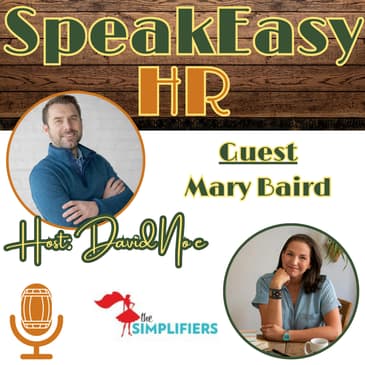
What if the problem isn’t Monday… but the culture we’ve created around work?
In this episode, I sit down with Mary Baird — Employee Experience strategist, leadership expert, and author of Squash the Sunday Scaries — to unpack why so many professionals feel anxious, burned out, and disconnected before the workweek even begins.
We dive into:
1. Why trust is disappearing in the workplace
2. The hidden causes of burnout and disengagement
3. How leaders can rebuild culture and connection
4. Practical ways to improve employee experience immediately
5. The future of AI, leadership, and workplace wellbeing
If you’ve ever felt drained on Sunday night, struggled with burnout, or wanted to build a healthier workplace culture — this episode is for you.
Honest conversation. Practical insights. Real solutions for the modern workforce. Websitehttp://www.thesimplifiers.com
Powered by the WRKdefined Podcast Network.
[00:01:01] Hey, what's going on everybody? David Noe with SpeakEasy HR presented by Payroll Partners. I don't know if that intro went the whole way through, but hopefully it did. Anyway, I am thrilled to have a brand new episode, brand new guest, and episode 75 of this podcast is crazy to think about, but I am thrilled to have on the show today, Mary Baird,
[00:01:28] founder and principal consultants with The Simplifiers. Welcome, Mary. How are you today? Mary Baird, I'm great. Thank you so much for having me. David Noe, Absolutely. We've been talking now for a few months about this topic and what you're bringing to the podcast and your book that you've written, so we have a lot to dive into. We do have a contest for people watching live, and it's going to be a 24-hour contest. So if you are watching live
[00:01:58] or you're catching this on demand, all you have to do is put the word simple in the comment section and you will get into a drawing for a signed copy of Mary's book, How to Squash the Sunday Scaries. So again, you have 24 hours to put that word in the comment section and you will be in the drawing and we'll announce the winner and connect with them. So definitely do that if you are watching. So we are
[00:02:26] live on LinkedIn and YouTube and definitely have really a lot to get into with this topic. And I want to learn a little bit more about your background, Mary, because I'm intrigued to hear about it as I've started looking at your profile. So you are a Texas grad. Mary Baird That's right. Go Longhorns. David Noe Okay. So tell us a little bit about your background and education and where you've gone with that and then now the simplifier. So kind of explain that a little bit too.
[00:02:56] Mary Baird Yeah, I did my whole career backwards, David, which is really interesting and I think has helped inform who I am and the work that I do in the world right now. So right now, the work I do is, well, yes, I wrote a book called Squash the Sunday Scaries, but I'm an employee experience strategist and that people engage with me in three different ways. I'm a keynote speaker, so they have me bring in and speak at their conferences and events. I am
[00:03:23] a workshop facilitator where companies will bring me in to train their HR teams and their people managers. And finally, I am a consultant. So if you really want somebody to run alongside you as you are doing your employee listening engagement surveys, as you're really trying to rebuild trust in the workplace, that's the work that I do. So how I did it all backwards is that in the beginning,
[00:03:49] I actually started a company called The Simplifiers back in 2003. So, you know, just a few years after graduating from UT Austin and the first 11 years of that agency was as an event planning organization. So I worked with pretty large corporate clients, Google, Facebook, Intel, Microsoft to help produce
[00:04:14] the first two iterations of TEDx Austin way, way, way back in the day. And as an event planner, I was really finding that my niche was large scale corporate events that were really around the world of employee engagement. So awards programs, strategic offsite retreats for clients, all hands meetings, things like that. And we really, you know, in Austin, we were known as the agency that specializes in
[00:04:44] non-traditional events. So things that were, you know, not a boring meeting room with like boring meeting room sandwiches and, you know, all the things we brought something different. And I think, you know, being an event planner for 11 years really informed a lot of things about, you know, what works in the world of employee engagement and what doesn't. From there, I actually took the
[00:05:09] company, sold off the event side of the business and took the simplifiers overseas to England. So from 2014 to 2020, I was in England and really pivoted the company into leadership development. So that's really where people were starting to say, Hey, Mary, teach me how to do this. So they would bring me in to teach their teams or do executive coaching and working at the C-suite level. Again, running alongside
[00:05:36] companies and understanding what's broken and how do we fix it? And then, you know, the backwards part is then when I got back here to the States, did a move in the pandemic, zero stars, do not recommend. That was terrible, but did it, survived it. And, you know, all the things, but after I moved back here, I was like, I really wonder what it's like to work inside the belly of the beast. And so be inside
[00:06:04] corporate rather than running alongside my clients. And so that's where I had gotten the opportunity to work at a couple of very large organizations, including one was Samsung and another one was called Optimum. And I was doing either leadership development, training strategy, architecture, or actually more specifically employee experience work. And so, yeah, I've, I'm done working inside the
[00:06:31] beast. I would much rather run alongside you guys out there doing the hard work and sweat and blood and tears. And I think that again, it makes me a better consultant and, and teacher as now. Yeah, absolutely. Well, got to give you a little, uh, mini air horn to that. That was great. So appreciate you sharing all of, all of that. And then the simplifiers podcast. So tell us about,
[00:06:54] you've been doing that for a little bit now. Yeah. So I, you know, even before 2003, my early, early career days were actually working in commercial radio. I've worked in almost every single job at a radio station and, um, you know, including being an on-air DJ. Uh, this was very early days and, uh, you know, just to get the opportunity to do a podcast, I had been wanting
[00:07:19] to do it for years and years and years, and then finally just took the leap in 2018. Um, so yeah, the simplifiers podcast has been around. We're now in season nine. We have over 400 episodes, uh, where we've interviewed really smart people all over the world who can simplify one topic, either in work or in life. And right now we're super hyper-focused on topics as they relate to leadership
[00:07:43] and culture strategy. Um, and so that's where we're at. That is awesome. Thanks. What is your best memory or story about working in the, in the radio business? Yeah. I mean in radio. So here's the thing. Uh, I was a radio DJ in the late nineties, early two thousands. Okay. And so it's a whole different world where, uh, people would know my voice, but not know what I look like. And so I could
[00:08:11] sort of, you know, be in Austin, Texas in anonymity almost, you know, until I showed up at a, you know, like a radio station promotion. So I always think it's funny because people recognize my voice before they recognize my face and that's just sort of stayed with me, um, for 20 plus years. Uh, when people say now like, Oh my God, I've heard about this podcast. Your voice sounds so familiar. It's
[00:08:35] so soothing. I'm like, Oh, well that's, that's just me. Yeah. Yeah. That is great. Well, thanks for sharing all of that. I, I love to hear about someone's background and kind of where they've gone in their journey. And, uh, so we, we do have the contest for those of you watching live or the recording up until two, two o'clock tomorrow, we're going to have 24 hours of this contest and we're
[00:09:02] going to see who is in that. So we have, um, I see Tori on LinkedIn. She put in the word simple. So we also have Albert, uh, good day, wonderful talk. So welcome, uh, Albert, make sure you put that, uh, word in the comment section to be in the drawing. So for those of you who are new to this podcast, my name is David Noe. I have hosted this since the beginning. I also have some great content
[00:09:30] on the website, speakeasyhr.com brand new blog out was, uh, on the HR trends leaders should be focused on this summer. So check out those five HR trends at speakeasyhr.com. We are a part of a brand new TV show channel, uh, called the HR channel on Roku and Amazon fire. So if you're one of those smart TV kind of people and want to watch some HR, uh, podcasts, go out to the HR channel and,
[00:10:00] and check that out. And then obviously work defined, that's a way to find all of the podcasts out there. So, all right, Mary, biggest piece of advice you have ever received in your career is. Mm. Um, I've had a couple of really incredible bosses over my entire career and I've had a couple
[00:10:22] of real stinkers. Let's just say that, uh, my goodness. And I do think back on one of those bosses, uh, his name is Dennis Coleman and he is this incredible human who, you know, you remember way, way, way back in the day when, you know, there's sort of the funny saying of like, what would Jesus do or something like that? You know, there would be a saying in our office of what would
[00:10:45] Dennis Coleman do? And, and, you know, this is it. He is a person who leads with kindness. Um, um, there is always time for him to hear you and to really, you always left his office feeling heard and understood, which doesn't mean that he always agreed with, you know, your ideas or what you were trying to, you know, create or an idea that you were trying to pitch across. But that goes a long
[00:11:12] way. When you feel heard and understood, man, I feel like I can trust you and I respect you as my leader. And so that has informed a lot of who I am as a people manager, um, over the years and how I teach employee experience, because it all starts with employee listening first. You know, you actually have to listen to your workforce and, and ask them like, Hey, what's broken here? Like, no, really
[00:11:40] what's broken here. And then when you listen and they're on and they feel understood and actually heard and you do something about it, that's where you build that trust and respect. And that goes a long way. Absolutely. No, that's great. Thank you very much for sharing that. All right. So we have a fun game that I play on this. It is, uh, a, I think it's world famous, but it's probably close to the
[00:12:09] point of just being famous on this, on this show. So it's, it's an envelope icebreaker game and I'm going to transition to that, see if it works or not. And, uh, I'll see you here in one second. All right. I think it worked, right? Uh, all right. One through 15, pick a number and there's
[00:12:34] some fun questions in here. Uh, lucky number seven, please. Lucky number seven is, uh, dropping them. Here we go. Number seven. All right. Question is what's a TV show or movie you quote way too often? Oh gosh. Uh, this is embarrassing David. Um, probably labyrinth with David Bowie and Jennifer
[00:13:02] Connelly. Um, do you remember this movie from 1986? Uh, it's a Henson movie. There's a lot of puppets and I've heard of it. Yes. It used to be my all time favorite movie, but now I'm, you know, a little bit older. Uh, there are some problematic parts of it, but whatever, it's a great movie. Oh, that's awesome. I love it. Um, all right. So before we get into your, your topic,
[00:13:30] I've got a couple of fire rapid fire questions, and then we're going to get a couple of sponsor, uh, messages, and then we're going to dive into your topic all about the Sunday scary. So a couple of rapid fire questions. One word that defines great leadership. One word that defines great leadership. I'm going to say empathy. Yeah. I think I, I land there
[00:13:58] because there's a million words, you know, discernment, simplicity, um, courage. All of those things are incredibly important, but I truly believe empathy is the baseline foundation to a great leader. Somebody, again, this builds on the old, uh, story I told earlier about Dennis Coleman. If you can truly slow down and listen and not necessarily listen as a, like, Oh, bless your heart kind of thing,
[00:14:25] because that's not empathy. That's actually sympathy with an S. Um, but then put yourself in the other person's shoes. Uh, I think a great leader is somebody who can do that well. And also a great leader is somebody who can remove roadblocks so that you can do your work without any hitch, without any, um, conflicts and challenges. Your job is to remove roadblocks, advocate for the person, especially
[00:14:53] behind closed doors when, when they're not there and help them do the thing. Cool. Love that. All right. One, what, what's one thing people should stop doing at work immediately? Hmm. Uh, stupid meetings. That should have been an email. I mean, like that's, that's harsh, but you know what I'm talking about you guys. And this is the thing that I thought was so fascinating
[00:15:20] working again inside the belly of the beast as a consultant. I move fast. I make decisions fast. I, I, you know, create plans for my clients and I go, wait, why, why is it taking so much longer for them to execute this plan, this, that we've got in place. But once I got inside and realize all of the bureaucracy and red tape and meetings about meetings to prep for the big meetings so that we could rehearse
[00:15:48] for the, I was like, I can't believe it. This is crazy. Um, and so I think what I would recommend, if you are somebody who is in charge of a team, you know, actually stepping back and taking an audit of last week's stand, you know, standing meetings and things that we do last month, standing meetings and things that we do and really take a moment and go, wait, is this still serving us? Is this way of
[00:16:16] working the most efficient, the most productive, the most collaborative? Does it help us get to achieve the goals that we have set for this team and for this organization? And if no, then be brave enough to innovate, to say, you know what, we don't need a 30 minute standup call with a hundred people at 8am on Monday morning. That's an email with bullet points to, you know, quickly disseminate the information and, you know, do it a different way that feels more efficient.
[00:16:47] You're coming with the heat. I love it. All right. Last rapid fire question. Best way to reset after a stressful week. Hmm. Um, okay. So this is all about the Sunday scaries, right? So everybody has heard of this term. And if you haven't, let me explain it for you. Uh, it's hits about 8 42 PM on a Sunday night
[00:17:10] where it's that sort of like deep sense of dread and in your stomach and anxiety about the week ahead. So if you are in that cycle of having the Sunday scaries and then Monday comes, you're like, and then you just sort of barreling through the week, just trying to survive things, man, that is no way to live and no way to work. And so many people are caught in that, that trap and in
[00:17:35] that loop. So for me, yes, there's the short term solutions of like, go to yoga, go to strength training, lift something heavy at the gym. All of those things help, um, keeps your brain clear and your mind clear so that you can tackle the next day. But I almost say that there's gotta be a root cause to that. Something deeper that needs exploring again, auditing and innovating how we do things
[00:18:01] because it feels broken for so many. Yep. Yeah. And we're going to dive into that topic a little bit about the Sunday scaries and trying to help people navigate through that with, with everything that you've learned and have written a book about it. So again, um, if you are watching live comment in the, in the comment section with the word simple, and you'll be in a raffle for a signed copy of the
[00:18:26] book from Mary. So, uh, just a couple of words from our presenting sponsor payroll partners, and then we're going to get into it here. So hold on one second. Finding a new employee takes time and money for one position on a single job board. You could easily spend a minimum of five to $10 a day advertising a job post. It's worth noting that the average time it takes to hire a new employee is 36 days. However, it can take longer than that. You could find yourself paying hundreds of dollars
[00:18:54] a month for a single job board. And if you're using multiple job boards for multiple positions, this could add up to thousands of dollars a month. There is a much simpler and more affordable way of finding the right candidate at payroll partners. We offer an applicant tracking system to help manage your hiring process. Our ATS is customizable, allowing you to decide which days you want to run the job and when to close it. So you don't break the bank. And this feature lets you e-blast your
[00:19:21] network hosting jobs on multiple boards at once, all managed in one location. Payroll partners, elevating your payroll and HR experience. So if you are in the business of software and payroll and HR, and it's just not simple for you, it's not working, it's clunky, you're having bad service experience,
[00:19:47] all the things, all the pain points that you're potentially feeling day in, day out, and might have Sunday scaries because of the platforms that you use. Look me up on LinkedIn, look us up at payrollpartners.net. Would love to connect with you and just hear about your situation, see if we can help you along the way. So, all right, Mary, just like everybody that comes on here, I love to dive into a topic with them collectively and help them collaborate with me on what topic
[00:20:15] it's going to be what we're going to dive into. And so yours was a little bit easier to really define, I felt like. Some people are like, well, I've got all kinds of stuff I could bring in. So when I heard about the book and I heard about your work, I'm like, that is a great topic. So it's how to squash the Sunday scary. So you've talked a little bit about what they are initially. So why do you think so many people are experiencing them today?
[00:20:44] Yeah, I think it's an incredibly prevalent issue in corporate life. And let me just say, not just in America, I think corporate life globally, the work feels broken for so many people. And I'll be honest, David, I've been wanting to write a book for about five years now. And as a first time author, I was like, oh, I've got this idea. I've got this idea. And I kind of wrote
[00:21:09] a little and then sort of it stalled or whatever. But really, for me, having watched the trends over the last year of layoffs, I realized the market is at a really unique point. And I dare say a breaking point where a book like this is incredibly necessary right now for HR leaders, people managers, and even small business owners who don't have the experience or knowledge on how to rebuild trust
[00:21:38] and improve employee experience. Because here's the thing. Back in the day, my dad is 83. He had worked in big corporate over the years. He's definitely a boomer. And when he was still in the corporate America life, he worked at major corporations, got a corner office, stayed there for 30 years, got a gold watch upon retirement. You know, it felt very safe and secure. You show up,
[00:22:04] you do a great job, you get compensated and rewarded for it. And this is where you work. That's not the reality for the majority of people who work in corporate America. Now, you show up, you have insane demands, revenue targets that are bananas. And you know, there's no guarantee that you're going to have a job next day or next week, next quarter. Because layoffs seem to be the
[00:22:31] norm. And really, I think the timeline split somewhere right around 2019, at least it seemed like to me, because when the pandemic hit, of course, we all went home, shut down for safety, because we just didn't know what was happening. Right. And 2020 was a lot of, you know, hiring spree. 21 was a hiring spree, just butts in seats. I sign on bonuses. We just need people. Because if you remember,
[00:22:58] there was also the great resignation where people were like, no, I'm out. This, this is not the life for me. And so that's what caused this hiring spree. But then there was also, if you remember correctly, there was a huge supply chain issue. So a lot of companies did not hit their revenue targets in 2020 and 21 and 22. And so how did they correct? By going through round after round of layoffs, you know, and, and, but still having these incredible revenue targets because they're
[00:23:28] trying to catch up from missed revenue from years past. So layoffs in 22, 23, 24, 25, and even now 26. I mean, it's just incredible. Every single week you hear about a new company that's, that's done a layoff into it. The software company just laid off 17%, one, seven percent of their entire organization recently. And for a lot of these folks, they have been working there, you know,
[00:23:56] anywhere from eight to 10 years. That's their, their median range. And so even for those long time, you know, dedicated, loyal employees, there's still layoffs happening. So as an employee, how can you feel safe and secure if, you know, Hey, you survived this layoff? Well, Hey, I've got two jobs instead of one now, um, because they're not rehiring those positions, but then you feel like a survivor that's
[00:24:23] just like, well, when is it going to happen to me? You don't feel safe and secure. And so for me, yes, layoffs do balance a budget very quickly because let's face it, people are expensive. Payroll benefits are expensive, but they decimate the trust. And so I actually have a paradigm shift that I'd love to share with you guys. Let's do it. Okay. So here's the thought. So many companies really focus all of
[00:24:52] their resources, money, um, budgets, all the things towards customer experience. They go customer experience. If we can make that incredible, you know, then we will have, we'll hit our revenue targets and we'll, you know, not have to lay people off. But what happens is you focus all of your resources and budget and head count and all the things towards customer experiences. And you do that at the consequence of your employees. And that comes, you know, blink twice. If you guys are watching this
[00:25:21] and you're like, yep, this is me where your boss has said, you need to be always on or do whatever it takes or solve for yes. These are all great corporate jargon, nonsense things. And what that actually means is, Hey, I need you to work your buns off and, um, you know, burn out. What's that? We've got these insane revenue targets to hit. Um, and we're not thinking about the employee experience because you know, the people burn out, they, they, whatever, we'll just find more people
[00:25:51] or we'll lay them off and we'll do it again and again. And the cycle is not sustainable. So the new paradigm shift for you to consider is this better employee experience equals better customer experience, which equals better business results, hitting revenue targets, profit, all the things. So if you invest at the top of this chain by actually investing in better employee experiences,
[00:26:17] guess what? That you rebuild trust your, your employees go, Hey, these guys are actually care about me. You know what I'm going to do. I'm going to invest into a world-class customer experience. I'm going to give it my all today. I'm going to do whatever it takes. And that leads to better business results. I love that. So what are the biggest ways companies are unintentionally breaking the employee trust? Okay. So do we, we talked about employee listening, right? So if your company
[00:26:46] does any sort of employee engagement surveys or pulses, things like that, the number one way you can break trust when you do those, you're like, Oh, great. We're taking a box, right? We're asking them people questions and seeing how they like it working here. You take all that data and then you do nothing with it. In my opinion, it's like, you shouldn't even survey at all. If you're not ready to take action
[00:27:12] on what people tell you, either what they tell you that's positive about working here or negative, you are doing a disservice. You are silently telling them, Hey, your voice actually doesn't matter because we're just going to continue to run the business as is. So when you do schedule your employee engagement surveys, before you go to, to press send to your workforce, you have to make sure
[00:27:39] you have budget headcount resources allocated for what's next. So a survey that's done well is you said this, we did this and here's what's next. You have to have that open loop of conversations that closes at the end. Yep. Definitely. Yeah. I have, I have heard that so many times. It's like they're
[00:28:04] afraid to get the feedback and they're afraid to see what the results will be, but they're curious. And so they do it anyway. And then they, they don't do much that's in there as good, good recommendations. Right. So yeah. And you don't have to say yes to everything that somebody says in an employee survey. Like if they say, do you know what? I think we should only work three days a week and you know, the other two days a week, whatever. Um, which aside, uh, companies in,
[00:28:31] in Europe right now are testing on a very large scale of four day work week. And guess what you guys, uh, performance is up revenue targets are same or higher. I mean, so it is possible, but let's say somebody says, Oh, I only want to work three days a week, but pay me as a 40 hour employee. Um, you know that you could run the numbers on that. You could say a pressure test as a legitimate idea and go, you know what? Actually, no, that, that doesn't make sense for our organization
[00:28:57] currently at this stage. So you have to tell them and it's okay to say no, but you have to back it up and remember, this is going to sound dumb you guys, but I'm going to say it out loud. You've hired adults. So treat them like one, tell them, Hey, you know, we, we got your feedback on, you know, doing a three day work week and it just doesn't make sense for our organization right now. Here's why. And here's what we are considering right now as an alternative. And that, that's how you rebuild
[00:29:26] trust and respect, treat people like adults and tell them, you know, uh, rather than just staying radio silent, treat people like adults. If it was only that easy. I mean, yes, it, I think it actually is that simple. Um, it just takes, uh, it takes strong leadership to do so and be the role model of how you, how we operate here in the organization. Cause I think core values and
[00:29:53] guiding principles are not just, you know, fake letters that we put on the wall. Like, how do we make decisions here? How do we lead, uh, uh, you know, in this organization? Yep. So you've worked along these brands, Google, you know, Microsoft, and you said Samsung. So what's one common trait that these best practice, these best workplaces are all sharing
[00:30:16] that you've seen? Hmm. I think that what I have seen that, that is working the most is, um, you know, everything we just talked about and strong employee listening, strong investment in to your people, um, whether that's leadership development, you know, and, and that, I want to say this really quick. Leadership development is not just for, you know, senior directors plus
[00:30:43] leadership development should be at every level of your organization from bottle washer to CFO. Um, you need to give people the opportunity to have upskilling and learning opportunities, mentors, all of the things. And I think that one piece right there, if you can have a really strong framework behind how you do leadership development in your organization, I think people really appreciate
[00:31:13] that. And I'll give you one practical idea on how to do that. If you're like, well, yeah, yeah, yeah. We don't have Google money. We're a hundred person, small business. How does that work? It's very simple. Uh, and it's, it's detailed in the book as well. So the playbook's all there for you to copy paste and replicate. But, um, you know, these larger organizations have something called an IDP,
[00:31:35] an individual development plan. And in my opinion, it is not top down, um, orders. It is bottom up empowering. And what I mean by this is that, um, let's say the individual, the bottle washer at the very bottom rung of the org chart is really interested in becoming a better public speaker. Then you say, great, let's make that part of your IDP this year. And you individual, you drive this.
[00:32:04] So what things can you do to test and practice being a better public speaker in while you're at work, right? Maybe you can train the other new hires that are coming on board. Maybe you could do a voiceover and work with the learning and development team on a future training program. Maybe you could lead a lunch and learn, um, you know, at your, your local depot or your local office
[00:32:30] location. Have you ever wondered what really makes a generation tech who gets to pick the name and why the slang keeps changing? Don't worry. I can help. My name's Dr. Megan Grace on hashtag Gen Z. I show the voices and experiences of generation Z, how they're different from other generations, what moves them and why they do what they do. And each episode, we go beyond the buzzwords and the stereotypes to dive into real conversations and the insights that matter to making intergenerational collaboration a reality.
[00:32:58] You can catch hashtag Gen Z on the work defined podcast network and wherever you listen to podcasts. When you put the individual in charge of driving the IDP creation and obviously the completion of it, and then teach your managers, the person who is their boss, how to run alongside them as an accountability partner, man, it's a whole different dynamic change and really changes the conversation
[00:33:25] rather than, Hey, bottle washer, have you done this, this, this, and your compliance training yet? Uh, I just need you to fill out your IDP cause it's dumb paperwork, blah, blah, blah. You don't take that seriously versus, Hey, I want to invest in you in this year ahead and let's run alongside to help you complete that. I love that. And I, you, you had mentioned mentorship and you had mentioned, you know, those, those kinds of, uh, practices and framework. And I think that's that IDP is such a
[00:33:52] great, great idea. And it costs nothing, zero dollars that, that it's just putting the frameworks into place. Cause I think people start to think, Oh, I have to send people to conferences. I have to do this and that, and it's going to be really expensive. Zero dollars, zero dollars. And you kind of explain this next question that I was going to ask you about burnout and early signs, early warning signs, and maybe you have more to add to that. So when, when you have worked with
[00:34:21] businesses and individuals and managers and leaders, you know, what are some of the early signs that someone is kind of heading toward that burnout phase before they, you know, really realize it? Yeah. Um, there's a couple of things. Uh, you're going to start to notice, uh, emotional responses first, meaning, um, they're either short in their communication skills in a meeting or they're,
[00:34:47] they're very short in their conversation skills in a email. And you're like, Hmm, that tone is different than what I've seen before. You're going to notice the physical nonverbal signs of kind of exhaustion or feeling a little bit frazzled, showing up to meetings late, things like that. And then the kind of stage two is, is where they start to get like, I don't know, cynical, like, Oh, that's never going to work. Or, you know, they shoot down ideas and their, their,
[00:35:14] their brain feels very limited. Um, you know, remember Carol Dweck's, uh, uh, book about mindset. Do they have a fixed mindset or an open mindset? And when you're in stages of burnout, your brain starts to get fixed because it's starting to head into a place of panic. So we can't see the, Oh, wouldn't it be cool if we did this kind of ideas? It just starts to see the fear and the panic
[00:35:42] and shuts down as a coping mechanism, as a defense mechanism. So I think if you are starting to notice those signs in yourself, like, Oh, I'm more terse and curt in my tone of voice. And my physical body is starting to shut down. And my mindset is starting to turn cynical, then, ah, maybe something's up. But if you're same same thing, if you're a people manager and you're seeing these signs with your
[00:36:09] purse, your, your direct report, I just encourage you to not go straight to, uh, reprimand. Oh, let's put this person on a PIP because like a performance improvement plan, because they're just clearly not doing their job very well to like pause again, empathy and go, Hey David, how's it going? Do you want to go on a walk? Uh, like, let's just go for 10 minutes and, and, you know, talk about
[00:36:35] like life and everything. And, you know, is there anything as your boss, I can do more or less of to help you. That one question, man, I've taught so many people managers over the years and I've used it myself with teams. That one question has really changed dynamics entirely. What can I,
[00:36:57] as your boss do more or less of to help you that builds trust, real trust? Yep. Yeah. And that leads me to the next question about communication and the role that communication plays with reducing the stress and uncertainty inside organizations. So, so tell me about that and kind of what you've seen and what you have, um, suggested to companies when it comes to the role of communication,
[00:37:24] strong communication. Yeah. So here's the thing. I, I, a spoiler alert, everyone. I don't think, uh, layoffs are going anywhere anytime soon. I think if your company is one that's known to do round after round of layoffs, I don't think that's going to end. Even if they invested in, um, employee experience, even if they read the book and they're, they're incorporating this in. So if layoffs are, are part of how this ecosystem works in corporate life, as we know it now,
[00:37:52] I believe that the, with that paradigm shift and say, you know what, we are a company that invests in our employees and our employee experience. Um, and for however long you're with our organization, best, this is something that we believe in. We want to make sure that the employee experience is as good as it can be for you. And here's what I think about that. That's a lot more authentic and
[00:38:17] honest. If I was the employee, um, and my company said that and actually did it, that's, that's the big one, right? Don't, can't just say, Oh yeah, yeah. We're really into employee experience. Buy a couple of ping pong tables. Give me a couple of slices of pizza and be like, tick, we did it. Right. Um, no, that's not employee experience. Um, but if you, you say upfront, like while you're here for however long or short you're here, we are investing in you. That means something. And so
[00:38:45] when you lily pad off to the next job, either because you have found a better role somewhere else, or because we've had to do another round of layoffs, the time that you're here matters. And we, we want to take good care of you. So that's the communication that I would prefer as an employee versus like, everything's fine. It's great. Blah, blah, blah. Oops. Next week,
[00:39:09] there's a layoff that no one knew about that. That's not safe. Yep. I am with Mary Baird live on LinkedIn and YouTube founder and principal consultant of the simplifiers. If you are watching comment, simple and be in the drawing for a free signed copy of Mary's book, how to squash the Sunday scaries. So I don't feel like I can get through many conversations without talking about this next
[00:39:36] topic and it's AI rapidly changing the workplace and the future of the workplace. So how do you think AI will increase workplace anxiety or help reduce it? Yeah. So I think, uh, it's no surprise that AI is really making a significant shift in how corporate life operates. Um, and it's interesting cause like I actually teach, uh, HR teams and, and actually full organizations on the practical ways of
[00:40:05] using AI at work. So just recently taught a healthcare organization of 4,000 employees, um, how to utilize Microsoft copilot in a strategic and ethical way. So actually I'm, I'm pro AI, but I'm also pro human. And, and here's the thing is, you know, with AI, is AI going to take my job? No. People who know AI is going to take your job. That's the reality of where we are now.
[00:40:34] And I feel like as HR teams out there, we have to do a bit of rebranding about when we adopt AI at an enterprise level in our organizations, what this actually means. Because I think companies that are adopting AI and also doing layoffs in the name of AI are doing themselves a disservice by saying,
[00:40:57] well, this layoff is because of AI, um, efficiencies and, and all of that. AI is a tool to help your humans accelerate the work that they do. It helps drive performance. It does not replace the humans themselves in my opinion. So I don't know how you use it, David, but man, how I use AI, you know,
[00:41:21] things like chat, GPT, Claude, co-pilot, all of that now versus what, how I was using it 12 to 18 months ago is significantly different. And I look at it as a very trusty, very annoyingly smart executive assistant that does run alongside me. And so, you know, like say for example, you want to say, Hey, build me a project plan for, um, you know, this new software we're going to
[00:41:49] implement in our organization over the next 18 months. What are the major milestones that I need to look out for? You know, how do we pace the timing of it? What things happen concurrently or what things happen, you know, step-by-step. And then you put that into chat, GPT or wherever and boop, boop, boop, boop. It magically creates this incredibly detailed project plan. But then it goes, um, would you like me to build a SWOT analysis, a risk management plan? Would you like me to build a
[00:42:16] communications plan? Um, and so those are the things that you go, Oh, I hadn't even thought about that. And it helps you. And you say, yes, please. Because I'm always very friendly to the robots. I think that's important. Um, and it helps you again, up-level the work you are producing and accelerate that work to do it faster than say three years ago when you're like putting pen to paper and
[00:42:40] creating that project plan from absolute scratch. It's helping you accelerate to do the human work that you do best. That, uh, is discernment, emotional intelligence strategy. What do I do with all of this information next? Yeah. Yeah. I'm really curious how the workforce will look with individuals going into higher education, college and whatnot, and where the workplace will
[00:43:05] be in three, four years. And I would say this to anybody in the workforce that have been in the workforce for years, 10, 12, you know, plus years. If, if you get those Sunday scaries and you feel like your company might be going through a future layoff, you know, what are you going to do about it? You know, how are you going to build your personal brand? How are you going to do the things that other people you work with are not doing? And it could be just networking more. It could be getting a mentor,
[00:43:35] getting a group of mentors. I have a book behind me, pathfinders. It's all about building a board of, of advisors for yourself. Right? So being out and prepared and having an action plan, if you get that call or if you get that email and say, Hey, you know, your position's being eliminated. I talk to people all the time when I interview people and a lot of people are unemployed right now because they were laid off. So obviously they're in the job market. So again, there are so many
[00:44:04] things that people are potentially thinking about doing or using AI for, they're just either scared or not wanting to do it. So I just encourage you to, you know, get out of your comfort zone and really position yourself to be in an environment and situation that you can go out and find a job, you know, and, and really use your, your personal network to the, to your advantage. So, yeah. Yeah. And this is where I would recommend for anyone that's, that's listening to us that works
[00:44:31] in HR, find your local SHRM chapter, um, or HRCI chapter and, you know, really connect with your people face-to-face in person, because it's likely that your chapter is doing AI training in a practical way, not talking about it as a theory, but saying, Hey, here's how to use this tool. Um, I sit on the board of directors for Dallas HR, one of the, um, I think it's the third largest SHRM chapter in the
[00:44:57] U S um, go to Dallas HR.org. We are always doing incredibly practical training on AI, um, and both in-person and online virtual. Um, so, you know, these resources are out there to help you upskill on this. If you don't have that in-house at your organization yet. Absolutely. And disrupt HR,
[00:45:22] another thing, amazing group. Um, I'm on the planning team for this event coming up in July. It's sold out. We're a month out and it's already sold out. So if you are going to disrupt Northern Kentucky, let's, uh, let's connect. If not, hopefully we'll see at the next one, but a lot of different cities all over the country, all over the world with disrupt HR. So, um, all right, Mary, I'm going to leave you with this question and, uh, would love to hear your, your feedback on it.
[00:45:50] So for leaders listening today, what's one simple thing they could do this week to immediately improve the employee experience? Mm. So good. Um, so here's the thing. I know this about HR people is that you certainly are time poor. You have no time to read a whole stinking book, right? Right. So when I was writing this book, I actually wrote it as a choose your own adventure book. Do
[00:46:18] you remember those as a kid where it's like, Oh, does the hero want to climb the mountain, go to page 200? Does she want to go into the Valley, go to page 75? Right. You read this and, you know, one place and go to the other and go to another. Right. And that's was at the core of, you know, my favorite books as a kid. And for me, how we wrote this book is you start with employee listening first in the middle and you ask one question, literally one question pulse. And it's,
[00:46:47] what's broken at our organization? That's it. And you could ask the follow-up question of like, and how would you fix it? Period. You know, two questions, one of them optional, one of them required and see that what the feedback is that you get. And then from there you go off into one of the eight strategic levers to help improve the employee experience based on the feedback you're getting, whether it's, you know, Hey, we really need to improve the workplace experience, like our
[00:47:16] physical offices, or maybe we really need to focus on our new hire onboarding or our recognition programs, or maybe our digital employee experience, our payroll software looks like it's from 1986. And we need to really update it because it just drives people crazy. So that would be my one bit of advice. Start in the center. What's broken at our organization and how would you fix it? And people
[00:47:41] may not tell you the truth right out the gate, but what happens is you build trust by asking the question, you said this, we did this, here's what's next. And being able to take action, communicate what you've done. And then you ask again, what's broken here? You know, maybe three months down the line and they go, you know what, actually, this is what's broken here. You get the truth and then you're, you're cooking with gas, um, and really making an impact.
[00:48:10] Yeah, absolutely. I love that. Well, um, for those of you who are not checking out Mary's work yet, I highly encourage you to go to the simplifiers website, see all her work, check out her book, how to squash the Sunday scaries is really a thing. And I'm sure a lot of people listening to this have felt it. If you haven't, I'm sure, you know, somebody that has, you sit around on a Sunday night,
[00:48:38] talk to your family and you're like, Oh, I gotta go to work tomorrow. I gotta do this project. I gotta go talk to these people. Like you feel it or, you know, people that feel it. So check out Mary's work, see how she can help you, your organization out highly encourage you all to check out her work. So, um, Mary, this has been amazing. I've really enjoyed having you on and I wish you all the best of luck and hopefully we'll stay in touch.
[00:49:05] Yeah. Can I tell you one tiny thing though, really quick before we go off. Um, if you are curious about this book and head over to the simplifiers.com forward slash book, but actually starting tomorrow, I'm going to give you guys a sneak peek announcement. We're doing a book club. So a 30 day program all online. So if you're like, yes, I want to do this. Yes. I want to read this book. Oh my God. I have no idea where to begin. You can actually be part of the book club for 30 days.
[00:49:34] You'll get office hours with me and you'll have me running alongside you and a gift, a gift of having a whole community of other HR leaders that are doing it alongside you. So yes, head over to the simplifiers.com. You'll find information there on the book club. Love that. Love that. I didn't even know about that. So how about that? Very cool. Awesome. Well, good. Well, thanks Mary for your time. This has been, um, a fantastic topic and I think it's
[00:50:02] something that is going to really help a lot of individuals and businesses along the way. So keep doing what you're doing. I think it's amazing and really appreciate you coming on and spending some time with us today. So hopefully we'll talk soon and, uh, appreciate everyone coming on and hearing this and, and certainly connect with Mary on LinkedIn if you're not. So wish you all the best, Mary. I really appreciate your time. It's my pleasure. Absolutely. Keep it simple guys. Absolutely.
[00:50:28] All right. We have some amazing guests coming on this summer. It's going to get hot. We're going to get busy with these topics and Mary's just kicking off the summer. So, um, be sure to check out speakeasyhr.com for all the latest and I hope you all have a great rest of your day and we'll talk soon. See you later.
Sponsors
