
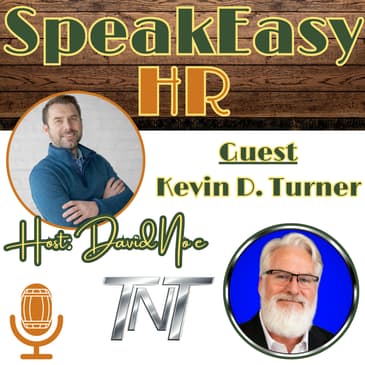
For years, professionals have blamed the LinkedIn algorithm for low engagement, limited visibility, and missed opportunities. But what if the algorithm isn't the problem anymore?
In this episode, I sit down with LinkedIn strategist, executive branding expert, and founder of TNT Brand Strategist, Kevin Turner, to challenge one of the biggest myths on the platform today.
Drawing from more than 20 years of experience, over 7,000 optimized LinkedIn profiles, and insights gained as a LinkedIn Beta Tester since 2007, Kevin explains why visibility today is less about beating the algorithm and more about sending the right signal.
Together, we explored how leaders can strengthen their personal brand, improve discoverability, position themselves for new opportunities, and become easier to find, understand, trust, and recommend. Whether you're an executive, HR leader, business owner, job seeker, or aspiring thought leader, this conversation will help you rethink how you show up online and why clarity may be more important than content.
If your expertise is stronger than your visibility, this is an episode you won't want to miss.
Powered by the WRKdefined Podcast Network.
[00:01:03] Hey, what's going on everybody? David Noe with SpeakEasy HR, presented by Payroll Partners. We are back for a brand new episode, brand new guest, and one topic that I have not had a lot of people bring on the show, and it is going to be an amazing conversation. I am thrilled to have Kevin Turner on SpeakEasy HR. Welcome. How are you? Kevin Turner, Fantastic David, and thank you for having me here today. I'm excited too, and we're definitely talking about one of my favorite topics.
[00:01:33] Kevin Turner, Definitely, definitely. So yeah, just like everybody else, when I've connected to people about coming on as a future guest, we talk about topics and ideas and what to bring to the podcast. And it's just really fun to learn about someone's passion right now in their work. And you just before we came on live, you were like, well, just had some new updates today that we can dive into and what people are going to be looking out for on LinkedIn
[00:02:02] and what'll be new. And so your background is on LinkedIn, and that's what we're going to kind of dive into today. But before we do that, we are live on LinkedIn and YouTube. For those of you who are joining live, welcome. The chat is definitely there for you to use. If you have any questions along the way, things you're thinking about with LinkedIn, and just you may or may not know fully the best way to do it, or you want some advice, Kevin is here
[00:02:29] to answer them. So Kevin, if you want to just start, kind of tell everybody about your background and what you've been up to and, and you know, the, what did you want to do when you were growing up kind of thing? All those fun questions. How long do we have, Dave? You know, I've got this very mixed laddered background. You know, they always, people imagine that a career path is perfectly straight, right up the ladder. Not mine. Mine
[00:02:56] was based on five pivots, right? One, I started with the Sony Corporation actually in Japan by writing letters and having them invite me as a high schooler to Japan to work with them as a expert experiential, I can even say that marketer. So I got to test things like the Walkman before anybody knew what the Walkman was. And you'd go out there and wear the headphones and buy,
[00:03:23] they would give you money to buy music and you'd buy music and you would, you know, be walking around, you had two headphones, you put them on other people, right? That's where my excitement for marketing and branding came in. You know, went back to school, studied marketing all the way and joined Sony when I got out and was there for 13 years, all the way up into national sales. I think my, my budget was 250 million in product a year. And I was always beating my budget and loved
[00:03:52] doing that. Worked with a group within LinkedIn that was a, um, a joint venture, right? Sony Qualcomm, they got divorced and they sent us all home, 600 of us all in one day, one phone call. So it was like, okay, now what do I do? And you really had to kind of think about it, had to pivot. And from there started talking to, um, privacy, private, um, equity groups about a concept of data management,
[00:04:22] right? If we collect so much data on the internet, what is our responsibility? Yeah. Privacy wise. And how can you make it privacy progressive for companies who want to protect that? And so I actually started up with, uh, uh, a few lawyers, which is the hardest way to start any business when that's your, that's your bench, right? And we started privacy council, built that up and sold it,
[00:04:49] uh, continued on with that venture capital group, went into corporate turnarounds and corporate turnarounds are a lot of fun. The problem with a corporate turnaround is if you do it right, you're out of a job, right? And the faster you do it, right, the faster you're out of a job. And then you've got to find another one. I found this out a little too late that when you are doing a corporate turnaround, you've got to be working 90% of your time or 80% of your time finding the next
[00:05:16] two, right? While you're finishing that one and making it look like you putting in a hundred percent over here, corporate turnarounds, not for me even moved my family at one point, um, came back and actually ran the international division of American Heart Association. So kind of another pivot right in that process, completely, uh, a for-profit center inside a nonprofit, which was kind of interesting in itself. And I set up the offices in Hong Kong,
[00:05:45] uh, United Arab Emirates, uh, Belgium, uh, Puerto Rico, all servicing different areas, hired the people, created brick facilities in different locations. So we didn't do any tax implications that could complicate the nonprofit, all those great things. Um, loved it, but I was traveling 80% of my month married and having a family, right. And I got to put the brakes on. I was home one weekend a month on
[00:06:13] the opposite side of the clock. Wow. The places I was going, cause it was heart science. It wasn't, um, the beautiful places, right? It was, uh, who was deep into Uganda. It was deep into not Paris, not the pieces of beaches of Nice, right? You were going into the rough places where they really need the science. And so we did a lot of travel into deep into China with the, uh, military
[00:06:40] armed surgeons, which is kind of an odd thing. And the, uh, Chinese medical doctor association, all that stuff was great, but I put the brakes on and said, I got to do something different where I'm home more. And I always had a passion because I've done international business all my life. My parents were not Americans when they got to the country. I was first generation, always had that kind of connectivity. And as I was traveling since 2005, when I joined LinkedIn,
[00:07:09] I started connecting people all over the world. And it was my way to do a digital pen pal, right? You didn't have to write letters. You didn't have to wait a month for them to come back. They were there every single day. So if their kid graduated high school or they got a, you know, whatever it was promotion, or it was there every day for you to grab. Yeah. And the time zones didn't matter. And so that got me excited about LinkedIn, got me very involved in LinkedIn. And because of that, I always had a very large network within the
[00:07:37] LinkedIn process and got a lot of attention through LinkedIn. And I'm now on my 21st beta test with them. So I've been very involved inside the product group. Sometimes they'll talk to me, right? Sometimes they'll give me the answers. And when they stop talking, I know I've got it right. Right? Because sometimes they just, you won't share stuff, you know, at times. So,
[00:08:00] but it's very exciting, you know, in that sense of what I've been able to get from LinkedIn has helped me in three of those pivots in my career. And it's all about building trust, building your knowledge base, right? And getting people to interact with you, engage with you, and think about you when opportunities come up. There's no other platform you can do that like that for free. Yep.
[00:08:27] You don't have to have a premium account to do any of this. And that always got me very excited. So, that's where you have had quite a journey and thanks for sharing all of that. And I know some people might've heard of that before today, but some have not. We've got some folks watching live. So Albert, welcome. He is a regular out here. We've got Wendy Shore. Hey, Kevin. Hi, all.
[00:08:56] Love that. Debbie's listening from Florida. Very good. And Dan Roth, welcome. Excellent. So, got some folks watching live. So if you have a question as we go through, throw them in the chat and we'll try to get to them along the way. So Kevin, you've gone through a lot. You've experienced a lot in your career. What's the biggest piece of advice you've ever received?
[00:09:23] I think the best thing is, is don't stay current, stay future, right? Future proof for yourself, understand what's coming and be able to embrace it. And sometimes even know when not to use it. And we all are going through that right now with AI, right? So it's a perfect example. Some people are pushing it back. Some people are bringing it in. Other people are being sensible about it and knowing
[00:09:49] where it fits and where it doesn't and when you should use it and when you shouldn't. Even the platform LinkedIn is going through a process where they're now saying, well, we want to now push down AI slop. Well, you know, they also provide a tool that creates AI slop. So we're all kind of doing it, but it's that future proof embracing what's next so that you understand what you can do with it, what you don't do with it. And I think that's the best advice. And my dad gave me that. So
[00:10:18] yeah, no, that is fantastic. All right. We were talking before you came on about the envelope icebreaker game. So you got a little bit of a headstart in what that is. So we're going to transition to that and we're going to dive into your topic after that. Hold on one second here.
[00:10:33] All right. So one through 15, you get to pick a number and there is a question in here that just to hear a little bit more. Okay. Well, I'm going to pick number seven. Why not? Right.
[00:11:01] Lucky numbers. I know it's going to be good. Okay. What's a TV show or a movie you quote way too often? It's got to be 2001 space odyssey, right? And that quote would be Dave. I'm afraid I can't do that, which is perfect for today. Right. Hopefully I don't use that again, but I love that. The whole
[00:11:25] concept behind that and I have a personal relationship with it. My father actually worked with Stanley Kubrick. He was the aerospace, uh, kind of, uh, knowledge asset they had. And he actually created the, the, uh, space station, the rotation to create gravity, right. And the Pan Am shuttle. Okay. I always think it back cause it comes back to me now. And that, that quote was about when
[00:11:55] Hal locked out the, uh, the astronauts and they kept saying, Hal opened the door bay and Hal being AI was saying no, because they knew these were going to come in. They were going to get back in and turn AI off. So maybe it's really, really current. So if you haven't watched that, go back and watch it.
[00:12:17] Um, it's fascinating. Yeah, definitely. Definitely. Dan, uh, said Kevin just isn't just an expert. He's a role model. He's one of the best human beings I've ever met. Wow. All right. And you are incredible yourself. So I, I truly appreciate it cause I know everything you do and I loved your last TEDx. Very cool. Very cool. Well, good. Well, just a couple of messages from our sponsor payroll partners,
[00:12:45] and then we're going to get into your topic about the algorithm. The algorithm doesn't affect you anymore. And it's all about your signal. So hold on, grab a drink. We'll be back in one minute. Finding a new employee takes time and money for one position on a single job board. You could easily spend a minimum of five to $10 a day advertising a job post. It's worth noting that the average time it takes to hire a new employee is 36 days. However, it can take longer than that. You could find yourself
[00:13:13] paying hundreds of dollars a month for a single job board. And if you're using multiple job boards for multiple positions, this could add up to thousands of dollars a month. There is a much simpler and more affordable way of finding the right candidate at payroll partners. We offer an applicant tracking system to help manage your hiring process. Our ATS is customizable, allowing you to decide which days you want to run the job and when to close it so you don't break the bank.
[00:13:39] And this feature lets you e-blast your network, hosting jobs on multiple boards at once, all managed in one location. Payroll partners, elevating your payroll and HR experience. So if you are just fed up with your technology and your company, everyone has to pay employees, pay them correctly, pay them accurately on time. It's a lot of complexity to it. So if it's just not
[00:14:06] working for you, look us up payroll partners.net. Check me out on LinkedIn. Would love to hear from you here about your situation. And if we can maybe help you find a better system. So all right. Well, Kevin, we are to the point where we're going to really get into this meat of the topic that you brought here and a couple of rapid fire questions to start. These are your quick five to 10 second answers.
[00:14:30] And it starts about your LinkedIn profile, headline or photo, which matters more? Kevin Turner In the search process, it's going to be headline. In the visual connectivity process, it's probably going to be that profile photo, right? We're trying to build trust, trying to build connectivity, two different ways to get there. So I think it depends on what it is that you need to get done. Kevin Kennedy Yeah. Very good. One word that this that defines
[00:15:00] strong personal branding. Kevin Turner Truth. Kevin Turner Truth. Kevin Turner Yeah. Biggest mistake people make on LinkedIn. Kevin Kennedy Setting up an account and not doing anything with it, right? Thinking, I'll build it, they will come. They will not. And LinkedIn won't let them. Kevin Kennedy Yeah. Content or consistency, which wins? Kevin Kennedy I would say over the two, if you had to pick one.
[00:15:29] Kevin Kennedy It's going to be content. Kevin Kennedy Okay. What's one signal every professional should be sending online? Kevin Kennedy The one that moves them forward to where they want to go. Kevin Kennedy Okay. Very good. Love rapid fire questions. It just kind of gets us going. You know, it's kind of like a workout. It's a little, little workout, a little warm up. So now we're going to get into these questions. And I have questions ready for Kevin. If you are watching live and have
[00:15:59] a question, throw it in the chat and we'll try to get to it if it's not one that might fit what I've already got ready for him. So Kevin, you've helped optimize over 7,000 LinkedIn profiles. What pattern do you consistently see in people who struggle with visibility?
[00:16:21] Kevin Kennedy I think often they are kind of cut and paste their resume into LinkedIn, right? And a resume has a purpose. It is for applying. It is for review. It's for a process. Kevin Kennedy LinkedIn is more of a social connectivity point. So you got to look at it very differently in that sense. Kevin Turner Yeah, definitely. So for years, people have blamed the algorithm. So what's actually holding most professionals back today?
[00:16:50] Kevin Kennedy That thought in general, right? Because there isn't actually a algorithm for LinkedIn. Kevin Kennedy Even for a post, there are 19 algorithms, plural, that affect a post and some of them even compete with each other. Because they're made by different product groups. They evolve on their own. So the concept of the algorithm was made to sell algorithm reports. Right? Oh, no, it just changed
[00:17:16] right as I got my algorithm report ready. And for 49.95, you can have all the knowledge you need, right?
[00:17:23] Kevin Kennedy Most of the stuff is kind of common sense. And some of them create some statistical backup to show. But none of it is definitely a science. And again, it isn't one. So they're already being a little dishonest at the beginning. And it doesn't change on a schedule like that. So the other component of that is, it's studying what they think is past history. And past history can teach us a lot about the future. It doesn't
[00:17:55] Kevin Kennedy That's why that needs to go away. The whole concept. Kevin Kennedy Wow. So you brought up a good question that I was now thinking of. Or you said something that kind of struck me. So you said 19 algorithms, right? Kevin Kennedy Mm hmm. Kevin Kennedy Just for reach of posts.
[00:18:18] Kevin Kennedy Just for reach. So talk to the people that may not be out there as much as me and you, right? They get out there maybe once a week, or, you know, I'm, I feel like I'm in there every day. And they want to get more of a reach and they want to get to more people and maybe have some kind of strategy around using LinkedIn more, oh, I need to be out there more, I need to network and connect with more people.
[00:18:44] Kevin Kennedy So I look at like what time of the day you post, what day of the week you post and if it's a video, whether it's a event you want to promote. Kevin Kennedy So what are some of the things that people really should be like making the top priority when they're thinking of posting something? Kevin Kennedy Well, and I would start with know your audience, right? If your audience does their reading at noon, don't post at a.m. or five at night, right?
[00:19:12] Kevin Kennedy So know your audience, there isn't a perfect time for everybody, because everybody responds differently. So that's the first thing, know that audience know when they want to read when they want to engage. Kevin Kennedy Know how to get that out of them. So that's your first step. But I think even before you get into the post, you've got to make sure that you as an individual on LinkedIn, you've got everything set.
[00:19:36] Kevin Kennedy So they understand who you are. And that's huge right now with the way LinkedIn is doing things is they are testing for signal, right? Kevin Kennedy They're going to say, well, who is David? What does he stand for? Kevin Kennedy They're going to look for three to five things that you stand for that it can see proof within your profile that you are experiencing this and that you could be an expert in this area.
[00:19:59] Kevin Kennedy And it's going to want to see content that matches it. And then it's going to show that content that matches it to people who are interested in that type of content. Kevin Kennedy That's why people have noticed just recently, they're getting a lot more third level people coming in to see their post. And that's because those are the people who are interested in it. Kevin Kennedy You know, and I think it's a huge opportunity as opposed to most people think, well, that's that's scary. I don't know those people. They're strangers, right?
[00:20:26] Kevin Kennedy Stranger is where opportunity comes in. You know, we know our friends. We know those people who interact with us on a constant basis. Kevin Kennedy They're probably not if they aren't already a client, they're probably not going to be a client. Kevin Kennedy So that opportunity comes in with those people that we don't know that don't know us yet. Kevin Kennedy Yeah, yeah. No, that's that's definitely good. And that's what. So the next question, it kind of talks about a person's signal.
[00:20:50] Kevin Kennedy And what do you mean when you talk about a person person's signal online with with LinkedIn? Kevin Kennedy Well, and it's interesting in the sense that LinkedIn is really trying to use AI to understand who you are. Right? Kevin Kennedy What do you do? What are your values? What do you move forward? Kevin Kennedy It's really easy to use AI in a profile review. You can ask AI, here's my profile. Here's my content.
[00:21:18] Kevin Kennedy Here's the jobs that I'm interested in. Or here's what I want to do next. Right? Kevin Kennedy And you give it maybe those jobs. And you can say, what what is the signal that LinkedIn would see using this context? Kevin Kennedy And it will come back and it will say, you know, this is what it's seeing. This is what also is it's confusing people. Right? Kevin Kennedy Some of this other stuff that doesn't need to be there. You were talking about payroll, HR and all that stuff.
[00:21:45] Kevin Kennedy When I was in venture capital. This was before enterprise software, I used to be able to do payroll tax. Kevin Kennedy And, you know, checks to employees by hand, when I was managing eight companies under the venture capital group messed up once. Kevin Kennedy And I had people show up Friday night, I gave them cash and said, can that hold you till Monday? Kevin Kennedy So we had an 80 hour work week, I wasn't going back to fix this. I never ever want to do that again.
[00:22:11] Kevin Kennedy I will never do that again. Even with software, I won't do it, I would hire you. Kevin Kennedy So you would never see that in my profile, that will never be a signal that I send out, even though I did it really well. Kevin Kennedy Yeah, and that for your period only messed up once. And I made up. So that's part of that knowing what your signal contains and what it shouldn't contain. Kevin Kennedy Okay, and getting that right and going in there and fine tuning that.
[00:22:34] Kevin Kennedy Yeah. I remember the first time someone mentioned LinkedIn to me, I was at lunch way back. It had to have been 20 years ago. Kevin Kennedy I'd have to go back and see the original date, which I know you can. I know you can go in there and find when you joined. Kevin Kennedy But they're like, have you heard of this LinkedIn social media platform? Kevin Kennedy I was like, no. And I was in insurance broker. I was with a with a local benefit broker.
[00:23:05] Kevin Kennedy I was at lunch with one of the insurance carriers and they're like, you need to go out there and you need to create a profile because it's a really powerful tool. Kevin Kennedy And you know, it's kind of like, I feel like it's one of those. And someone had made a comment about how they've been off it recently. Kevin Kennedy And they just got onto it after a year and it's, it's now more littered with like Facebook stuff. Kevin Kennedy And you know, I, I think it depends on your network and it depends on who is on your feed, right?
[00:23:34] Kevin Kennedy So if people have that stuff out there and you don't want to see it, then I follow them, you know what I mean? Kevin Kennedy But yeah, it's, it's one of those platforms I think is still evolving. Kevin Kennedy And it gives you the chance to do stuff like this, like a, a live podcast. Kevin Kennedy Oh yeah, no, it's I mean, basically they've given you the keys to a television station and said it's free. Kevin Kennedy Yeah, right? Kevin Kennedy Exactly. Kevin Kennedy Exactly. Kevin Kennedy That is an amazing opportunity.
[00:24:01] Kevin Kennedy And I, people who say it's Facebook or it's too Facebooky for me. Kevin Kennedy LinkedIn is a microcosm of the real world. Kevin Kennedy Yeah. Kevin Kennedy Right. Kevin Kennedy You can find anything you want there. Kevin Kennedy And you can hang out anywhere you want there. Kevin Kennedy And if you let things get upset, just like in the real world, maybe that'll bring yourself down. Kevin Kennedy Go find the people you want to be with, right? Kevin Kennedy Attract them, engage with them, build with them, and you won't see the stuff you don't want to see.
[00:24:30] Kevin Kennedy And if you do see it, you can either disconnect or you can say, don't show me that. Kevin Kennedy You have control within LinkedIn. Kevin Kennedy And anybody who says it's too much this and I'm done with it. Kevin Kennedy It's because they've never really made a difference in what they're seeing. Kevin Kennedy You got to do that. Kevin Kennedy You got to do that. Kevin Kennedy Just like in the real world. Kevin Kennedy If we hang out in the wrong places, I'm at a biker bar every weekend, I'm probably going to get in trouble. Kevin Kennedy So, our choice. Kevin Kennedy Yep, exactly.
[00:24:59] Kevin Kennedy And it's funny you brought up the TV show. Kevin Kennedy So, I joined a Roku channel, it's called the HR channel. Kevin Kennedy So, Speakeasy HR is now part of the HR channel. Kevin Kennedy A lot of fun. Kevin Kennedy It's on Roku Amazon Fire TV. Kevin Kennedy So, check out the HR channel. Kevin Kennedy It just launched a few months ago and have a lot of fun with that as well. Kevin Kennedy I am with Kevin Turner. He is a brand. He's the managing partner with TNT Brand Strategists.
[00:25:28] And we're talking LinkedIn. We're talking all kinds of stuff going on with LinkedIn right now. And so let's talk about people looking for jobs right now, Kevin. So what are what are the most important signals executives and recruiters are looking for right now? Would you say a couple of things? There's two ways to look at this. One is that LinkedIn's business is data access, right?
[00:25:57] The world's largest database of resumes. That's what a profile technically is, is a resume, right? A little augmented, a little better. And I think that recruiter and sales navigator, the two components that have full database access in LinkedIn and you pay for that. Right. That breaks that six degrees of separation that they normally cut you off at two or three. You got all six degrees, you pay for it.
[00:26:23] That's 65 percent of LinkedIn's annual revenue of 19 billion. Right. So that's like 12 and some quarter change of billions of dollars. That is the tail that wags LinkedIn's dog. Right. And you think about people who are doing recruiter or people who are doing sales navigator. They want things that are timely, accurate. Right.
[00:26:49] Hello, I'm Ruth Thomas, host of Comp and Coffee, where we break down what's next in the world of compensation management. From pay transparency to performance alignment, we explore how businesses are rethinking compensation to drive impact, equity and growth. So if you're shaping the future of pay at your organization, grab a cup and tune in. Listen on the Work Defined Podcast Network. Hot topics, those kind of things.
[00:27:17] So you want to make sure you're including those in that signal. Right. And timely is an interesting thing in data. If I if I sold you a database of emails. Right. And it was 15 years old. Or I could sell you this other database of emails and it's two weeks old. Which one, all things equal, would be more valuable. Right. The timely one. So LinkedIn is looking at timely all the time. You can even take things like your profile photo. You can load the same profile photo again.
[00:27:47] And it changes the time clock within LinkedIn. It says, wow, brand new. And it'll say, you just uploaded your profile photo. So making changes within LinkedIn sets that timing clock again. Right. As you update. And we know things change. Things that we did in the past are less important. So we've edited them out. Things that we're doing now are growing. So we're editing them in. Make sure you're keeping timely. And the other component of that accurate, which people forget.
[00:28:16] Things like if I say I graduated, you know, UT with an MBA, right? Or whatever it is. And I don't have a date on it. That's no longer accurate. That's incomplete data. That's what we call gray data. If I could sell you a list, but it didn't have everything in it. What is the value? Not as much. Right. So again, if we're wanting LinkedIn to promote us as the perfect product, we have to become that perfect product.
[00:28:45] So accuracy is really important. Now, people always say, you know, if I tell them when I graduated, definitely turn of the century before that. Right. They're going to know how old I am. Well, if you've had a Google account, they already know how old you are. Believe it or not. There is no secrets in the Internet in that sense. They're going to know. But what they're going to do, if you keep that date out of it, instead of you being in an opportunity where they might say, I don't like Dave because he's too old. Right.
[00:29:15] He's over 30. So I'm not going to talk to him. Instead of having that opportunity, you're not going to have any opportunity because LinkedIn, data access business, they're going to say, OK, we're going to give them 100 people that gave the accurate information with all the information we asked for. They're going to be at the top of the list. And think of it. Remember the old Google search days. If you did a Google search, how often did you get past page three? Before you basically did a new search, right?
[00:29:43] You never got to page 10, 150, 1 billion because LinkedIn will keep, I mean, LinkedIn, Google will keep going until it runs out and never does. Right. That's the concept behind this. So if we want to be found, we want that signal to be strong. That's one of the things we've got. It's got to be timely. It's got to be accurate. It's got to be complete. Think about it in that sense of how do I fit the data so I can be promoted? That's, you know, a big side of it.
[00:30:11] The other side of it is LinkedIn has now gone to natural language search. So you want to put things in natural language terms. If somebody is looking for somebody who does A, B and C, right? In your case, it would be enterprise, HR, payroll, blah, blah, blah. And then what you need to do so that AI believes that signal is do what's called semantic proof.
[00:30:37] And I brought in 100 accounts and they're doing, you know, close to 500 million. That's your semantic proof. So it's not just making a statement. I'm the best at this. It's making a statement. I'm the best of this. And here's my proof. And then LinkedIn can say, that's a strong signal. I'm going to promote it. Most people forget about that piece, right? So natural language and then have your semantic proof to back it up. So AI can say, hey, this is real. This is good stuff.
[00:31:06] I'm going to push it forward and make them the perfect product. That's where we need to be. It's fascinating. So how does clarity of positioning impacts whether someone gets found, trusted, or recommended on LinkedIn? I think it's huge. Again, microcosm of the real world, right? If you've got that reputation on the outside, that's why people come to you, right? They come to you. They see you in the meeting. They come and they shake your hand. I want to talk to you about AVNC.
[00:31:36] Same thing happens in the digital world. You know, build that trust. Build that credibility. Opportunity is going to find you. Or when you're looking for opportunity, it's easier to get the door open. Yeah. So personal branding, I know, is something that you're very passionate about. And you really help a lot of people with that. So where do you see most professionals getting that message wrong? They try to be everything to everybody, right?
[00:32:05] The Jack and Jill of all trades. The end of that is master of none. Nobody hires a master of none unless they're running a convent, right? We're not doing that. We want people who can get things done. So don't do this. I can do everything. Even if you can't. Even if they actually expect you to do it once you get the job, they're hiring for risk reduction, right? So you're better off refining what that is, even if it's at an absurd level,
[00:32:33] because there is a company that wants it really bad. Nobody else is doing it the way you're doing it. So that refining of that message is really important. Yeah, definitely. We are live on LinkedIn and YouTube with Kevin Turner. If you are watching and have a question, chime into the chat section. I know there are several people watching. Appreciate your engagement with us.
[00:32:58] So, Kevin, how can someone quickly improve how they are perceived on LinkedIn without constantly posting content day after day after day? And believe it or not, LinkedIn doesn't want you to do constant posting of content. They don't want you to do daily. They don't want you to do five times a day. They want quality from you, right?
[00:33:26] And consistency is you decide what you can do and then be able to engage with it. So a post is nothing if you post and run. That's a drive-by post, right? Or a drive-by comment. It doesn't go anywhere. So you've got to have the time to do the post that adds value. And then you've got to build the engagement in the process. For me, you know, I did that once where I did it every single day. It's terrible. The disaster stuff starts getting messy. And, you know,
[00:33:55] you don't even want to do it anymore. So who wants to read that, right? When I got down to, I do two a week. Works perfectly. My engagement is up. My reach is up. All these people who are whining and complaining, my reach is down, my reach is down, right? They were the ones who were trying to game the system and got away with it for a long time when there were algorithms, right? Yeah. They don't get that anymore. So they are screaming. They are crying.
[00:34:23] But those who are really kind of focusing and saying, I'm going to add value and I'm going to engage and I'm going to build with others, they're getting that reach that was taken away from them because of all the gaming. Okay. Yeah. So a LinkedIn user, I don't see the name, but it says, how can I tell if my profile is garbage? If it smells like no. I would say, you know,
[00:34:52] have a few of your friends, smart friends, right? Look at it and say, if you saw this, what would you think? Take me out of the equation. What would you think about this person? What do they deliver and what's holding them back? And just ask some good friends to do that for you. Offer to do it back for them, right? That's the best way to kind of reciprocity always gets you a little further. But that's probably the best start point. And again, you can also go to AI and say,
[00:35:21] assess my profile. Where am I going wrong? Where am I going right if I want this in the future? Right. And it will give you some good insights. I always say that AI can be an incredible muse, but a terrible artist. So whatever it gives you, don't trust it. But use it as kind of a spark to do your own deeper dive, your own conversation, right? But just don't trust what it says
[00:35:51] just because it says that. So. Yeah. And I've been an open AI beta tester since fall of 2021. Okay. I have a love hate with it. Yeah, definitely. So I know in the past, and I feel like it's going away, maybe not, but when it comes to like a recommendation section on LinkedIn and how you have like specific skills that you can have people recommend you for.
[00:36:19] And then you ask people for, it's like a, what section is it? Where people can give you like a testimonial. Yeah. Written recommendations. And then there's endorsement of skills. You got endorsement of skills. Yes. Endorsement of skills. So they've got these sections. I feel like they have, they've had those for quite some time. Do you, do you see those still being important? Where if you meet somebody and somehow you feel like
[00:36:47] they would be a good person to endorse you? Are those things that people are still wanting to see? Are you telling people to still do that? Yes. And for different reasons, the skills that you assign, right, are a signal within the database. Okay. People who come up and endorse you for a skill are basically a multiplier, right? Okay. So if I say I've got, you know, whatever it is, you know, vibe coding,
[00:37:17] and I'm the only one who says it, well, I could have it or I might not have it, right? But if a hundred people say I have it, that's pretty good. If 300 people say you have code vibing or vibe coding, pardon me, then believe it or not, in a search result, you will be higher than me because of your endorsements. And the big win in that is people who are also highly endorsed for a skill, if they endorse you,
[00:37:47] that is a total multiplier. So it's like a 10X. So if you want leadership, go out and find people who have leadership that are already highly endorsed that know you, give them leadership, and most people will reciprocate. Yeah. And I always suggest people go have what I call a skills party, right? Invite a hundred of your best friends, say, come to my profile, give me every skill you know I have. Don't give me the ones you don't know or you don't know I have, but give me every one you know I have, and I will do the same for you.
[00:38:17] You get a hundred people to do that, maybe 80% of them do it, maybe some give you five, maybe some give you 50, but you're going to up that rank immediately. So that's kind of that skills endorsement piece. And you've got to assign at least your five top skills to your about section. That's really critical. But those are your, like your high level ones. Don't put Microsoft Word in there, right? Because unless that is your high level skill, right? It would be more like communication.
[00:38:47] Corporate communication might be the high level skill, right? So put your high levels in there and everything else feeds towards those. And so that's the way to approach that. Most people forget. And you can have up to a hundred skills. Do you need a hundred? Maybe not. But they are in an essence within a database or they're kind of SEO, right? So if you can use them and they don't hurt you, why not have as many as you can, right? And just kind of plug them in there. So that's big.
[00:39:15] The written recommendations, those are for people. If people got to you, they love to read those because they look at that and they go, well, let me see who that is. And they go look and they go, wow, that's an industry leader. That's a bit of a book. And they're talking great about them. You can't buy written recommendations on LinkedIn because it's attached to somebody's profile, right? They're real business. And in that sense, they hold a lot of water. And most recruiters will look at that.
[00:39:44] If they're interested in you, they're going to look at it. But not only are they going to look at who recommended you, they're going to look at have you recommended others? Yeah. And most people take but don't give, right? I've never been able to get a balance in there, but I give as well as, you know, I accept in that sense. So make sure you've got both sides of that playing. Yeah, definitely. Question from the crowd watching live from Sandra. She said,
[00:40:14] I have experienced that LinkedIn will expand the reach of my personal content post versus business value content. Do you know what is the underlying rationale to that? Yeah, companies are boring, right? People are not. We connect with people. When we do business with a company, I do business with you, David, not the company, right? The company is the background. It's the product. It's all that stuff. But if I didn't like you, I'd probably find another company. Right. That's how people are.
[00:40:43] So when a company does a post, well, okay, that's the company saying they're selling me something, right? If you do a post and I like you and I think, hey, that's pretty cool. And where does David work? Oh, he works at this company. Well, maybe I had to look at their stuff. That's how we get there. So it makes sense that a personal post on average will have more engagement, more reach than a business post. Yep. But they both have great value and they can actually support each other. And now today
[00:41:12] they can collaborate with each other. So that was the thing that launched today was this collaborative post so that if you and I want to do a post together in the past, I would have to mention you, which is the equivalent of tagging in any other site. LinkedIn has its own language, right? Now I can actually create a post, invite you in. And if you accept the invite, it gets posted from both of our accounts. So we both get the engagement. We both get the stats. We both kind of get
[00:41:42] the creds in the process, right? And that's pretty cool. And you can do that with business pages. So if you're a company and you've got a business page and you've got five champions, right? Include them in that collaborative and then that really activates their network in there and gets that association with, hey, Dave is with, you know, this company. So it all connects together. So really clever on LinkedIn's part and really clever on any creator's part
[00:42:10] to pick this up. Now it's rolling out slowly like anything on LinkedIn. Five waves, they're random, they're increasing in size and some of them take 30 to 90 days. Some of them have taken two years. So don't get crazy if you don't have it, but if you do, it's pretty neat. Why do you think it took them so long to do something like this? You know, if you think about LinkedIn and where it started, it is totally different than where it began.
[00:42:39] And that's why LinkedIn had that site. Oh, that's where you go if you're looking for a job. Now it's where you go if you want to create opportunity, build friendships, learn things. I mean, it's got all these things going. And I think it took them as long as they got to that point because they had so many other things they had to put in order. Yeah. And I think that's just why. You know, it's an evolution of a process. Yeah. So when you look at other rollouts that you've been a part of with beta testing and doing, what's been one of those,
[00:43:09] I guess, key improvements that you've been kind of involved in that you thought would be, you know, a really good enhancement to the platform that has really created itself to be even better than the content was before with the platform? There's a lot of them, you know, in that sense of, you know, what is it hard to pinpoint down, but I think, I'm trying to think what even, what would even be my favorite. I have too many, you know,
[00:43:38] just a couple of years ago we had over 250 changes on LinkedIn. This year we've got right at 100 right now. So to pick one is difficult, but to me, anything that helps us clarify who we are, right? Those are the things that I like and, you know, for a long time we didn't have an about section. Now we've got an about section that allows us to stand out outside of that resume speak that's down in the experience area. So, you know, that I thought
[00:44:07] was fantastic. The ability to do things like lives, you know? Yeah. Do you need that on LinkedIn? I mean, does LinkedIn need that? Probably not. It probably costs them a lot of money, but it gives huge opportunities. So, you know, that's an area that I've always thought was incredible. So, there's a lot of the little pieces like that. And it's funny, I wouldn't want to be new to LinkedIn right now. It is a total onion. You know? It's like, oh, wow, oh, wow.
[00:44:37] I've even seen people who claim to be LinkedIn experts and come to me every day and go, well, look at this new feature I found. I was like, well, yeah, it's about three years old. What? It's just, there's that much there, you know, and you just have to find out what works for you and use it. you talked about 100 changes to it this year already. Yep. And we're in June of 2026. So, is there any, is there anywhere to go to find
[00:45:07] all those and like when they do them or is it just you have to stumble across? there isn't even a place to find them inside LinkedIn. There isn't a master list. Each product division keeps their own little list and they don't even share it with new employees. I have a thing I do called Captured in the Wild and I've been tracking that for the last seven years. You can go there and you're going to find out every bit of change that went,
[00:45:36] what got thrown out, what they're doing again, what are glitches, all those things were listed there and it's a contribution by probably 100 other LinkedIn experts who selfishly share this stuff. They can hold it back and say this is my secret and I'm going to use it only for my clients. They don't because that's not who I'd want in that group. It's there and it's available and I have a lot of people from LinkedIn who use that list so they can understand where the organization
[00:46:05] is totally in that sense. Dan has a question in the crowd. What was the worst LinkedIn fail of the last three years? Collaborative articles, creator mode, LinkedIn audio. You know what? For me, it's simple because it made me so mad because I had it when it came out was pinned comment where if you wrote something you could pin your comment at the top and I like to pin resources at the top
[00:46:35] and now if you comment on your own LinkedIn might push it all the way this, nobody sees it. So that to me was the one that drove me the most crazy. The other ones, some of them I didn't even like anyway when I was using them and I try everything and try to see what's the positive in this for anybody and some of them I just don't see and they go away and I don't really worry about them anymore because I thought they were not as good as they should have been. Yep, definitely.
[00:47:06] Tammy, thank you for the specific topics for job seekers. Yeah, it's a really weird time to be looking for a job right now. I mean, I've been with my role for my company for four years and I just I'm involved in recruiting for us and people coming into the workforce, graduating from school. It's a really fascinating time and how fast things are changing and what a platform like LinkedIn can do for your career.
[00:47:36] I think that's the most important thing. If you do get your signals right, you get your activity right and you're building with others, huge opportunity for landing, huge opportunity for promotion and to me that's incredible and most people just they don't look at it. They just go, we'll just keep applying and we'll keep applying or we'll keep networking and there's this digital reputation component that
[00:48:06] LinkedIn gives us and those who are using it are landing. They are finding opportunities. It's not a guarantee, right? But it's definitely helping quite a few people. Yeah. Debbie has an idea for you, Kevin. So we need a campaign to get LinkedIn to return pin comments. Yeah. I even know the product manager. I won't say her name. She promised to bring it back right after they took it and never did.
[00:48:37] I'll tell you what, it's crazy. Sometimes it's the simple things that drive you crazy, right? Right? So for job seekers right now trying to stand out in the crowded market, what's the first practical step you would recommend for them? For job seekers, I truly believe in networking always beats not working. Right? You can do a lot of that through LinkedIn, through the power of digital, right?
[00:49:07] You can get out there, you can meet people. One of the things that in the networking process, if you're just there and asking, you know, how can you help me? How can you help me find a job? I'm looking for a job. That's not really networking, right? Introducing people to other people because you see a fit, you see a value, without an ask, that's more like networking, right? And I know an individual who runs a networking champions group,
[00:49:37] Donnie Bovin, and his concept of networking I think is brilliant, and that is you network with people who service the account you want to get into or the company you want to get into, but don't compete. Right? So if you're in janitorial services, talk with somebody who's in accounting services that has that account. Help them get into other accounts that'll help you get into that account. The same thing works in employment, right? If you want to get in in a sales
[00:50:07] area and you're networking with sales people, you'll be like, hey, man, I don't want you taking my job, but if you're networking with maybe the accounting group, they might say, hey, we need a salesperson like you who understands accounting, let me help you get in. Right? So think about it in that sense. Network not just with your target audience or your competitors, but network with those who can make those warm introductions in. And I think that's a smart way to approach it. Definitely. Another question from
[00:50:37] Sandra, what new features or functionality would you like to see LinkedIn implement that would enhance the member experience? There's a bunch of them. One of them actually comes around lives. Make it easy to find them. Right? Yeah. Make it easy to remember if I signed up for a live, hey, it's coming up in a half an hour. Make those things easy. Right? Same thing. And I was talking earlier with Jeff Young, super guy, actually Superman guy on LinkedIn.
[00:51:06] And we talked about saving. You know, if you save a post, then you got to figure out, well, how do I find the post I saved? Yeah. Put that little icon, that little saved, right? Icon up in that top thing. Let me click on it and I'll see everything I saved. Don't hide it five clicks in in an area I'm not going to be able to remember where to find it. And so some of those things need to change. And, you know, we always try to get that message out there and spark the
[00:51:36] product group as best we can. Right? Yeah. Yeah. I feel like the demographics on LinkedIn are probably more widespread than most. I feel like the younger crowd, they're not going to some of the Facebook, you know, X, Twitter, you know, TikTok, Instagram. There's so many out there and I feel like LinkedIn, you probably know very well what age bands are more active in there. you know, and there's
[00:52:06] some statistics you can see like my newsletter and stuff I do. I can kind of see who's clicking on what. But I mean, would you also agree that like the demographics on LinkedIn are probably more more widespread than than most? I go back to that microcosm of the real world. They're not leaving anybody out. Right. And if you think about what you're doing now, this live broadcast, that's that has an age group. That's not the really younger. doing lives. They're doing videos.
[00:52:36] And so they've got some video stream. Everybody says you've got to do video. Well, you're doing video. They're doing video in a different way. Right. So that's the beauty of LinkedIn. Find out what works for you and use it. You don't have to be in the video stream to be successful on LinkedIn. Right. So think about it in that sense. And that is why LinkedIn developed that immersive screen. That was to get all the TikTokers over. Right. Do your business here. Build your brand here. We're going to
[00:53:06] give you the ability to do that. And that's really what they've done there. That doesn't mean if I'm my age, if I need to be in the immersive feed all the time and live there, that might not get me to my client. Right. Who may not ever dip their toes into that feed because to them it's too TikTok-y. Right. So that's the beauty of LinkedIn is it's got different areas where you can find who you need to talk to. Yeah. Right. That's what you need to focus on. And the quarterback from
[00:53:35] Indiana, Mendoza, that he was very, you know, promoting LinkedIn and putting that thing like I'm, you know, available for hire, whatever he did when he was on that campaign to go into the NFL draft. And I think a lot of people saw that and not sure how that overall was successful for LinkedIn. I'm sure it was. And they got more, more people engaged in LinkedIn, especially the younger crowd.
[00:54:03] So we got a question. Sometimes a little bit of that humor doesn't hurt. You know, people always think this is, you gotta be, you know, buttoned up all the time. Nope. You don't have to, you can show a little personality. I don't particularly expose a lot of personal information, but I don't have any problem with personality and humor and those kind of things. And I think it does attract other people. So that person understood kind of the levity in it, right? And that created the opportunity and LinkedIn
[00:54:32] appreciated that. Yeah, that's what this platform is. This is what my podcast is. It's uncut, unfiltered, authentic, you know. So howdy, Kevin, David, what are your thoughts about creator marketplace to help creators get paid? Pros and cons. Any idea about the criteria to define who's a real creator? And that's, you know, the most difficult thing when you're launching anything is how do you test it with the
[00:55:02] right size group, right? So that you can learn and fix before you test it with everybody. And that's always a challenge in a platform like this. So people always feel left out, right? Ultimately, LinkedIn's goal is to give everybody an opportunity. Right? To have economic wealth, whatever it is, fulfillment in their life. They want to do that for everybody. So sometimes we have to wait through this slow process of rollout. That's always difficult.
[00:55:31] I'm beta testing one of the tool sets for this now, but I'm not in the full test program, right? So I didn't get the full bit. Sad about that. Sure. You know, a little mad maybe, but I've got this component I'm trying out right now and it'll be interesting to see how it all works. Yeah. But I think that's always the biggest challenge. And this whole monetization process, everybody wants to be in it, right?
[00:56:01] Thinking I can make money doing that. Well, if they don't get it right and they don't fine tune it and they roll it out to everybody, it's just going to crater. Yeah. They don't want to do that. So I think they're doing it the right way. We just have to kind of hold on to it. And I know a lot of people outside of the U.S. are upset because nobody outside of the U.S. is involved in it. Right. So, you know, that's a product group decision and I kind of understand it in some degree. Yeah. All right. I'll leave you with this question, Kevin.
[00:56:31] So if someone only changes one thing after listening to this episode on their LinkedIn profile, strategy, what should it be? Connect as a human. Right. Yeah. Well, that means you got to change everything. Most of it's kind of a trick question, but that was a very good answer. The very good answer. So, um, no,
[00:57:01] this has been fantastic, Kevin. I know you could probably talk about LinkedIn all day, but I don't want to take up your whole day and I appreciate you coming on for the 50 so minutes that we've been on live and all the engagement with the folks watching live. Certainly appreciate it. And, uh, if anybody is not connected to you, Kevin, best way to do it is on LinkedIn. On LinkedIn. You can find me Kevin D. Turner, uh, or if you're looking in the URLs, my URL ends in president
[00:57:30] and believe it or not, in searches I get found as president of LinkedIn. So, SEO, right? All the way. But you'll find me here and and, uh, I usually ask people to, to engage with me before they, uh, invite me, right? Yeah. Dance before we kiss. That's exactly it. That's, that's how I ask a lot of people about connecting to come on this podcast is really, you know, let's connect and, and I,
[00:58:00] I want to learn more about what you do and maybe if my audience on this podcast is, is what you're looking for to, to share your ideas and insights, I'm all for it. So, uh, well, great. Well, thanks for your time, Kevin. I really appreciate it. Wish you all the best and I'll be trying to look out for all the new updates on LinkedIn as we go, but, uh, I won't be a stranger to you if I have any questions. Very cool. All right. Thanks everybody. Have a great day. We'll be back next week. Brand new episode, brand new guest. Take care.
Sponsors
