
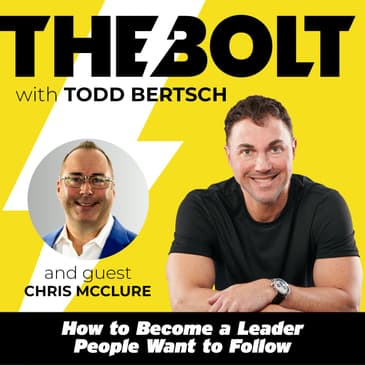
Chris McClure explains what separates a manager from a leader people genuinely want to follow. You’ll learn why promoting high performers without leadership development can hurt both the manager and the team, how consistent one-on-one conversations build trust and engagement, why personal development plans should happen before performance problems arise, and how leaders can balance caring for people with producing results.
Key Takeaways
- Great performers do not automatically become great leaders.
- Middle managers need intentional leadership development.
- Strong leaders listen, stay present, and know their people.
- Consistent one-on-ones build trust and engagement.
- Personal development plans create proactive growth.
- Not every promotion is the right career move.
- Leadership development can be simple and consistent.
- Great leaders balance caring with producing results.
- Your leadership determines who you attract and retain.
- Invest in yourself so you can invest in others.
https://www.toddbertsch.com/podcast/leaders-people-want-to-follow-with-chris-mcclure/
Thanks for listening or watching! We appreciate you.
Follow us at:
https://www.linkedin.com/in/toddmbertsch/
https://www.facebook.com/theboltwithtoddb
https://www.instagram.com/theboltwithtoddb/
https://www.youtube.com/@theboltwithtoddb
Ready to ignite lasting transformation in your team or event? Book me for keynotes, corporate training, or Positive Intelligence® coaching at ToddBertsch.com
Powered by the WRKdefined Podcast Network.
[00:00:05] Welcome to The BOLT Podcast. I'm Todd Birch, entrepreneur, keynote speaker, and mental fitness coach. Whether you're a new listener or one of our loyal listeners, I'm glad you're here. See, I believe we're all a work in progress. No matter where you are in your journey, there's always another lesson, another challenge to overcome, and another opportunity to grow. And that's what this podcast is all about.
[00:00:31] With my guest, we'll have honest conversations about leadership and personal and professional growth. I'm excited for this next episode, so let's get to it. All right, welcome back, listeners. I am excited about this conversation today. We're going to focus on one simple question. What makes someone a leader people actually want to follow? My guest today is my friend Chris McClure, and he believes great leadership isn't about building followers.
[00:01:01] It's about developing people and bringing out their very best. Chris is a leadership and strategy coach, speaker, and author of The Magnetic Leader and The Way to Greatness. After spending more than 20 years as a pastor, and another decade coaching leaders and organizations, Chris has seen firsthand what happens when we intentionally invest in people, and what happens when we don't.
[00:01:29] Chris, welcome to The Bolt Podcast, my friend. Hey, I'm super excited to be here. Thanks for having me, Todd. Absolutely. I am truly excited about this conversation. And, you know, interesting enough, you and I had had a couple conversations, and I was on your show a few weeks ago. And we just really love that conversation. We have so much in common. We have a great synergy. We believe in a lot of the same things in terms of leadership, and I believe life.
[00:01:54] And this conversation today is something, a topic that I've broached in some other conversations, but we're going to dig into it today. So I always like to start the show with a little bit of journey. Yeah. You know, a little background story. So you spent, and this is interesting, 20 years, 20 years as a pastor before moving into leadership and business coaching. So my question is, why the switch, man?
[00:02:22] And then what did those years teach you about people and leadership? Yeah, absolutely. Well, first of all, the switch I never saw coming, by the way. It was one of those things where I would call it a God thing that just literally was a shift in my life that I never anticipated. When I was 16 years old, I always start back there. When I was 16 years old, I was heading into my senior year of high school, had no clue on what I was going to do with my life. And I went on a mission trip, a youth mission trip with my youth group at church.
[00:02:51] And we were in Guyana, South America. And I was really struggling at that point about what to do with my life for, you know, what am I going to do to go to college or not or whatever, right? And every time the military calls started coming, I was like more and more tempted to just say yes and sign up because I didn't know what to do to move forward. And so I didn't really want to go in the military, but I was like, well, that's an option, right? And a lot of people do, thankfully and gratefully.
[00:03:16] But anyway, on that trip, my youth pastor really started to kind of cast a vision, not just for myself, but for others in the group about, okay, we're doing great work and helping a lot of people here in this foreign country. But what can we do back home? What is it that you can do every day? You don't have to travel all these 3,000 miles or whatever it was to do this. And it really made me think about, hey, you know, what he's doing for me, I want to do for others.
[00:03:43] I want to help other people get clear on their purpose and their vision for their life and then kind of equip them to achieve that. And so that's kind of where it started for me. I went home. Actually, the way I thought I would just do what I was thinking was become a youth pastor, just like my youth pastor was, and help teenagers and young adults, you know, figure life out and where they're going. And obviously, you know, a person of faith, you know, it was very faith-driven for me.
[00:04:10] And so I went off to college and went to college to be a youth pastor. And for 13 or 14 years, that's what I did. And I was working with teenagers, middle school, high school, college-age students and their families for all that time. Learned a lot of lessons. I mean, obviously, leading teenagers is its own, you know, animal in itself. And I stumbled across John Maxwell along the way. And one of the things that I heard him say was, if you really want to grow and test your leadership skills, then you need to work in a volunteer organization.
[00:04:40] Well, for me, I was already in a volunteer organization in churches because, you know, there was like a few of us that were paid staff that worked there. But the majority of people that ran things around the church were volunteers. And so I'd been leading volunteers for years at that point, even when I really came across that. But and so long story, you know, shorter is so I get I get ahead, you know, into my 20s, start having about 30 years old. We had our first son.
[00:05:04] I started thinking, OK, maybe this youth pastor schedule is not the best for what my vision for my family life looks like. So I started to back away from that, ended up more an associate executive pastor type role where I was helping more of the organizational side of things and continuing to lead teams and different components throughout the church. So that was my pastoral journey. And and I was doing great. But Todd, I got to about 35, 36 years old and I was like thinking about my life. I'm like, I felt like I had peaked because I didn't.
[00:05:33] My role that I was in was, I would say, the the role that I I didn't want to go anywhere else. I didn't really want to do anything else beyond that. I didn't want to preach full time. That wasn't what I felt like my calling and skill set was. So for me, that executive pastor associate role was where I felt like I kind of reached the mountaintop in my career at mid 30s. And I felt like I was having my midlife crisis early on, honestly. And around that time, I started to kind of have a pull towards the business community.
[00:06:00] And I was hearing a lot of noise within our church from frustrated people about their managers and their companies and the leadership of everything going on that they were a part of. And and I had this passion when I was 18 years old. I I was handed an internship when I was wrapping up an internship. Somebody handed me John Maxwell's Becoming a Person of Influence book. That was my first personal growth leadership book I ever read. And so I had been journeying for about 15, 20 years at that point on my leadership development.
[00:06:29] And I was like, well, maybe I can help people outside the church realm that I was in, in the business community and in the community at large. And so I kind of had that seed in my mind, didn't know where that went, kind of ran into like a leadership crisis. I call it with some staff issues we were dealing with at our church at the time. And it really made me do a lot of soul searching and really looking at, well, if I'm not doing this, what would I be doing? And I had no answer to that. I felt like I was back at 16 years old again, wondering what am I going to do when I grow up?
[00:06:57] And so anyway, stumbled across the Maxwell Leadership Certification Program through a person I met in the community. Ended up going to that back in 2015 to be certified as a coach, speaker, trainer with the Maxwell Organization. And came home and I just told my wife, I remember this. I said, you know, I just feel like our family story is changing and I don't know what that means yet, but I could just tell something was shifting.
[00:07:21] And then a friend of mine who owns a small business said, Chris, you know, now that you got this leadership coaching and training side of things, would you come work with me and my team and just do like a small group leadership session? And so I did that. And that kind of was the jump starting point. And actually he's been my client for the last 11 years. Every January now we get together to kind of help him start his year off. And but that's been my journey. And so it wasn't like anything intentional, Todd. It was just like progressively as I was just kind of going through doing what I did.
[00:07:51] But it was also the journey of growing as a leader and learning leadership skills and seeing great leaders, but also seeing leaders that were not so great. And I feel like both of those were incredibly important for my journey to become the leader I am and also to help leaders become the leaders worth following. Yeah, I love that.
[00:08:11] So not necessarily an interruption per se, which is typically what it takes for someone to seek out some insight or to make a significant shift or change. But you were you were guided. Right. And I would assume that's your strong faith. Yeah, it was interrupted in the sense that the leadership challenge we were dealing with was abrupt and it wasn't something that I saw coming. And I didn't want to be, you know, for me, I was looking for an out, honestly.
[00:08:39] But that was kind of that interruption point. But I didn't just jump ship at that point. I really kept kind of praying it through. And I started interviewing like local leaders that were in like hospitality and nonprofit and all these different industries. I'm like, what is it like? Tell me what you do. What's it like? And I was having great conversations and nothing was fitting for me at that time. But at the same time, I was learning a lot from talking to them about what their job, what they you know, the pros and cons of their industries and their roles were.
[00:09:08] So, you know, it was it was kind of a it looks more, you know, now I look back, I see the path. Right. You see the thread as you're from hindsight. But at the time, it felt very disruptive and painful and frustrating and scary even. But now I see it all makes sense now. And now I actually help leaders navigate different transitions because of what I went through in that transition. I love it. Yeah. There was a plan. You were just following along. Right.
[00:09:35] So what did you what did you learn about people and leadership in particular in your years as a pastor? Because I find that very interesting. Yeah, I think a lot of it comes down to people just want to be cared for. People want to know that somebody truly is in their corner. I mean, one of the greatest stories I tell this all the time to people is there was a woman who was like a Sunday school teacher at our church, the last church I served at. And it was my first summer there. I think I started at like the beginning of June.
[00:10:03] And as the summer went on, school year was getting ready to start. And so in churches, a lot of times, you know, the kids will move up to their next grade either at the beginning or the end of the summer. And it was it was at the end of the summer in this in our setting. And so I went to this Sunday school teacher and her name was Linda. And I said, Linda, you know, I know you've been doing this a long time. Do you want to continue doing this? Do you take a break? And she said, Chris, I've been teaching Sunday school for 50 years and nobody's ever asked me that question. She's like, they've just always assumed I'll do it.
[00:10:32] And she's like, of course, I'm going to keep doing it. I've been doing it for 50 years. I love it. And I'm like, that's fine. But but she appreciated me asking her, are you OK? Do you want to keep doing this or do you want to take a break? And that was a very defining moment for me, Todd, where I was like, you know what? Sometimes it's just giving people an out, giving people or just asking how they're doing, just showing that there's just I'm paying attention and I care about your well-being. And I think that was one of my biggest things.
[00:11:02] The other thing is that, you know, not you're not always going to be understood. Right. As a leader, you're not always going to be understood. You have intentions and you have ways of approaching things. That's not always going to be understood by the people. My wife's a middle school teacher. She's beginning the school year right now. She's already dealing with a parent issue that, you know, is not not giving her the benefit of the doubt. And yet her principal is trying to tell this parent, look, this teacher cares about your child's well-being long term, not just short term. Right.
[00:11:32] And, you know, you may not like how, you know, she just she approached this test or whatever right now, but it's really for your child's best interest. So we run into that, I think, as leaders and especially when you're in volunteer type organizations, you can't you don't have a paycheck holding over somebody's head. So you have to lead in a way that inspires, in a way that engages, in a way that makes people really want to follow you and stay a part of your mission and your vision.
[00:11:59] Whereas maybe in the corporate space, the business space, people, they do hang on. That's where I think all this employee engagement results that Gallup keeps finding. There's a there's a lot of people that are disengaged and not really there. They're checked out. They're apathetic in the workplace. Right. But they're still getting paid and they have a mortgage to pay and car payments and kids to feed and all the things. Right. So when you're when it's your job, people will stick it out a lot more than when it's a volunteer thing, where if I walk away, I lose nothing.
[00:12:28] So, you know, that's the kind of thing I'm dealing with. Yeah, that's interesting. I want to go back to a few things. First, John Maxwell. Love him. Like, I love his podcast. I've read many of his books and I love his. I have this one quote that I printed out. He always says, have an attitude of gratitude. Mm hmm. And that that's that's gold. And, you know, John, he's he's got all kinds of gold, man. That guy's been doing it for a long time.
[00:12:57] I remember his 50th anniversary year as a leader. They're celebrating right now. Right. And he started as a pastor. Yeah. 100 percent. And yeah, I was listening to an episode. He was being interviewed by somebody and they asked him if he was, you know, John, you're however many years old. You've been doing this for, you know, close 50 years. Like, when are you going to retire? He's like, well, this doesn't feel like work. Like, right. I love what I do. You talk about a man who's lit up. Yeah.
[00:13:25] Whose spark is bright, you know, shining bright. So anyhow. Yeah, I love it. I've heard a lot of great things about the Maxwell Leadership Program, something that I might look into myself personally. But no, I love that. And I want to go back to something you were talking about, about being understood. And it takes me back to, I guess I'm reflecting back on quotes and books, but I want to go back to Stephen Covey's book, Seem to Understand Before Being Understood. Yeah.
[00:13:54] And that's just a really, really powerful quote, especially as leaders. Right. And yeah. And oftentimes we're not understood. We're not. And I think, you know, you have to develop some thick skin along the way. Right. And that's been a lesson I've had to learn over the years because I always tell people I'm a recovering people pleaser. You know, I always want everybody to be happy. When I take the strength finders assessment, responsibility and harmony are my top two in my strengths.
[00:14:23] And it's funny because a good friend of mine, he's been a mentor over these last decade probably. And he's like, you know, those things collide a lot, don't they? And I was like, yeah, you're right. They do. Because I always want to be responsible and get things done. But I also want harmony. I want people to get along. I want to get along with people. I want people like me. You know, it's like I'm a people person by nature. So but but you you have to understand that not everybody is going to be your person. Right.
[00:14:48] And that's that's a hard lesson for some leaders, especially if you are kind of like I am. It's like I've had to go. You know what? I'm not for everybody as much as I may want to support them and be there for people doesn't mean that we're going to connect and have the same kind of perspective or approach. You know, I don't think that means you have to be unkind or dismiss people necessarily. But it's definitely helped me have more of a filter of, hey, if we're not connecting, it's OK.
[00:15:17] You know, there's somebody out there for them. There's somebody out there for for other people to handle. So, yeah, that's a lesson I had to learn as well, Chris. Listen, I was very much the same way. People pleaser and in our positive intelligence framework, it's a saboteur. We call it pleaser, literally. And there are some underlying strengths to that as well. Right. It's just when we get sabotaged by it is where we start to falter. But, yeah, I had to realize not everybody is going to be my friend.
[00:15:46] I wanted everyone. I wanted to be that. And I truly wanted it. I wanted to be friends. But there's a line in the sand. You know, you have to you have to draw that, especially as the owner of the company. Again, it doesn't mean that I don't care for you or that, you know, I won't be kind or leave with empathy. It's just that, hey, you know, we're different. We have different personality traits. It's so all good. But that leads us to the question.
[00:16:15] So what makes somebody worth following? You know, what does what does that mean to you? And we started unpacking a little bit. Yeah. Well, I think I think a lot of it comes down to you have to know your context, you know, because not every context is going to require the same kind of leadership. It's not going to attract the same kind of people or those types of things. I think that, you know, I've had to step into different roles and be a different kind of leader doesn't mean I'm you know, I'm not a chameleon. Right.
[00:16:43] Like for me, I want to be authentic and real in myself wherever I show up. But but when I step into a different situation or context challenge, you know, whatever the case may be, we have to kind of read read the room. We have to understand the environment we're in. We have to make sure that we are responding, I'll say, not just reacting so that we're actually being the kind of person that the team or the individual organization needs.
[00:17:09] And for me, I just think that, you know, when it comes down to it, being being wise, being smart about that is key. You know, if you show up and it's the whole thing, like if the only tool you have is a hammer, then everything looks like a nail. You know, well, in leadership, you know, you need to have a tool belt with lots of different tools that you're going to show up with because you don't know what each situation is going to require. And so I think that some of it's just that is, you know, are you wise enough and intelligent enough to step into a situation, into a team?
[00:17:39] You know, the last church I served at another great example, when I got there, there was there was, I'll say, dysfunction. There was just a lack of cohesiveness among the team. The church had a weekday preschool program that was very active in it. And it was in the like the children's classroom area. And then on Sundays, it was the Sunday school classes. So you had weekday teachers and programming. You had weekend, you know, teachers and programming.
[00:18:07] Well, there was a lot of turf wars and, you know, banging heads and all these things, right, that can happen. And, you know, I just remember having to have meetings about, well, this person was locking their cabinets and I can't use it on this. And I'm like, oh, my gosh, this feels so petty. Right. But but when I really got down to it and I realized these people just they're not connecting to each other well. So I started having regular team meetings and then one on one meetings with the people. And when I got them together and everybody started to be more on the same page, the tension started to lessen.
[00:18:34] When I started to meet with them one on one and understand their motives and their desires or frustrations, then things got better. And and literally, Todd, within like, I'll say three to six months, I can't remember exactly. There was a noticeable difference of of that whole situation because the the relationships were getting healed. And I was very active and, you know, I was very present during the week. I'd go down and talk to the teachers a lot and made friends with them and and heard their side of things and what they needed and help them.
[00:19:04] And then same thing for the weekend. So I think a lot of it just came down to being present, being being a listener, like you said, seeking first to understand, not trying to come in with an agenda or my own perspective. But, you know, I was I was the outsider at that point. And I always tell people, if you're a leader and you're brand new, you have a window of time that is opportune for you to go in with fresh eyes and see things that you'll never see again.
[00:19:31] Because it's kind of like I was equated to, you know, you buy a new house or you're looking at to buy a new house. You walk in, you see all the nicks on the wall, all the chips on the floor and the counter and all the things. Right. Like you see it all. Well, within a few months of living there, all those things are like you're blind to it. Right. You don't see it anymore because you're just living it. And and so I think that's the same way in leadership. You know, take advantage of those new opportunities, even if it's in the same organization, but a new project or a new team you're working on or with.
[00:19:59] Take advantage of those early days because you see things with fresh eyes that other people don't. And years ago, I read one of Malcolm Gladwell's books, and he talked about the way New York City had cleaned up some things through fixing broken windows. And and I love that analogy. And so we started using that analogy, like what are the broken windows around our organization that we can fix that will help other things get better? By doing that, it changed it changed culture, it changed the situation.
[00:20:27] So I think, once again, being a leader worth following is, you know, you don't go in as the be all, end all or the know it all. Right. You go in with a posture, I'll call it, of understanding, of listening, of truly caring for the people you're leading to see where they're coming from. And then, you know, put together a plan and strategy from there. Yeah. Ooh, lots to unpack there. You know, I think it comes back to two things for me, Chris, to simplify.
[00:20:56] And I agree wholeheartedly with everything that you said. Curiosity and pausing. Well, actually, let me reverse that. Pausing. Yeah. I think is the key to all that, because when we take a moment to pause, then we're not reacting. Right. And we can take in the information. We can be more curious. Ask the second and third question and really allow everybody to be a part of that conversation. Mm hmm.
[00:21:25] Um, because, you know, when pressure hits, when stress hits, our nervous system, you know, just tells us to react. Right. We're in danger. And we start to get into survival mode and that can get us in trouble, especially as leaders. And then when we do that, we're raising the stress level for ourselves, but also everybody around us. And that's the tone, that's the posture that we're setting.
[00:21:50] But when we can come in calm and collected and pause, then we can laser focus. Right. We can have that self-command and we can have better conversations and better solutions. But I love, you know, it does go back to knowing your people and spending the time with your people. I mean, really, most people just want to be seen and heard. Correct. They want to be a part of the conversation and maybe nothing changes.
[00:22:19] Well, maybe those cabinets stay locked. Yep. But at least somebody took the time to say, hey, let's just have a conversation here. Right. We all want the same thing at the end of the day. Right. We want to have a, the optimal experience for our kids. So let's just work through this. Maybe we have, we put a system in place or we get new locks or whatever the case may be. But until we can have a civil conversation and just put aside that, that angst and that discomforts, then we can move forward.
[00:22:49] So yeah, a lot of good things there. And you kind of touched on this. So we're going to talk about this for a moment. I think this is probably one of the biggest challenges that I've seen. And I've had this conversation with several leaders this year in particular, is that we promote people into management. So they become a quote unquote leader and likely, especially middle management, maybe the first time they've been a leader. Yep. But we don't equip them.
[00:23:19] We're just tossing them to the sharks. And that's a, that's a problem, right? We don't prepare them. And I don't know if you've seen the same thing, but I'm seeing it more and more. And as teams are shrinking and we're being responsible for more, then we don't take that time. Or maybe we don't even know enough to train the managers to be equipped for leadership.
[00:23:47] So I just want to sit here for a moment and talk about this, share some of the experiences that you've had with those new leaders, those middle managers who maybe have had some, some training, right? They've had some support and investment and others that haven't. And where we falter and what we can learn from this. Yeah, I think this is huge.
[00:24:12] You know, Todd, I think you and I were exchanging some emails even a few weeks ago about the Gallup research, you know, results and reports and, and how even back in July, you know, they came out this report saying that, you know, like only 22% of managers are engaged now based on their studies. And then, but that 70% of impact on employee engagement is with the manager. Right. So that's significant, right? Like you're putting a lot of responsibility on somebody that is maybe struggling themselves.
[00:24:42] And, you know, I always use a good friend of mine. He's an executive with a large national bank. And he told me one time, this was back when I first started coaching a decade ago. He said, Chris, he said, I've been promoted and I don't know what I'm doing. He's like, he goes, I, he said his first job that he had, he was a manager, he had one employee. And he said, that guy quit and moved on. He's like, I was not very good for him. He said, but I did learn some things. And the next guy that took his place came in and I was much better with him.
[00:25:09] And in fact, when my friend got promoted to his next role, that that person ended up getting promoted to my friend's role. So he said, I saw a better outcome the second time. But he said, honestly, you know, he's in this large corporation. Everybody recognized the brand of this bank. And it's like, but he was just being promoted because he's really good at what he does, but he's being promoted into leading people. And he's a great guy. Everybody likes him. It's not about likability.
[00:25:35] He's a great person, but he didn't know how to manage, you know, how to lead his team. And so nobody was training him in that. And I think that that that's the story that ends up happening is somebody excels in a role and they get promoted to the next role. Now they got these people under them and they're not being really trained and equipped. To lead now, occasionally. Right. What happens is if you've been led well by others, you've learned by observation and by being in the right kind of environment and culture.
[00:26:04] Now you just kind of take it with you because it's natural and intuitive for you. But the reality is that's not the norm. Right. Like that's not what, you know, everybody's. And you can't depend on that. That's not a repeatable process to say, well, I'm just going to hope that everybody's had a good leader in their life at some point in their life. That's not going to work. So I think, and the other side of it too, Todd, I think is, you know, executive leadership level, ownership level. You know, they, what I've observed, at least they tend to go to a lot of more conferences, workshops.
[00:26:34] They have coaches. They have people that are, you know, investing in them that they're, you know, putting themselves in front of. And also on the front line, in the beginning stages of a career, there's a lot of investment because a new employee is onboarded at a certain, you know, level. And they're trained and they're equipped to do well. So really the gap in the middle management is, you know, I think it's sometimes we take it for granted that they know what they're doing. They've been at the job or in the company for a certain period of time. So they have this tenure and longevity.
[00:27:03] So they'll just be great when they move into this next position. Another story that I always think about, my uncle was in the optical industry selling eyeglass frames for 30 or 40 years. That was his career as a salesman. And he told me, he said, Chris, he said, you know, I was great out in the field. They asked me to be like the district manager, I think was his role. And so for a few years he did it and he said, I can do it, but I don't like it.
[00:27:26] He's like, I like to be out in the field, but because of his longevity, because he knew the industry really well and was successful, they promoted him to a district manager. But it pulled him out of where he was the strongest and where he enjoyed and lit him up in your terminology, right? Like he would put up to go see his clients. He was lit up to go be, you know, walking into optical offices and really helping his customers. And so he was okay at the management side, but it wasn't where it was his best fit.
[00:27:55] And he didn't get trained either. He just, once again, he just was like, kind of, like you said, thrown to the sharks to, now he had, he had credibility because of his tenure and they had seen him. They had seen his skills. So they knew what they were getting on one level, but it wasn't the right place for him. And so I think there's just a variety of things that happen in that to answer your question.
[00:28:15] And I, I just think that, you know, one of the things that I've, I've been really digging into this whole Gallup, you know, research lately, because it's really started to like, why after 25 years have these numbers not changed that much? Why are managers even worse off now than the regular employee, the typical employee? Right. And, and what I started to see, Todd, was that we look at the, that the issue of employee engagement or disengagement and, and we want to fix that.
[00:28:42] So we start tinkering around with a lot of little things to take, to, to figure that out, but we're not going far enough upstream and saying, well, what, what's flowing downstream to cause that?
[00:28:51] Right. And I've discovered, or in my, at least my thesis, I'll say, and what I'm really digging into is that it's this very question you're asking is are we, if we're investing in our middle management and the people that are really engaging with people, both up, up above them, as well as below them in the org chart, if we're investing in them, then you're going to have a much better experience downstream for business results, for employee experience, employee engagement.
[00:29:14] But I just think it's, it can be, it can just kind of be overlooked in the midst of the busyness of the day that I don't think a lot of leaders are, are actively avoiding or ignoring their people as much as they're just busy doing the job. And it's like an afterthought if it's a thought at all. I mean, I would agree, Chris, and I see a lot of the same things. And I think it does go back to, I love your, your story about your friend or the optical salesman. Yeah, my uncle. Yeah. Your uncle.
[00:29:44] You know, if somebody would have stopped to just ask him the question first. Yeah. Do you like this? Do you want to do this? Right. Is this something that you would even enjoy? Because oftentimes, and I like to use the analogy of a business owner, like, like myself, somebody who was an expert in something, which for me was design website developments. I saw a gap in the industry and in my local region, I created a company to fill that gap.
[00:30:12] And at the beginning, I was doing all the things, right? And as I started to grow the business, I slowly got away from what really lights me up, which is creating and building. I was HR, I was HR, I was CFO, I was ops, right? And these, while I appreciated learning all those important business pillars. Yeah. They took me away from the things that really light me up. And I've seen that too often.
[00:30:38] And I think if, again, I keep going back to the power of the pause and really just asking the question first, you know, would it's much easier. I understand because I've done it to just promote somebody because they're an expert in what they do. They're very good. You love them. They have the tenure. They have, you know, potentially the likability or at least their respect to the teammates. And then you put them into a new role. But then what happens, right? And I've done it.
[00:31:06] And I think it's difficult, maybe even more difficult in a smaller organization. Yeah. Because you don't have the redundancy, right? So if you're pulling someone out of a role and you're moving them into a new role, quite possibly you don't have the role that they just left filled. Right. So you're focused on that and not focused on potentially helping that person. In my case, it was negligence.
[00:31:32] I didn't even know enough about leadership per se as a training and as schooling to really help somebody. I just figured, hey, people like you. You're good with people. You'll do fine. Right. And I kind of did the same thing for myself, which I failed many times before I truly learned the craft, you know, and how to hone and that it is trainable.
[00:31:59] And there are great programs and coaches out there to make us the best people we are. So I think you and I are on the same page. And we've seen this and we see it in the Gallup polls. And there's the siren. Thank you. This is one of the benefits of being in downtown Akron. There's always a siren. I think it's like a signature of your podcast. It has become that. And I do quite often talk about smoke signals on the program. So if it's ever timed perfectly, smoke signals and then the fire truck comes by blaring.
[00:32:30] But yeah, Chris, we go back to the managers, middle management. So let me ask you this. What can we do? So if it is a blind spot, if we're not doing this intentionally, throwing somebody to the sharks and not giving them the training, what can we do? What can we put in place so that we do stop and pause?
[00:33:00] Yeah. Sure. But I'm sure there are some basic things we can do to help equip these newly formed managers, right? Leaders. Yeah. Yeah. I think so. So the first chapter of my book, The Magnetic Leader, I talk about meeting needs. And what I talk about is not just about avoiding meetings that everybody feels their schedule is too full of, right?
[00:33:25] But it's about if you're going to meet the needs of your team, if you're going to develop them, you have to actually meet with your people consistently and intentionally. And so, yes, there are meetings that feel redundant. Yes, there are things that we do in business that everybody says that could have been an email, right? I mean, we all know those things. But if you're going to, even if you don't have a big budget or you're not sure where to begin, you can sit down consistently.
[00:33:51] And this is the thing I learned, like I said, that really transformed the culture of the last team I was leading at that church was the one-on-one meetings, the team meetings, they were as formational as anything else I did. Because A, it kept us on the same page, but B, I knew the people much better. And one of the things I did, Todd, you know, it's very common in the HR realm and space, right, to have performance improvement plans.
[00:34:17] But I created a sheet that I was working with my people I was leading, and I said, let's have a personal development plan. And this is an intentional guide that at the beginning of a year, we would say, okay, what's an area or two that you really want to grow in this year? And they would kind of find that. And then I'd say, okay, what kind of conferences or training or podcasts or whatever the resources may be, what are out there?
[00:34:41] And so I had them do some research on that, like, this is what I want to grow in, or maybe it's something that he needed to grow in that was a performance issue that we had talked about. So if that was the topic, okay, well, what are the areas or what are the resources to grow in that area? It could be books, it could be podcasts, it could be whatever, right? And then we would just stay on top of that, right? So it wasn't even this, I'll say, a really structured coaching program. I didn't even understand.
[00:35:08] At that time, I didn't even understand coaching, honestly, like as a skill set that I now do with clients. For me, it was just, okay, you want to grow or you need to grow in this area, let's figure out the resources, and then let's keep meeting consistently and work through this. That was so huge because, A, it showed intentionality. It showed care for those people, and there was accountability that they had to work the process, too.
[00:35:33] So instead of looking at it from the back end and saying, you're not performing well, so now you're on a pit, well, instead, now you're on the proactive end, on the front end, saying, this is where I want or need to grow. Here's how I'm going to do it. And then we just checked in because I would have monthly one-on-ones with them. And I know that I'm not the only one. I've heard a lot of people talk about this whole annual review process. If that's the only meeting you're having, that's a fail as a leader, honestly.
[00:36:01] I think there's a place for an annual review to be more strategic about the next year, looking back, looking ahead. But there's 11 months in between that you can capitalize on as a leader, and that's what I was doing. I mean, my one-on-one meetings were my favorite thing I got to do as a leader with that team. And it was their favorite thing because they got individual time with me.
[00:36:25] We got to talk about their challenges, their goals, whether with their teams that they were leading, whether with their personal lives. I had one guy who had been with the organization for 10 years, and he said, Chris, I just feel like I'm just kind of done. And I'm like, that's okay. I had another woman who felt the same way, and she felt guilty because she felt like it was time to move on. I said, that's not a failure. You've served well for a decade. You don't have a life sentence here, right? You can move on, and we're going to support you.
[00:36:54] And so both of those people went their separate ways, and the relationships were healthy. And actually, I just texted the guy the other day and said, hey, it's been a while since we talked. How are you doing? It's been years now that we worked together, but he came to my mind, and I just wanted to check in on him and his family and his job. But that all came because of these one-on-one meetings. And so I think, Todd, yes, training programs, coaches, I think those are highly valuable. I'd be remiss to say otherwise, right, on one level.
[00:37:24] But I think on a daily practical thing, and that's even what I teach in my coaching program, is are you meeting consistently with your people to do these things I just mentioned? Because it's not as hard as we make it. And I think a lot of leaders think, well, I've got to have this robust, detailed plan. What I've learned is the simpler, the better. Just be intentional. Absolutely love it, Chris. Absolutely love it. Hey, it's Todd again.
[00:37:48] Look, our leaders are facing incredible challenges right now with burnout, disengagement, and stress among our teams. We see the data. Gallup shows us that 80% of employees and managers are disengaged. SHRM reports that burnout and stress are at the top of workplace challenges. And the Global Business Index reports a 180% increase in business disruption. Those are real problems. And that's why mental fitness matters more than ever.
[00:38:18] Mental fitness is your ability to respond to pressure and challenges with clarity, confidence, and laser focus. Instead of being derailed by negativity, self-doubt, or stress. It's about building that self-command, especially when it matters most. How do I know? Because I went through a mental fitness program called Positive Intelligence during COVID. Changed my life.
[00:38:48] Changed the way that I live, lead, and run my business. And through the Positive Intelligence program, I work with leaders and teams to help them reduce burnout, strengthen resilience, and create a culture where people feel supported, engaged, and capable of performing at their best, even under high pressure. It's a neuroscience-backed program. It's only eight weeks. And it works.
[00:39:14] So if you're interested in learning more about the program, visit my website, ToddBirch.com. Let's set up a call, and I'll walk you through a quick demo. Now back to the show. We're going to come back, and I'm going to sound a little repetitive because we've talked about this on a few of my most recent episodes. And again, we keep circling. Well, not circling. We keep coming back to knowing your people. And the one thing you can do is the one-on-one.
[00:39:42] So one of my guests a few months ago shared some Gallup. So let's go back to Gallup for a second. Some research they posted a few years ago. The number one way to increase engagement is to spend 30 minutes each week, those one-to-ones, with each of the people that report to you. One 30-minute, one-to-one with each person. That's how you increase engagement.
[00:40:12] I think that goes back to what we're talking about. And it's spending the time. So let's say we could put this into place. I asked the question, what's one thing that a leader can do? A new leader, right? Or an organization or a small business is have those one-to-ones. Because if you're having that conversation, you're going to know your people. Right. And quite honestly, you'll probably ask the question like, do you really want this role?
[00:40:41] And here's what this role entails. You're going to be managing people. And most likely, you're probably not going to do the things that you've been doing, that you probably love doing. Is this something you want to do? And then you start to discover maybe some things about them that they could work on or that maybe the role isn't right for them. So you revert back and you find someone else that will be in that role that lights them up, that likes managing people.
[00:41:09] Because it's very difficult to manage people. Well, and in those one-on-one conversations, right, you probably already know that it's not a great fit. So the problem, I think, in some of this is, especially if it's a large organization where, like if it's a corporation with layers and lots of opportunities, there's going to be constantly jobs opening and available for people to apply to, right?
[00:41:31] And so, but if you're, as a manager, if you know your people well, you can actually kind of head off problems for that person by saying, you know what, I know you applied for that or maybe they said they were going to apply for that new position. It's like, let's talk about that because here's what I see. I don't want you to step into something that's not going to be a good fit for you based on what I know about you and all this. They can still apply, right? They have free will to do that.
[00:41:56] However, I just think as a leader, you would have more influence and a voice in their path. And you're helping them map out their path more intentionally that way by knowing them. And you're right. And I don't doubt that 30 minutes a week would be huge. But honestly, Todd, I think 10 to 15 minutes a week of touch points could be huge. It's just that consistency. Right.
[00:42:19] And obviously every industry, you know, if it's a manufacturing logistics type, it may be harder to have 30 minutes off the floor, for instance. But you could have, you know, those side conversations if you're walking the floor and talk. It's that leadership by walking around principle. Once again, it's about, to me, it's presence. It's intentionality. It's caring for your people. And when you do that, you just get to know them so much better and you get to know their tendencies.
[00:42:47] And you can even reveal to them, you know, their tendencies that they may not even see in themselves. Because we don't see our own weaknesses and blind spots like others do. So as a leader, you can bring those things up, not in a disciplinary action kind of a thing, but as an awareness so that they can be better and be more successful. Right. Yeah. My wife always says it's not what you say, it's how you say it. I heard that a lot from my mom growing up, too. So, yeah, again, you and I are kindred spirits.
[00:43:16] And I took that to heart. Boy, did that change the trajectory of my marriage. But, yeah, one-on-ones. Be consistent. Stick to it. Don't move it. Because people look into every little thing. And, wow. So the one thing, as a new leader, we're going to tell you this is what you do. Stick, create, and stick to one-on-ones. Again, 15 minutes, 30 minutes.
[00:43:40] Some people need more time depending on the week, depending on the month, depending on the season in life or career point they're at. And then meet them where they're at. Figure out a way to make it work. I have one guy that's a leader that I'm coaching. And he figured out that one of his direct reports has time in the morning. So what he does is he has a commute. So he calls in his car so that they can have that time.
[00:44:10] So, again, not making it an extra effort on their parts and something to look forward to. I used to dread them, to be honest. When I was early on in my leadership, I dreaded it. I had them, but I dreaded it. And then because I dreaded it, I would put them off. I would reschedule them. I would move them. And it kept getting worse, right? It did. And then I got the feedback. Talk about a blind spot. I didn't know. I just thought, well, people, I'm the owner. I got a million things going on. I can do this.
[00:44:39] And they said, well, you know, that bothers me. You know, I was able to build that trust and that bridge with some of my employees. And they were able to be more transparent and say, you know, when you do that, it makes me feel like I'm not as important to you. I was like, oh, crap. I, you know, that wasn't my intention. I really had, but now I know. Thank you. So it's, it is, it's the little things. But so as a new manager, if you can just commit to those one-to-ones, I think you'll
[00:45:09] be well on your way. And I want to come back to the PDP. I love, I absolutely love that. The PDP, the personal development plan. I think that is a brilliant idea to include that in those one-to-ones and to talk about that for a number of reasons. One, it's a growth mindset, right? That puts us all on a growth trajectory, which could potentially keep us from getting into
[00:45:36] a comfort zone, which is disengagement, quiet, quitting, hugging, whatever you want to call it will help those numbers. But also the accountability piece is cool, right? So when you do it together, it's not Chris coming to Todd. I report to you saying, hey, Todd, this is what I think you need to work on. This is no, let's meet together. Let's collaborate. And when the person's involved, because they're always asking the question, this is just how we are as humans, selfish.
[00:46:06] What's in it for me? Right. Well, if I'm collaborating with you, I'm a part of it. And together we're saying, yeah, I really, this is what I love. This is what lights me up. I want to learn more about project management. So what book is out there? What podcast or conference or whatever, right? It's depending on the budget and investment, but it's something. And it's something to work towards and it's growth. And everybody, as much as we say we don't love change or growth, we do.
[00:46:35] We're built to evolve. So we do want that. And that does feed us. And that keeps us ignited and potentially keeps us at the organization and increases engagements, lessens burnout, increases retention. Huh? Well, even, yeah, even in my own business, you know, years ago when I first started my business, not being in the business, like never intended to be in business, didn't have a business degree, all those things. The one topic that I avoided, like the plague was marketing. And, and I'm like, it finally hit me one day.
[00:47:05] I was like, well, Chris, the thing you're avoiding the most is the thing you need to grow in the most. And Todd, that's that mental switch that flipped for me for about two years. I dug in and so many of the books that are behind me on my bookshelf are marketing books. And now I love to talk about marketing. I'll talk to anybody all day long about how they could market their business, their offers, all the things. And, and the thing I hated became the thing I loved because I recognized that as a growth area that I needed to dig into.
[00:47:31] And so there came a period where I was like, okay, I don't need to read another book. I've got it right. I mean, things started to sound repetitive again after I, after a while, but that was an area that I knew I needed to dig into for a season and I did it. And then after that, you know, I started, okay, well, what's next? What are the other things? And so I, I'm constantly asking that of myself, even as a solopreneur in my business, what are the areas I need to grow in so that I can be better for my business and for my clients?
[00:47:58] And, you know, it's something that's easy to apply once again, in any organization is what is that growth area? And what, you know, I think sometimes people make it to your point about being inclusive. With the employee, if it's done with them, not just done to them, it changes things. You know, I've been in, I can tell you probably, when you go and speak, right, you know, who's there because they want to be there and who's there because they have to be there. Yeah.
[00:48:25] And, and so I was speaking years ago, right when I started my business, I was speaking to a group of, uh, they were engineers of all sorts, I think. And I was doing like a lunch and learn presentation and the manager, he was like, well, how do you think it went? And I was like, how do you think it went? Cause these guys were staring at me with blank stares. And he said, well, did any of them nod? And I was like, yeah. He's like, well, they're with you. He's like, that's just how they are. And for me, I was like, I'm a very engaging, like my, if you, my face tells the story, right? Like if I'm with you or not.
[00:48:54] And so I think it's just different personalities and, and, but how do you include, how detailed do you get? You know, how much latitude do you give in this development plan? And all those things matter because then it creates that buy-in, you know, for, for people, one of Maxwell's laws of, uh, his 21 laws of leadership is law buy-in, right? They buy into the, the, the leader, you know, first. And so it's like, if they don't buy into you, they aren't going to buy into your vision. So I think all this helps with all that. Yep. I totally agree with you.
[00:49:24] Um, I want to go back to your book for a minute, the magnetic leader. Um, why the title of that book, what's that mean being a magnet, right? There's, there's definitely some thoughts there. And then you talk about the 18 essential actions that leaders need to take. I mean, obviously we don't have time. We're not going to go into every single one, but let's talk about the title and why you wrote that book. And then a couple of the, the most common or in your mind, the most important of those
[00:49:51] 18 actions that some of the leaders who are listening today, you know, could take away with them. Yeah. So, so the premise of it, the title and everything really, once again, inspired by John Maxwell, he talks about the law of magnetism, that who you are is who you attract. And so over time, just thinking about it and looking at, you know, that whole concept, I was like, well, what, what makes a leader magnetic? What makes people want to be attracted, you know, attracted to them as a leader and to their organization.
[00:50:19] And the other side of it is, is that magnets, not just, they don't just attract, they repel. Mm-hmm. And, and that's been one of those things too. Like I learned that through my marketing and business building was sometimes you, you need to repel the wrong clients. You need to repel the wrong people to avoid problems, just like you need to attract the right people. And so that's, that's the behind the title is that, right? Is I want to attract high quality team members, customers, and clients, but I also want to be able to repel the wrong ones so that everybody can be better off.
[00:50:49] As far as the 18 essential actions go, these are actions that I know I've, I've watched, observed, been led by leaders who emulated all these. They're also things that I've done myself for many years now and 30, you know, plus years of leadership now of, of really trying to just figure out like what, what made people want to work with me? What, what made people want to be on my team and be excited and, and keep the relationships
[00:51:17] even long after I've been gone from, from organizations and teams. What was it that caused those things to happen? And so, you know, synthesizing all that, trying to not just from, you know, observation and not, definitely not an academic side of things, because I'm not an academic guy. Honestly, I'm, I always tell people I'm a very simple guy who learns in simple ways and like to teach simply. And that's what this book is about. It's, it's, you know, in each of these chapters, these 18 essential actions, there's a three step process that I give, you know, people that are reading it to apply.
[00:51:47] And so, you know, one of them you mentioned, you know, like, yeah, we can't go through all 18, but the one that I found very interesting, and I didn't do this intentionally, but it like metaphorically, it makes a lot of sense to me. Essential action number nine. And so right in the middle of the book is loving people is the, is the essential action. And it goes back to this whole thing we talked about is, do you care for your people? And I even address it right up front. Like, you know, what does love have to do with leadership?
[00:52:14] Because that's a weird word to bring into a business or corporate space. Right. And we have, we have more images of romanticism and all the things, you know, marriages and personal relationship. Well, you know, I look at love from, do you care for your people? Do you care about their wellbeing more than just your own? And so are you helping them be successful? Are you helping them address problems? All the things we've talked about today. So that's really at the heart of, of the book. But then the other ones are, I, I, you know, some of them are, are personal integrity issues.
[00:52:44] You know, are, are you get guarding your integrity? Do you trust your insight that, you know, the, the knowledge you have, the experience you have, do you trust yourself? That the 18th essential action isn't, isn't the least important. This isn't a sequential order. Yeah. It's not sequential. It's just each of these chapters could be mixed up and mixed around. Um, but the, the 18th one is about producing results that if you're, you could do all these
[00:53:09] other 17 essential actions, which are character based and, and value based and what you're doing for your people and with your people. But if you're not producing results at the end of the day, people aren't going to follow you either. So people want to be on a winning team still. They may say to you, Hey, Todd's a great guy, but we, we never were winning. You know, you don't want to be on the losing team. Even if you like the coach, right? Like that's the kind of thing I was talking about in that chapter is as a leader, as a team, as an organization, you need to be still producing results.
[00:53:38] Whereas, you know, there are plenty of leaders we can, you know, have reference to over the years that were very successful, but, and produced results, but everybody hated them, but they stayed on the team because they were on a winning team. You're like, so some people have more endurance for that than others. You know, I never wanted to be on a team that I didn't like the leader. So I would, I would, I mean, my first job, honestly, I, I was in a good situation overall. I was fine. I was leading well, but the guy I was working under, I did not get along with, I didn't like.
[00:54:08] And in fact, he told me that to stop reading so much because I was frustrated with how things were. And, and I was sitting at lunch when he told me that, and I knew that day that I was done. I, I went home and I told my wife, it's time to look to move on. And we did, you know, within a few months we were gone. And because for me, that wasn't the environment, that wasn't the culture fit I want to be a part of. So, so anyway, there's just a few of the highlights.
[00:54:33] Like I said, these are, I call them essential actions just because I think they, if you do them, they will truly transform your team culture and they will transform your relationships with the people you're leading. And nobody's going to be perfect at all 18 of them. We may not be perfect at any of them, honestly, but if we're constantly trying to get better in each of these and, and being intentional and, and being observant and being just paying attention to how am I doing in this area?
[00:55:02] That's the goal is kind of have these things flowing as an operating system within you as a leader, and then build that into your culture as a team and beyond. I love it. And I love the title of the book and we'll include links to the book and the show notes as well. And, you know, I think it comes back Chris to maybe 19 or maybe it's, it's in there. Taking care of yourself. And this is oftentimes one of, one of the mistakes that I see leaders, whether they're
[00:55:32] new leaders or somebody who's been in leadership role for years is not putting on that oxygen mask, you know, not having that self-awareness to do that reflection, to pause and to really be, you know, be open to the blind spots because we all have them. And especially organizations that are going through an immense amount of change, which pretty much everybody is right now, you know, just even with AI and the pace that it's moving.
[00:55:57] So spending the time to really take care of yourself because you can't pour into others from an empty cup. Correct. So always be in a growth mindset. And I think, you know, having that PDP. So you're going to have that for your team, but you need the PDP also. You need that plan, you know, that personal development plan. So 1%, we just want to get 1% better every day.
[00:56:22] Continue to be open, getting that 360 feedback, be curious and grow, man. Just grow. Look what happened to you. The guy tried to cut your curiosity off. Dude, that is, come on, man. And if I would, and if I'd have listened to him, I was 25, 26 years old at the time, Todd. So 20 plus years ago now, if I would have done that, how much would my life be different today? You know, just to appease a boss. So I didn't do my job. You're like that.
[00:56:49] Once again, thankfully I had other mentors and leaders in my life that had taught me better than that. Right. Exactly. Oh man. Well, Chris, this has been great, man. I love you and what you're doing. I love the book and the values that you have. I'm sure that you are a phenomenal coach. You just have all the rights, characteristics. So this was meant for you, brother, to get into this season and help others.
[00:57:16] You know, on the show, and you know me, I think now my whole premise, my whole theme, my message is about the spark. You know, what lights people up? So after years of leading, coaching, writing, developing people, I ask you, my friend, what lights you up today? Well, it's all tied into this. Honestly, it's like, I also work as the vice president of our local chamber of commerce and we are getting ready to open up a brand new, what we're calling a business success center.
[00:57:44] And it's going to have offices to lease for entrepreneurs, but it's also going to have an event center that people can do events. But one of the aspects that we're doing that I'm going to be running and leading for our local community and region is what we're calling a business success academy. And we're going to start with high school kids, college students, and then beyond where we're going to be helping them with the workforce development skills so they can enter the workforce well, they can grow as leaders.
[00:58:11] So basically taking all these things, all these lessons I've learned, all the things that I've had to navigate over the years, bringing in other experts. You know, I think I even mentioned that to you previously, like I'd love to find a way over time where maybe you fit into coming down and talking and being one of our presenters because I'm looking, I've got such a great network now of amazing people that I feel like can really speak in their lives, not just of young people, but also maybe it's, you know, the young professionals. Maybe it's the mid-level people that haven't really had the training or maybe it's the executives
[00:58:41] that, man, they've been doing it a long time and they're good at what they're doing, but they just need that refresh or they need some new perspective. So that's what's lighting me up right now is the vision of what can be to turn this into something that not just something I've been doing for myself or for a few close people around me over the years, but now we can really expand that into our region of where I'm at in the Dayton, Ohio area. And so that's lighting me up because I, as much as, you know, I'm not a maintainer, right? Like I love to build.
[00:59:10] I love to, I'm creative in that regard. I love to build new things. And then when I get to that place where it just needs to be maintained and managed, then I need to hand that off. That's what's something I've had to learn about myself, you know, to lead myself well. And this is one of those vision things that, you know, Hey, we're getting into this new space in our community, which is going to be amazing. I'm excited about that. It's a lot of work. Don't get me wrong. But at the same time, where we're going and what we're trying to accomplish that I think
[00:59:37] can start here, but even expand outward beyond our area is going to be huge. That's, that's what's lighting me up right now. I love it. It's kind of a full circle moment coming back to youth camp, right? It is. It's like, I know I'm like, I'm back to working with teenagers again somehow. You're developing our future leaders. Yeah. I love it. Full circle moment. All right. Well, Hey, you have one final message, the opportunity to leave our audience with one final message, quotes, thoughts.
[01:00:07] What's that going to be for us today? Yeah. I would say it's about intentionally invest in yourself. So you have something to invest in others. Honestly, it's, it's like you said earlier, you can't pour out of an empty cup and I wouldn't be able to do the things I've gotten to do for 30 years. If I hadn't been a learning leader. And that was one of those things, my youth pastor going back to the beginning of this episode, my youth pastor said, Chris, this was right when I was going off college. He said, you know, leaders are readers.
[01:00:35] And I'll tell you, Todd, I hated what he said that day because up until that point, I didn't like to read books. It was all trying to just do what I could at the bare minimum to pass the test, to get through the class. Right. Right. And, but it wasn't until I got that John Maxwell book that becoming a person of influence when that was handed to me, that was the first book that I truly grabbed hold of. And it started me on a 30 plus year journey now of personal development.
[01:01:04] And because of that one day I was literally, I was frustrated. I was feeling stuck and I was kind of feeling sorry for myself, you know? And, uh, you know, I felt like, honestly, I just felt like God was saying, Chris, you are reading and learning so much, not just for yourself, but what you can pour into and help other people. And so you're basically a walking library to help other people because a lot of people are like, well, what book are you reading now? And it's, it's kind of becoming this joke among my friends. Right.
[01:01:32] But every conversation I have with leaders, it's like, Hey, I've been reading about this. This applies to this, or I'd send an email and say, Hey, I saw this article and I've been doing that for 25, 30 years now, Todd. And so, but it's all been, I want to grow. So it starts with me. It doesn't end with me. That's why I always tell people it doesn't start or it doesn't end with you as a leader, but it does have to start with you. So invest in yourself so you can invest in others. That, that would be my final message, I guess. I love it. And then look at your wall of books. That's about, that's about half of what I got in this office.
[01:02:02] Exactly. Yeah. That's funny. I was the same way. Um, I, I didn't love to read. I think I've read one book in, in high school. Um, and, uh, now I, I can't stop. Um, I have some, I'm 20 deep. Um, but, uh, that's funny how one book can, can change things and light you up. So dude, this has been great, Chris. I love this conversation. I hope our listeners, you know, get something from it.
[01:02:28] Hope it lights somebody up, uh, or at least starts having those one-to-ones, um, and, uh, really focusing in on their people. So thank you so much. It's been a pleasure meeting you. I look forward to continuing our conversation. I know we're going to end up doing something together here in the future and, uh, it's just been great. Thank you, sir. Oh, thanks for having me. It's been a fun time. Wow. Another great episode. Thanks for joining us on the Bolt Podcast. Look, if today's conversation sparks something for you, pass it along.
[01:02:57] Every share creates a ripple and that ripple has the power to change somebody's life. If you want more information, more conversations, show notes, resources, or free tools, check out my website, toddbirch.com. Look, leadership is pretty simple. It comes down to taking care of yourself and your people. Ignite that spark, protect that spark, and light the way for others. We'll see you next time, my friends.
Sponsors
