
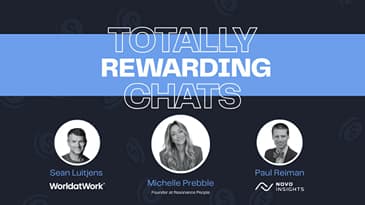
This episode explains how recruiters and compensation teams can work together to make better job offers, reduce pay compression, and improve early retention. A former head of global talent acquisition walks through how to define what a role actually needs before hiring begins, how to use job architecture, salary bands, and compa-ratio during the intake meeting, how to discuss pay with candidates when you cannot ask about salary history, and why very wide posted pay ranges weaken pay transparency. You will also learn why new hire offers often get far less scrutiny than merit increases, how recruiters can balance competing pressure from hiring managers, finance, and HR, and what compensation teams can do to educate recruiters instead of blaming them for pay problems.
Chapters
09:14 – How recruiters view compensation data and pay decisions
13:00 – Balancing hiring manager urgency with budget and internal equity
15:56 – Defining what a role really needs and avoiding up-leveling
18:12 – Using job architecture and compa-ratio in intake meetings
20:47 – How interview gaps make offer decisions harder to defend
23:07 – Why offers get less scrutiny than merit increases
24:09 – How much pay guidance recruiters actually need
26:30 – Discussing pay with candidates without asking salary history
27:35 – When wide posted pay ranges defeat pay transparency
42:04 – How hiring practices drive pay compression and how to fix it
Powered by the WRKdefined Podcast Network.
[00:00:00] Alright, another totally rewarding chats and I'm again with Paul. And Paul, I know on one of our episodes I told you I only wear black, blue and gray shirts. And now as I hit record, I realize I went with a off-white shirt to really, well that's because Michelle, I didn't want to match everybody evidently. This is eggplant, this isn't black.
[00:00:21] Yeah, that doesn't look black, but I'm also noticing, like, you know, and we'll introduce Michelle in a second. So I am Paul Ryman, according to my screen. You're just Sean. Like, are you trying to do like a Beyonce thing here and just be known as Sean or Prince or like... Have we met? I'm not smart enough to spell my last name. Like, it's hard to spell. Ah, good point. The robots would really get confused trying to like interpret your name on the screen.
[00:00:48] I should change it every time. So it's Sean, Sean L, Sean Luchens, Paul's Minion. That's what I should sign in on. There you go. Just Paul's Minion. We could do like the phonetic spelling of your last name, like, so that people really could, you know, actually get it right. It, um, Luchens, but every one of my three kids, without instruction, when they go graduate high school or college, you know, they walk across a stage, um, they give the announcer the phonetic spelling.
[00:01:15] And they all did it exactly the same. L-O-O dash C-H-E-N-S. Yeah, that's how I would have done it. And I'm like, no T involved or J. And I was like, okay. But I never told them. I mean, that's the, that's the way I would have phonetically spelled it, right? I know. There you go. I'm going to put that somewhere just so we don't forget. So welcome to this highly technical and educational session, Michelle. I, um, I appreciate you coming online and joining us. How are you?
[00:01:43] Oh, really well. Beautiful day in Vancouver, which doesn't, doesn't happen as the year gets going. So holding onto the sunshine with, uh, with both hands. That's a good choice. Well, then it turns to ski season and you just drive north, right? True. True. As long as you can get out of the cloud line and get up to, get up to Whistler or one of the local mountains, we have zero to complain about here. Yeah. Um, I'm stoked to have Michelle on. I was lucky enough to work with Michelle at Vizier.
[00:02:10] Um, and one of the, and we'll talk about why we had her on later. You'll hear from her stuff all in talent acquisition, but so that we don't screw it up and we set, you know, set the stage. Michelle, give us your background. For sure. So, um, I started my career, uh, early two thousands agency recruiting. And so I spent, gosh, two thirds of my career in agency, um, in Australia of all places.
[00:02:36] And then, uh, came back to Canada, stayed in agency for a while, uh, and then went in house. So as, as Sean said, joined Vizier and I was head of a global TA for five years there, which was unreal, amazing experience. And then decided at the end of last year, it was time to marry my external and internal experience into my own company.
[00:02:59] Uh, and I launched, uh, resonance people, which is, um, you know, without trying to be too fluffy, we'll say, uh, talent strategy and execution. But what it really means, uh, is, you know, we focus on growing defense companies.
[00:03:16] So we are a sector specific organization, um, and we're helping those organizations move away from ad hoc hiring into a more predictable, robust, effective engine around attraction, hiring, uh, and retention. Which, which, uh, see Paul, I think Paul wonders sometimes if I just pick people or whatever, like that fits really well.
[00:03:42] Um, so with what we're talking about before we jump in, cause we're going to talk about the link between TA and comp, uh, this round of questions for you. Okay, let's do it. So tea or coffee? Um, I'm pretty high octane without caffeine.
[00:04:00] So I'm like, I'm a, I'm a half calf girl, but my coffee in the morning is super Frankenstein with like protein and some like lion's mane. I don't know if you're a coffee snob, which I'm pretty sure both of you guys are in some degree or another, you would look at my coffee and think it was pathetic. I love it.
[00:04:22] But having worked with, uh, a number of Brits over my career that make an excellent cup of tea, if someone's offering me a good cup of tea, I'm not going to say no. So I'm going to go both. Okay. The Franken coffee. The Franken, I mean, I mean, look, coffee is just dirty water at the end of the day and you've just made it dirtier is what I'm hearing. Like you put lots of dirt in your water. So you put the protein in there. I do.
[00:04:50] So I use, instead of using like, uh, like milk or cream or whatever some people use, um, I'll just put in a little bit of like a protein shake, um, which is, you know, one of the pre-made ones. So it doesn't come out like super gritty and disgusting. Um, and, uh, I'll use that with like, yeah, some other, other supplements. As a, as an athlete, I've always separated the protein stuff from like my other foods.
[00:05:17] And I started, I will thank my oldest daughter for this. I just started because of making ice cream at home. Oh yeah. Protein ice cream. It's good. I'm going to put in that and make Paul's face says it all. Paul will not be having ice cream at our house. Um, if you're not watching, you should just go back to, you know, five and a half minutes in and look at Paul's face. We need that. I just, I try to keep my sins and my sort of good things separate.
[00:05:44] Whereas you are both talking about like, let me take the bad stuff for my body and the good stuff for my body and stick them together. No, I don't know if it's good or bad anymore. Like I can't mentally compartmentalize that. No calories in protein ice cream. They've taken them all out because it's just good stuff in there. Oh, see Paul, there you go. It's now no calories. And when you make it at home, the label on my ice cream has no calories. I actually put a sticker on mine that said zero because someone pointed out it doesn't have the nutritional information.
[00:06:13] So I wrote no calories on the side. I don't know how appropriate or tested it is, but, but it makes me feel better. Hey, I wrote it. It's right. Your favorite band. Oh, that is going to be a tie between probably Queen and maybe the Rolling Stones. That's a good tie. I could live with that tie. Yeah.
[00:06:40] So you have a weekend away of your own doing. So no spouses, you know, family involvement. You get to choose solely for yourself. Are you going to a posh resort or camping around the woods? I'm like the worst. I feel like I'm just going to give you like multiple answers for every question. So today I'm feeling adventurous and fun. So I'm a hundred percent going like camping and doing something super cool in the mountains. Don't say anymore.
[00:07:12] I'm good. I'm good. No, no, no, no. But yesterday and every other day. Yeah. But you know, if it's one of those weeks where you're like, I, the girl needs a shot of tequila, then she's, you know, she's probably going posh beachside, you know, margaritas in hand. So maybe there's the difference, Sean. Like I am always in a, this girl needs a shot of tequila mode. Right. And, and that's just not you. And as a result, I prefer the result.
[00:07:41] You can bring when you go camp, you can bring a tent and a bottle of tequila. No, we heard that. The cooler comes with. Warm up the chamber while you're cold by the fire. Um, so your hobby outside of work. Hobby outside of work. So from a sports perspective, my husband and I play a lot of golf now. Um, so that's more just, yeah. I mean, it's so beautiful here. You can golf almost year round.
[00:08:08] Um, but I, and I can't say it's a current hobby, but I used to love woodworking. Uh, when I lived in Australia, I had a big place. And so I had my own garage with my own setup and it was awesome. And I loved it. But I live in an apartment now and you know, you can't get a belt sander in a, in an apartment. So I've got a bunch of projects going. I'll have to like work some progress. I'll have to like, you know, send that, send that over to you.
[00:08:36] And then are you a crunchy or creamy peanut butter person? Uh, let's go crunchy. I don't really care, but let's say crunchy for argument's sake. I like a bit of texture in there. Well, I would argue with you on crunchy, but for argument's sake, it wouldn't be for argument's sake. It's just because you're wrong. Um, I love how passionate you are about the peanut butter debate. He's very passionate about his peanut butter. Um, so I wanted to have you on cause I, you know, I respected the work you were doing there.
[00:09:05] And then when we chatted, uh, whatever it is a few months ago, um, learning more about what you guys are doing about tying the strategy and all of it together. And so to start with, I would be very curious about kind of how in recruitment and TA you've worked with compensation, um, and you know, how you view the compensation department, um, and the comp data as a starting point. And then we'll kind of dive into tying it all together. Yeah.
[00:09:33] So, uh, it's really interesting when I was in the agency world, it was really difficult to kind of grasp what happens in a company when they're actually determining. Um, you know, how to evaluate comp for someone. And so it was a bit of a black box. And so folks in the agency world who didn't have first spent any time in house, it can be quite challenging because, you know, you're pretty upfront with candidate expectations and you just have a good read on the market because your entire day is speaking to folks that are working in companies.
[00:10:03] And so you tend to have a fairly good pulse on who's paying what. Um, internally, I was incredibly lucky in my previous role, um, to have a very close relationship with finance. Um, and of course we were a people analytics company, so data was, you know, was in our, was in our blood.
[00:10:22] Um, so I learned a ton and was able to get really close to, um, understanding how, uh, compensation, total rewards, you know, the, the merriment between the two and TA all come together. I think, um, the challenge is, and, and it's funny, I hear this all the time. It's like, you know, and Sean, you even said it to me in casual language, you know, TA just needs to get a bum on a seat.
[00:10:51] Well, you know, not, you know, not true because if TA is going to own the early retention number, which I think there's a lot of value in TA owning that number. Or putting a bum on the seat just opens a wreck in another couple of months. So you're just deferring the problem. So I think any comp discussion, um, needs to start with the role and the value, um, that it's bringing to the organization.
[00:11:15] And, you know, not forgetting that compensation is often a signal to candidates around how you value that position in the company. So if they're coming from a comp that's higher and you're offering them lower, you know, there's like some mental math going on there. It's like, Ooh, do they not really care about my job in this company? Like, is it not that important? Because I feel like that's a big haircut. Um, or it has, you know, the positive impact. It's like, Oh wow, they really value this position there. They, you know, it's, it seems like it is, it's high impact.
[00:11:43] So, um, you know, I think the best TA operators I've seen deeply understand comp. They understand their role. Um, they understand where the numbers come from. They've got an eye to internal equity. Um, you know, there's always a bit of pressure from the business. Cause if you think about, I don't know, brutal sports analogy, so don't ruin me if this is terrible. Um, but like TA being kind of like the quarterback of the entire hiring process.
[00:12:13] And then you've got, um, you know, you've got stakeholders in, uh, safe finance, um, or HR business partners, uh, or elsewhere in the business who have inward pressure on making sure that we're, um, you know, we're meeting business objectives around comp and budget. Um, we've got internal equity taken into consideration, but then you've got the hiring team and they're like, Hey, we're like, get this role filled. This is the best person I've ever seen. I need them.
[00:12:41] Um, and so TA is often the, the person in the middle between, um, the business and, you know, and I'll use business between by saying corporate, but like the business objectives and the hiring team, which sometimes their motivations are kind of at odds. How do you deal with that?
[00:13:01] Because I think I'll come back to the metrics thing because you do have this, you know, one, you know, get the hiring manager, both from a semi, like, I just don't want to keep doing this person's work cause they're out or somebody has to do it. Yeah. There's legit costs to the business because we're not getting stuff done. And then you've got the, you know, pressure of someone else. We don't hire too much cause we're going to have to pay that forever. And then, you know, now that we hired somebody new, we're going to have to pay Paul this much cause they're going to talk.
[00:13:28] Um, like you navigate all that because you literally have no power on either side of that. Um, like you, you don't get to decide. Yeah. You don't get to decide, but TA's job is to run a really, really good interview process where, um, there shouldn't be any, um, there shouldn't be any disagreement or anything left for consideration around where somebody falls in a band.
[00:13:55] So essentially like how good is this person we're bringing in and how do they bench against our existing team? If you've run a really good recruiting process and you've held yourself accountable for the things that you've said are the most important in the role and you've actually evaluated those things as opposed to having five interviews where they cover two of five of the things like ad nauseum, but they forget three of the things that were really important, um, to cover. So, so TA can custodian the interview process, right? That's their job.
[00:14:25] They have to make sure that's really sharp. It's the, the hiring team, uh, I will say broadly, but let's call it the, the people leader, uh, and the business that, uh, need to come to terms with what that number can look like and what the trade-offs are that they're willing to consider. Um, also I think there's a challenge around aging data and scarcity and sometimes the data is not keeping up with market.
[00:14:51] And so if you've got, you know, especially with the rate and pace of work and how it's changing right now from quarter to quarter positions are changing in demand for sure. And so you might be working with, um, in some large organizations kind of stale data that the business is then having to hire against.
[00:15:11] Um, so to answer your question, like TA's job is to present the facts and to give the business a defensible business case as to why they want to pay what they pay. Um, if you can't prove that, then like, you're not being data informed and you're not like, what are you coming to the table with? It can't be like, I feel like this person should have this. Like, that's nice, but I feel like I'm worth a million dollars. Like probably no one's going to pay me that just because I felt like having that.
[00:15:41] So it's, you know, make sure that the business has, or that the people leader has a really strong business case, uh, to ask for the content, um, strategy that they want to go with. And then, you know, it's a, it's a negotiation, um, taking into consideration the trade-offs. So two, two follow-ups related to that, Michelle. And I think you led with an important point, which in my own experience in house was the hardest point, which is, I think you said like the business knows what they, what is most important to them. And then you screen against it. Right.
[00:16:11] And I found the first part of that was awful. Like knowing what you actually care about is like a big gap, right? Do a lot of people can be a software engineer. A lot of people could be a director of finance, but what do you need? Like, what is that? Right. So I found that was kind of, kind of extraordinarily difficult. I'd love to hear a little bit more color on, you know, your role in TA at teasing that out. Cause I don't think everybody writes that in a job description.
[00:16:35] Um, and then the second, which is related to it is, well, once I've decided this is what's really important to me, I always found that people were really good at making the job bigger than when I started. Right. Right. So I'm looking for a director of finance, but, oh, when I think about what's really important to me, maybe I need a senior director. Right. And how do you guard against sort of what I called aspirational hiring? It's like hiring up, hiring bigger rather than no, really, you're just really focused on this attribute within a director.
[00:17:03] So it's, it's a loaded two questions, but I wanted to spit them out before I forgot, but I guess any, any reflections on either of those as I think about my own in-house experience and struggles. Totally. And that is, you know, what in the agency world, what you would call negotiating a fillable job in the internal world, um, you're just trying to get, um, hiring team alignment.
[00:17:24] Um, you know, and the challenges is that what is, um, what is one person's view of, you know, most critical deliverables is not another. And so, you know, when you have someone splitting hairs to say like, oh, I need a senior director, not a director. It's just like, okay, help me understand what is different in the job tomorrow that a senior director does that a director doesn't do.
[00:17:51] And I use that kind of language when I talk to candidates as well, because, you know, you'll interview someone and they'll say, oh, well, I just want to be a senior. I'm like, okay, well, what's different tomorrow versus today that you're going to do that says senior. And then that's when you're like bringing people down to the inevitable answer that it's just like, oh, it's money. Yeah.
[00:18:12] And the way that translates into the business sometimes though, is that, um, what that means is one is a huge signal that the hiring leader doesn't necessarily understand job architecture and like, doesn't know what they're getting. Oh, cause I could have a senior or I could have a, I could have a regular.
[00:18:29] Or so, you know, holding up if you're in a company and not a lot of people, not all people are, of course, but if you're in a company that is really good job architecture, then the TA partner on the intake is bringing that information to the meeting. Just say, Hey, let's like, look at this together. Like which box does this person fit in?
[00:18:47] Like what is practical and then you bring in your salary band and you just say, okay, well, like you're saying senior, like we're pushing like one 10 or like 1.2 comp ratio, or you're into a new level. Like, do you really have, like, do you really have the need and the justification for that kind of salary level? Are you going to get that approved? So it's like, begin as you mean to go on.
[00:19:13] So spend way more time in the beginning of a requisition with the business than you think you need to, to get people's alignment. And that's where you can get a lot of pushback. Is that the business wants to chuck you a job description and say, Hey, have at it, you know, go and go and find me the best. Um, there are generally, generally times where, um, like people do want to know, Hey, like what's a, what's a level three versus a level four. Like, I don't know that I know what that looks like.
[00:19:43] And so TA is great. They can go out and get, and be very transparent. Like, Hey, I'm going to set you up with this level three interview today, but I've got a level four for you tomorrow. Um, so you can, you can understand the difference. And when you've got a people leader who hires two or three times a year, they're relearning the interview skill every time they're at bat. They don't have enough at bats over the year to be predictably really good at this thing. However, they'll be like, Oh, but I've been a people leader for 15 years. I'm excellent at hiring.
[00:20:12] It's like nobody that does anything three times a year is excellent at it. And so, you know, a good TA leader is going to help coach the business through some of that nuance, you know, hold them accountable. Upfront, make sure that you've got a really well briefed interviewing team that, you know, if you're really on the ball, the people leader is reviewing the interview transcript post interview and being like, Oh, I wanted Sean to talk about X, Y, and Z. And I kind of only got Z out of them.
[00:20:42] I didn't get X and Y. So I'm going to need Paul to really double down on X and Y. Because what you do see happen at the end of an interview process, like I alluded to earlier, is that, you know, you get to the end and of the five critical things that you needed to evaluate on somebody, you've absolutely nailed two of them. But you haven't gone to three.
[00:21:03] And so when then you're talking about the comp discussion, well, no wonder you don't want to pay them what they're asking for, because you actually haven't evaluated them against three of the things that they're saying make up their total ask. Yeah. I think that's good on both sides, because I think one, you might miss something they're good at that adds value. But I think the other side, and Paul's heard me say it, like, you know, most people, you don't hire stupid people. That's not the general people strategy.
[00:21:32] And so if you are interviewing smart people, like, I mean, you know, I have lots of deficiencies. So my goal would be in an interview would be like, you know, if it's X, Y, and Z, like, and I'm strong as Z and X and Y, I'm not good at. But I'm also at the same time trying to steer clear of that. A hundred percent. You know, especially more senior people are like, you know, this is a sales job by both of us.
[00:21:58] And so I'm selling, you know, what I'm really good at, and I'm going to deflect off the other. And so if they aren't really diving into that, you know, it's there. Because the stuff they're good at, I would argue most good candidates will make sure they cover those. It's the stuff where you're like, well, was he really good at this to command that value? And they're like, well, I don't know. But we spent a lot of time on this. And you're like, well, so he got you. It's kind of like, you know, she just outplayed you in the interview. Congrats.
[00:22:29] Yeah, what are they papering over? But there's a reason why hiring sales folks or, like, account executives is one of the most difficult jobs in the world. They're selling the product that they know the best. So they are going to own you in that interview process. So you better be on your game. Paul, just in case you didn't know, I'll translate process as process in Chicago. I speak a little bit of Canadian. You know, in case you were lost. Yeah, I speak just enough Canadian.
[00:22:56] So one thing I'm curious your perspective, because I come from, we actually did an episode. It's been a while with a TA counterpart of mine when I was in house. And, you know, we talked a little bit about the push-pull between comp and TA and how when hiring, or actually, let me back up. During a comp cycle, we will beat people over the head on the difference between a 3% raise and a 5% raise. So a really small buffer that we're going to spend lots of time talking about.
[00:23:23] But in the hiring process, the range is this freaking wide, and comp doesn't even look at it. And there's a big distance between, sort of, from a comp perspective, an ungoverned hiring process, right, relative to merit. Now, that said, throwing a whole bunch of rules on top of a recruiter probably isn't going to make anybody happy either. So I guess I love your perspective on, sort of, how much constraint is desired.
[00:23:47] Like, when you're recruiting, is it great to have clear guidance on, I want to pay between $160 and $180 for this job? Or do you think recruiters want that wide open space? Like, I guess, feedback to me on the, you know, this ungovernedness of the offer, and how much guidance is good, and how much guidance or lack of guidance is bad from a TA perspective. Yeah, so boundaries are super important.
[00:24:12] Because when recruiters are out there, you know, building talent pipelines, part of the thing that helps them understand who gets categorized where is knowing where people sit in comp. And if you don't have any guardrails around understanding pay philosophy in your company, it's going to be really difficult for you to be effective in bringing the right people to the table. Because the candidate that exists in an enterprise company is not the candidate that's going to pick, you know, a small to medium business.
[00:24:40] Like, the Amazon person is not picking, you know, Joe's. I mean, sorry, terrible example, but you know what I mean. You know, like, they do need guardrails. Now, again, it depends on your company. Like, if you're data informed, and if you're a recruiter who's been there for a long time, you should have an idea of, you know, especially if you are aligned to a specific part of the business and you're not just a generalist who will recruit anywhere, you'll know.
[00:25:10] You'll know. You should have a handle for those norms. Of course. So you're like, hey, I've never brought somebody into the business on X number. Because that also, contrary to popular belief, recruiters spend a heck of a lot of time negotiating comp with candidates very early in the comp process or in the interview process. And that's because in order to include them in the funnel, you have to know with predictable certainty that if they are the best candidate, that you're going to be able to meet them on the number or somewhere close to it.
[00:25:40] And if you start bringing people in that are well above, also it's a signal, right? If they're well below or well above, that tells you something. You're just going to waste a ton of time. And so back to the thought that, hey, you know, recruiters want to put bums on seats. Well, they're not going to do that if they're not putting the right people in the pipeline. So, you know, I think people underestimate how much time recruiters spend negotiating comp
[00:26:07] with people up front, even to just consider entering them into the formal interview process. You know, I think it's only fair for the candidate and it's only fair for the business. There is absolutely nothing worse than getting the business jazzed up about a candidate and the candidate jazzed up about your opportunity and then finding out at the 11th hour that you guys are miles away on where you need to be to land the job. Sure. How do you do that? Like, I don't know, in the U.S., I'm always curious. Now it's gotten harder, right? You can ask what they're making.
[00:26:37] You can kind of maybe-ish ask what they might want to make. You can give them their range, right? And be like, hey, we're going to pay this range. But even then, like, if you're a little over that range as a candidate, you're kind of like, well, you know, and honestly, when I mentor people, I would tell them, like, ride that process, right? Let you be the one to say no. Like, you know, don't let them say no. You say no. You can always say no. You don't have to take a job offer. That's not how it works.
[00:27:07] And so how do you, how have you kind of worked with that? And also, have you been able to kind of find that little buffer if you ride to the end and they're like, well, I know we were talking about, you know, 150, but I really have to move at 160. Like, how do you navigate that piece? Yeah. I mean, for one, you just know that anyone, that people are always going to ask for more. So it's just a good, solid rule of thumb. Um, but okay.
[00:27:34] So pay transparency has been amazing, but also challenging. Pay transparency for companies that are doing it really well means that they're giving people a level of certainty on what type of job they're applying to because like, you know, it's a reasonable band. I have seen some of the biggest companies in the world putting a hundred K, um, pendulum in, in their, you know, in their job band that I'm like, that's not pay transparency. That's like, that's nuts. That's like, you know, a couple of different job levels.
[00:28:03] And then they put in some clever language to say like, oh, it's total comp and it's this. Well, you're just doing yourself a massive disservice because you then have zero understanding of the quality of your funnel or your inbound applications because everybody's just going to apply. Not to say they won't anyways, but, but they tend to. Um, but, um, how do you, how do you deal with that? How do you square that when you say that on the outbound recruiting piece?
[00:28:31] Um, and so, you know, um, because, you know, there's the application piece and I agree pay transparency. I think even if the job says it pays one 30 to one 60, you might get some people who are like, I need one 70, but like no one that needs two 70 is going to be applying to that job. Yeah. Nathlete collection, right? Hopefully. Um, when you're doing the outbound though, how do you do that? And then I, the reason I asked that is also when you've got people that are looking at pay,
[00:29:01] how do you convey the whole picture to them? Um, like the culture value, like all that, if the pay isn't there, like, how do you put a number on that? Because, you know, money's money. And then you're like, but we're a great place to work for. And I say that because I've seen zero ads that say this place sucks in their ad and zero recruiters who said we pay well, but you'll hate every day you come to work. Yeah. But you're going to quit in eight months. That's right. Yeah. Yeah.
[00:29:29] So like, how do you, how do you, I'm very curious how you convey that because comp people, total rewards people will say the total package and talk about our great culture, but I'm like, nobody talks about the bad one. So how do you, when you've been put in that spot of actually selling a culture, how do you sell that and apply value to it? Yeah. Okay. So that's like three questions. So hold, keep me honest here. Cause I'm going to answer your first two and then I'm going to get to the culture piece.
[00:29:55] Um, so how do I handle it in the interview process and then without bounding? So I talk about creating an interview process that is a self-selecting. It should be really, really obvious to the candidate and to the business, whether or not this is the right job or candidate for you. Um, and part of that is by being very transparent on numbers. So I, you know, you rightly pointed out, you can't ask people what they want to make, but
[00:30:20] if I've been in a company long enough, I know with relative certainty where the business is likely going to land on the number with within maybe about 10 K. Okay. So I'll say, Hey, you know, it's highly unlikely that we're going to go above X on this vacancy with that in mind. And what you've learned from me today about the opportunity, do you still want to go forward? Um, so you're giving the person the opt out. You're not asking them to disclose any information, but you're like, Hey, cards are in your hands.
[00:30:50] Now you tell me if you want to keep going forward, because I know it's highly unlikely that we're going to go above X number. Now, is that always true? Is that a negotiation tactic? Of course it is. But ultimately, the longer you're in the recruiting process with a candidate, that level of transparency and trust should increase. And so you should be able to, and as a good recruiter, you should be rehitting that conversation at every check-in, which I won't go on about this right now, but which is, I think, one of
[00:31:20] the challenges about some of the productivity tools. You are taking the candidate TA relationship out of the recruiting process by introducing more
[00:31:58] and more of these productivity tools. People are declining your offers. It's probably because you've gotten a relationship with the person. You didn't know what they were after in the first place. Um, all to say, I'm not saying that at any given time that it becomes appropriate to ask their comp. It's not. But what you find, the deeper the relationship is, the more Sean's going to say to Michelle, Hey, look, I'm on my third interview. Now you keep asking me how I feel about the opportunity in comp. You said you can't go above X. I'd really need Y though. Yeah. Like, where are we?
[00:32:27] How far off are we? And then I can be like, you know what? I don't know. Let me take that back to the business and we'll see if we should keep going forward. Yeah. This should be, and this is where I think this all lands. Instead of treating the interview process about like an us versus them, treat it as in like, let's mutually make a really good freaking decision about whether or not you belong in this company. Like, let's stop the like gameplay about like, Ooh, I've got to keep my cards close. And I don't know.
[00:32:54] It's like the more transparent they are, the more transparent the company is, the better chance you have of landing in the exact right place. Yeah. Totally. Totally. TA is supposed to communicate the operating reality. Yeah. They are not supposed to sell you anything because you are just deferring a problem. You create the operating reality the person walks into. Yeah. Two things. One, you had an opportunity to drop the AI buzzword in there and you didn't do it. You called them productivity tools.
[00:33:19] Now, I know not all are AI, but I was like, she just, she just didn't say AI when every other person in the world would have been like the problem with AI. So anyway, that was an aside. Yeah. I, I'm a hundred percent with you on the, like what I wish, I wish all humans would see this less as a game and more is a really big decision for everybody. The one of the biggest. Huge. I mean, changing jobs, getting married, moving. Like there's a list of like the five things that are stressful. Friends, social, financial. Totally. It's a big deal.
[00:33:48] And I've, that's the way I, I mean, I've switched jobs several times and every single one was like, look, here's how I'm feeling. And the more open I was, the better I felt about the choice. Like the one time I played games was the worst decision I made to switch companies. Right. It's like, you're better off saying, look, I, I, I want, I need to make this. Like, this is an assumption. Like if you can't meet there, then let's stop. It's no good for anybody. Yeah. Cause I can make a choice to take a pay cut.
[00:34:14] That it's going to be uncomfortable and I'm going to feel stress or, you know, like all the bad things can happen when you sort of aren't honest. So it doesn't mean you should ask. That's just like, isn't that a life thing? Totally. Just be honest and open. That's right. Why are we having, why do we have a different set of protocols when we're applying it to one of the most influential decisions of our life? But like, no, I'm going to go on TikTok and let this person who's never even had a job tell me how to prepare for an interview. Yeah.
[00:34:43] And then I show up and I, you know, and it doesn't go as I planned. And then the things that they said would happen, didn't happen. It's like, well, no. Yeah. You know, I do think companies, we even comp people like me are part of the reason this has existed over time. Right. Cause we've sort of treated it as a game. You know, how do we find people as low as possible? I mean, this isn't really the case, but that's the mindset. Well, best. And as a result, I'll spit it positive.
[00:35:08] People were looking for the best value for the dollar or can I find somebody because of what I'm paying others that is the same quality. I think there was some goodness to it, but to your point, it's like, how do I, how do I trick the system into getting this talent for this money thing? Right. And so why would I pay them this when they'll take that? Right. If they'll accept less and that's what, that's the good in the transparency, this transparent, that is not the right word. That comes pay philosophy though, too.
[00:35:37] And just organizational philosophy around how they want to look at that. And there's been so many different schools of thought on the right way to approach that. But ultimately, you know, you've got finance that have a totally different set of ideals. They are pushing the same objective as what total rewards might be and the HRBP team, because they're all coming at it with a different lens. The HRBPs are protecting internal employees and equity. You know, comp is protect, is protecting, you know, deliverables that have been set down
[00:36:06] to the business that, you know, tie to profitability that comes from finance, you know, and we're all coming at this from our own unique lens. So it doesn't make anything, any of it wrong, but you can understand how they all work as opposing forces at times. Totally. Yeah, I'll give, I'll give a shout out. I mean, you know, to Mr. Hughes, Michelle, like the best process I went through was when I went to Vizier and that was the most open. And actually I felt worse.
[00:36:33] It was, it got to the point, weirdly, Paul, where they kept moving. Look at Michelle knows how it went down. They kept moving and Paul will give me crap about this because it kind of how it went. The goalposts for the end of it kept changing. And the recruiter though, to be honest, Jay, super person. Yeah, amazing guy. Or my Uber driver when I was there. That's how personal he was. So I had to like, so they asked for an extra. Not because that was his job, Paul, because he chose to drive him to the airport.
[00:37:01] He chose to make sure I could get my flights to do like a 24 hour run to Vancouver. And they kept moving the goalposts. But to be fair, the relationship and the honesty he was with about it and not trying to play a game or like, well, we're not sure, whatever. He really was honest with, hopefully not calling him out. Like, bro, I didn't know this was how it was going to go down. I'm sorry. This isn't like, you know, like by that point I was like, it's cool, man, for you. I will go out there.
[00:37:30] It was like, like I almost got to the point where it was like, I don't care about the job, but like we're in it together at this point. So like we're going and like pay was off the table early. Like I think that playbook, Michelle, of like pay was off the, and you know, actually he realized pretty quickly I'm not money motivated. And so you just check that box and then he didn't come back to it. Well, I say that like, you know, everyone's got their bounds, right?
[00:37:57] But like he figured out what was motivating me about the opportunity. And so a good recruiter is, you know, I don't think he's going to be replaced for a while. The, um, my dad was a recruiter for 40 years. And when I was at Monster, um, I used to tell people my goal was to put him out of business. Sounds awful like the worst child ever, right? Um, but my dad was one of those, um, I'm going to send you three candidates who will do the job for the money, who will move, who fit your call.
[00:38:25] Like, like magically three butts in a chair that you could throw a dart at and all will work. And you just pick your favorite. Um, that's hard to replicate. And that's why it was always my goal because we couldn't with your, to your point, the efficiency tools, productivity tools we were building didn't do that. Did they get you a pile of paper and things to scan a hundred percent, but would they actually take the money where the games off the table, like all that stuff that I think is really hard.
[00:38:55] Um, before we get to the last question, I'll just call out the one thing I would take away from this whole conversation, Michelle was your TA don't get a big head. Um, you're in TA, but what, and you can tell me if I'm wrong, part of your success has been you are throwing around terms that I hate like comp ratio. If you haven't heard me, um, and understanding it and pay bands and range and grade.
[00:39:21] Um, and the knock on TA has been like, they don't really know what's going on. Um, and so I would take it as a, I know, I know you're good at your job, but like one of the things was you have this understanding of comp and took the time somewhere. So the last question I have before we get to the automatically fix anything is how did you get there? Like, like, was it the why and why did you decide? Was it just osmosis or did you realize early?
[00:39:51] Like, I need to know this. Like you, you really can, you could sit in a room, I would argue. And for a while, you know, pretend to be a comp person. Like you legit know what you're talking about in comp. How did you get there? I, I, I am like so curious and very impatient. Um, so like if I don't get something, I'm like, I'm not somebody that will sit there
[00:40:17] and be like, you know, go to an HRBP to say, Hey, I don't, you know, can you get me an answer on this? I'm going to the comp person and saying, or the FP&A team. And I'm like, Hey, I don't understand this. Can you actually talk me through, you know, like aging data and how you came up with the percentage and like why we would do this, not that. And, and like, can you show me like I'm, I'm visual learner. I like to see things and how things are made and whatever.
[00:40:46] Um, and, and so that's just a skill that's done well for me my whole life. Like, um, I like to know the why of everything. And I am very happy to go and figure it out myself and ask people and, and, and like ping someone I have no idea, like, or no reason to ping. Like you should have seen me starting this business. The people that I was messaging me and like, Hey, don't know what I'm talking about here, but you seem like you do any chance that you'll let me talk to you about X and the amount
[00:41:15] of people that say yes. It's crazy. That's how I ended up at Vizier. I was tackling a really challenging problem for a client and I didn't know how to solve the problem. So I was reaching out to people in a certain discipline on LinkedIn. I was like, Hey, I've got this problem. I don't know this space, but I really need to give this client some better coaching. Uh, and I'd love to hear your perspective on it. Uh, just happened to be somebody in the people and culture team at Vizier who responded and
[00:41:44] we had this amazing conversation and they were like, Hey, you want to, you want to interview for a job here? That's like, sure. That sounds kind of amazing. And so I think, you know, I think if you apply that curiosity to every aspect of life, you're probably going to get a little bit further forward than if you just waited for the information to land on your lap. I mean, I think it's super cool because, you know, and I'm on record as saying it, the number one, um, proponent of pay compression is talent acquisition.
[00:42:13] Um, and, and I, I don't know the why. So like, I like to throw them out in front of the bus. I just don't know why I keep throwing them out there. That's where it happens, right? Compression generally happens in the hiring piece. And so like your discussion of like, if comp can take and also be on the other side of it, comp and bend and reach out to TA and be like, Hey, I'm not going to complain to you about the, your past things that you've created for me every merit cycle. Can we talk about educating you so that maybe you can have this thing?
[00:42:43] Like, um, I think that would be great. Um, this has been great. Um, um, the last question we always ask. So it's interesting from the TA perspective. Um, if you could automagically fix any one thing in all of HR, what would it be? First off, did you just coin automagically? Not just that I use it other times, a highly technical term, Michelle. I like it a lot. I, you know, I might steal that one.
[00:43:11] Um, you know, uh, it kind of, it's, it's really in line with what we were just talking about. And that's, I would say if we could break down the silos and people in culture, um, so that they were operating as business people. And I know there's a lot of rhetoric around this and there's a lot of organizations that are doing great work around this and some that are not so much, but if you could break
[00:43:34] down the silos, um, within people in culture so that they had a really strong understanding of the business impact that they were trying to support an architect. And then understand to your point, like if comp would just call TA and be like, Hey, Preble, you're like 1.1 freaking comp ratio on your last five hours, like hires is killing me.
[00:44:02] Can, can we have a chat and let's talk about why that's happening to you and, and like how, why you keep landing on that number and how we can fix it. Like there would just be so much better outcomes as opposed to, you know, a whole bunch of dead TA people in front of a bus. Cause Sean just keeps getting mad at us. A little dark way to end, but okay. Uh, okay. Um, that is awesome. I, um, I cannot stress enough.
[00:44:30] Michelle is, um, is if you can't tell easy to chat with super knowledgeable, we will tag you, um, especially if you're in comp, reach out to talk about TA and integration terms or whatever. Um, so I'm super excited. You decided to donate an hour to Paul and I to come on. This has been awesome. Um, if you are listening, um, crap, like, and follow, like, and follow. You're going to get this right. We're so bad at this, Michelle. Give us those likes.
[00:45:00] We want them. Yeah, we want them, you know, and also, so you can listen to really smart people like Michelle, um, that come on. So thanks so much for coming on. Pleasure guys. It was awesome to spend time with you. I've been listening to some of your stuff and I really enjoy the conversations you have. You get some great guests on here. So well done to you guys too. Did you like and follow? I have liked and followed. That's how I, that's how I saw new episodes coming up. Look at that. Okay. Look at that. All right. That's, that's, that's the benefit. Thanks everyone.
[00:45:30] Cheers guys.
Sponsors
